



Sugiono: Indonesia's Diplomacy Must Be Underpinned by Strong National Resilience
- 10 Jul 2026 10:18 WIB
- Voice of Indonesia
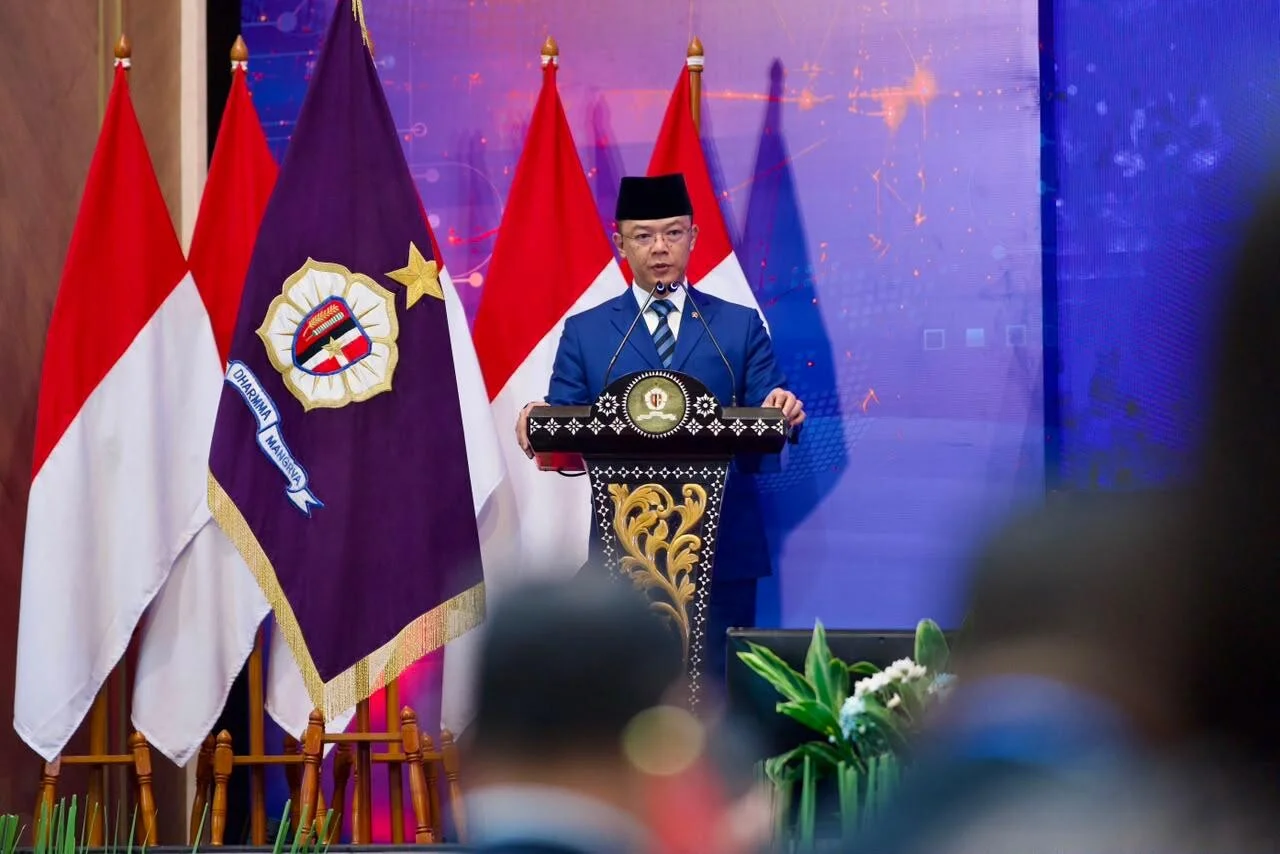
RRI.CO.ID, Jakarta – Indonesian Minister of Foreign Affairs Sugiono emphasized that the country's diplomacy must be supported by strong national resilience to address increasingly complex geopolitical challenges amid growing rivalry among nations and growing global fragmentation.
According to Sugiono, successful diplomacy cannot be separated from a strong domestic foundation. National resilience, he said, is no longer defined solely in terms of territorial defense, but also as a country's ability to absorb shocks, maintain its policy choices, and protect its people under pressure.
"None of this would be possible without a strong national foundation. National resilience is the ability of a nation to absorb shocks, preserve policy choices, and protect its people under pressure. Resilience is sovereignty translated into capability," Sugiono said while delivering the keynote address at the 10th Jakarta Geopolitical Forum (JGF), organized by the National Resilience Institute of the Republic of Indonesia (Lemhannas RI) in Jakarta on Thursday, 9 July 2026.
He explained that food security supports strategic autonomy, while energy security is a matter of national security. In addition, human capital serves as geopolitical capacity, whereas technology is no longer just a tool but has become a source of national power.
Therefore, Sugiono said Indonesia's diplomacy must be anchored in national transformation, as mandated by Article 33 of the 1945 Constitution.
Meanwhile, National Resilience Institute of the Republic of Indonesia RI Governor Ace Hasan Syadzily said today's geopolitical dynamics no longer affect only relations between states but also have direct implications for trade, investment, energy security, food security, employment, technology standards, data governance, and the security of critical infrastructure.
"For Indonesia, these developments are no longer distant diplomatic issues. Global fragmentation is felt in trade, investment, energy security, food security, employment, technology standards, data governance, and the security of critical infrastructure," Hasan said.
"Therefore, discussions about geopolitics also mean discussions about the daily resilience of our people and the strategic capacity of our state," he added.
According to Hasan, strengthening multilateralism must go hand in hand with strengthening national resilience, as countries with strong domestic foundations will have a more credible voice and stronger bargaining position in international affairs.
He added that for developing countries such as Indonesia, strengthening multilateralism is not merely an idealistic aspiration but a strategic necessity amid intensifying major power competition, protectionism, and global fragmentation.
"National resilience requires a strong economy, reliable energy and supply chains, high-quality human resources, digital readiness, social cohesion, and the ability to adapt to rapid technological change," Hasan said.
News Recomendation
Loading latest news.....