



Indonesia Promotes Deep Learning to Prepare Youth for Digital Era
- 29 Jun 2026 14:24 WIB
- Voice of Indonesia
RRI.CO.ID, Jakarta - Indonesia's Ministry of Primary and Secondary Education is strengthening the implementation of Deep Learning as part of its efforts to prepare young people for the challenges of the digital era. The initiative aims to equip students with critical thinking, problem-solving, collaboration, and adaptability skills needed in an increasingly technology-driven world.
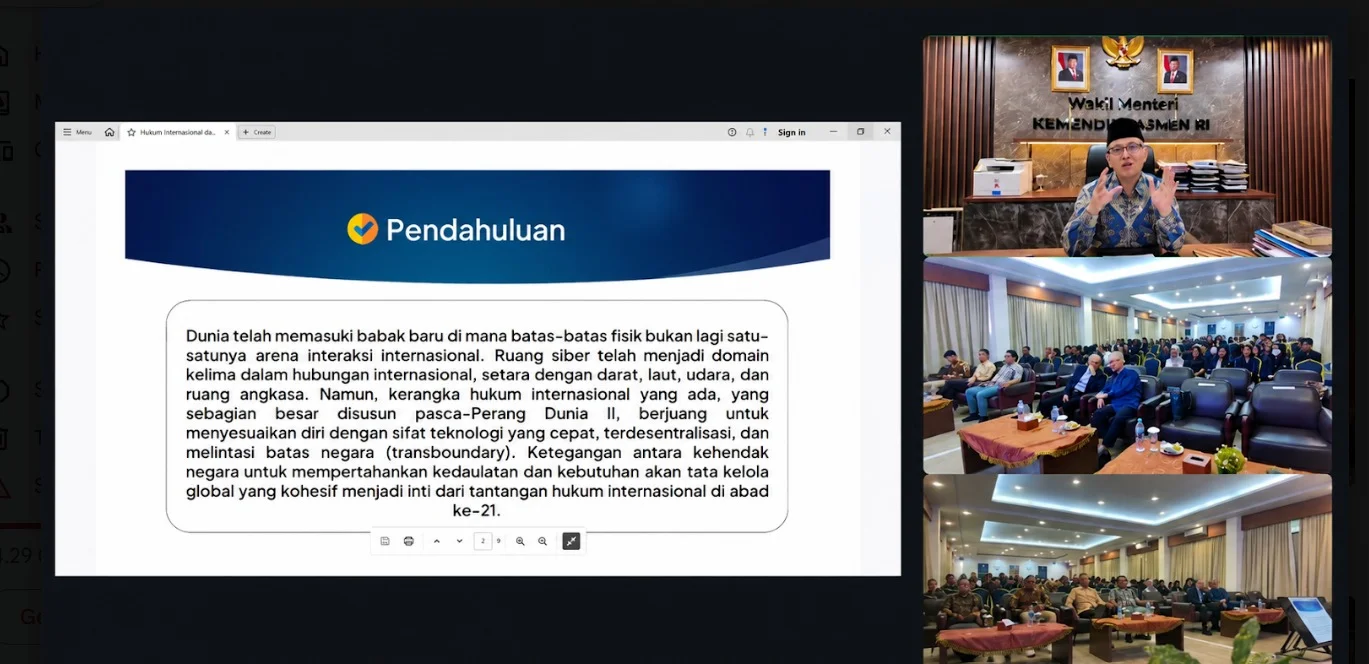
Based on the release received by RRI VOI in Jakarta, Sunday, June 28, 2026, Vice Minister of Primary and Secondary Education, Atip Latipulhayat, delivered the message during a public lecture titled International Law and Its Challenges in the Digital Era in Batam, Riau Islands. He said education must evolve alongside rapid technological change to prepare future generations for complex global challenges.
According to Atip, digital transformation has reshaped nearly every aspect of modern life, from social interaction and economic activity to global governance. It has also introduced new issues such as cybersecurity, personal data protection, cross-border crime, and the growing use of artificial intelligence.
"Technological development is advancing at a very rapid pace. Therefore, young people must continue learning, adapt to change, think critically, and understand the impacts of digital technological developments," Atip said.
He stressed that education should not focus solely on academic achievement but also on developing strong character, creativity, critical reasoning, and responsible decision-making. These competencies, he said, are essential for navigating today's rapidly changing environment.
The ministry's Deep Learning approach encourages students to gain a comprehensive understanding of concepts rather than relying on memorization. It also connects classroom learning with real-life situations while fostering higher-order thinking skills to solve increasingly complex problems.
She also emphasized that every activity in the digital space carries legal, ethical, and social responsibilities. He said digital literacy should be developed alongside character education and critical thinking to help young people become responsible digital citizens.
"I want to emphasize that international law should not become an artifact of the past. It must continue to evolve and respond to the global challenges facing society today and in the future," Atip said, underscoring the need for education systems to remain relevant in an era of rapid technological advancement.
News Recomendation
Loading latest news.....