



Indonesia’s Modern Agriculture System Promises Triple Rice Yields
- 27 Jun 2026 22:16 WIB
- Voice of Indonesia
Key Points
- The Ministry of Agriculture introduced the Modern-Advanced Agriculture System (PM-AAS) to boost rice yields.
- The PM-AAS framework integrates local Indonesian planting methods with international precision farming technology.
- President Prabowo Subianto praised the agricultural breakthrough as a revolutionary step toward global food export.
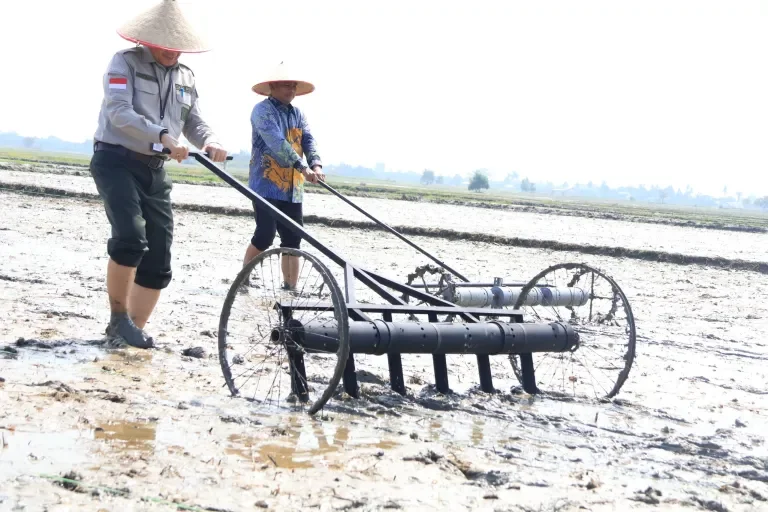
RRI.CO.ID, Jakarta - Indonesia is advancing toward sustainable food self-sufficiency with the introduction of the Modern-Advanced Agriculture System (PM-AAS), which has demonstrated the ability to boost rice productivity to 12.4 tons per hectare. Minister of Agriculture Andi Amran Sulaiman said the system, developed through nearly two years of research and field trials, could nearly triple average yields and strengthen national food security.
“This model can increase rice productivity almost threefold, from an average of 5–6 tons to at least 10 tons, even reaching 12.4 tons per hectare,” Minister Amran said in Jakarta on Saturday, June 27, 2026, as quoted by Antara.
PM-AAS integrates Indonesia’s jajar legowo planting system with modern cultivation practices studied in Arkansas, United States, and precision agriculture technologies from China. The approach is built on three principles: optimizing photosynthesis through planting arrangements (4:1 and 6:1 systems), increasing plant populations through continuous planting, and applying precision farming to reduce input costs.
“If applied correctly, fertilizer and water costs can be far more efficient. Inputs decrease, but harvests increase. That’s where farmers’ profits will rise,” Minister Amran explained.
He emphasized that higher productivity is key to sustaining rice self-sufficiency and fulfilling President Prabowo Subianto’s vision of Indonesia as a global food hub.
According to him, plant populations per hectare could rise from 300,000–360,000 clumps to as many as 800,000–1 million, making yield increases of nearly threefold achievable. “With productivity around 10 tons per hectare and lower production costs, farmers can earn much higher incomes compared to conventional methods,” he said.
“If farmers already feel significant profits, they will plant on their own. No need for constant encouragement because the farming system has proven profitable,” Minister Amran added.
The ministry is preparing seed support and technical assistance to help farmers adopt PM-AAS, with agricultural extension workers (PPL) tasked as the frontline. “All PPL must move. Our focus is on irrigated areas first. PM-AAS will be monitored together until 2029 to truly increase national production,” he stressed.
Minister Amran expressed optimism that PM-AAS would not only secure food self-sufficiency but also create production surpluses for future exports. “Our target is not just self-sufficiency. It must be sustained. After that, we think about exports and making Indonesia the world’s food barn, as directed by the President,” he said.
President Prabowo Subianto, during the National Farmers and Fishermen Week XVII in Gorontalo on June 24, praised the innovation. “There are so many innovations, new technologies, new techniques developed by the farming community under the leadership of the Minister of Agriculture. The results, in my view, are truly revolutionary,” he said.
This breakthrough positions PM-AAS as a cornerstone of Indonesia’s ambition to become a global leader in sustainable food production. ***
News Recomendation
Loading latest news.....