



Prof Henry: DSI a Manifestation of Constitution’s Moral Responsibility
- 11 Jun 2026 14:20 WIB
- Voice of Indonesia
RRI.CO.ID, Jakarta – PT Danantara Sumberdaya Indonesia (DSI), which has officially started its operations on June 1, 2026, is established to serve as an intermediary and price setter for the export of Indonesia’s strategic commodities. The legal basis for the agency’s operations is provided by a Government Regulation and a Minister of Trade Regulation.
Initially, DSI manages three key commodities: palm oil, coal, and ferroalloys. The establishment of the agency aims to improve transaction recording and eliminate practices such as under-invoicing and transfer pricing.
Professor Dr. Telisa Aulia Falianty of the Faculty of Economics and Business at the University of Indonesia highlighted the operational risks associated with this super holding institution. She affirmed that the agency requires strict, continuous, and transparent oversight to prevent potential financial reporting fraud by internal actors. According to her, the integrity of financial reporting is crucial to maintaining the confidence of foreign investors.
Meanwhile, Senior Expert at the Government Communication Agency of the Republic of Indonesia, Fithra Faisal, stated that strengthening governance is essential, considering the potential loss of state wealth amounting to IDR 15,400 trillion between 1991 and 2024. Therefore, DSI’s one-stop export system is projected to increase national economic growth by 0.8 percent.
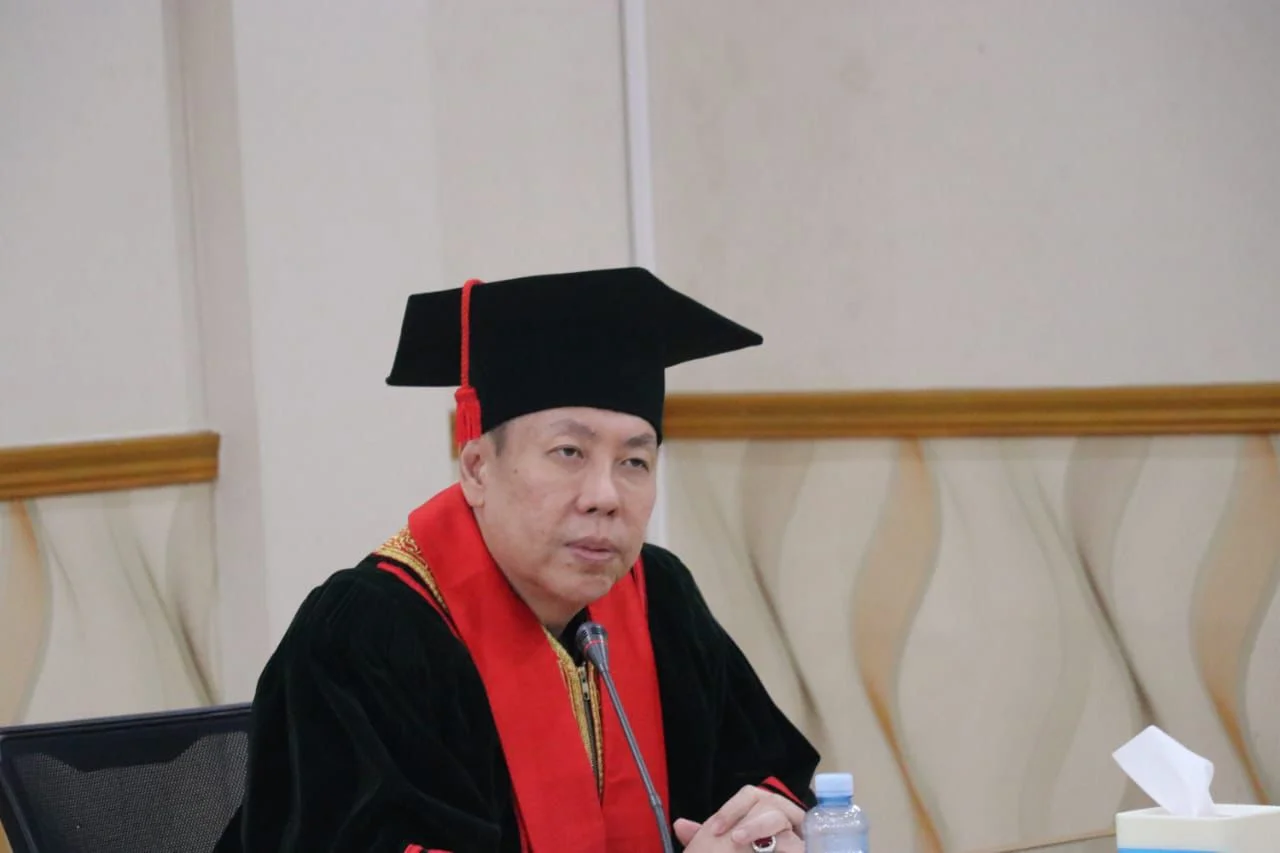
Regarding the matter, Public Policy Observer Prof. Dr. Henry Indraguna, S.H.,M.H. offered a more balanced perspective. In principle, he supports President Prabowo Subianto’s initiative.
However, he stressed that DSI’s success depends heavily on the integration of upstream and downstream sectors. “The upstream-to-downstream sector falls under the authority of Minister of Energy and Mineral Resources, Bahlil Lahadalia,” Prof Henry stated in an official statement received by RRI VOI on Wednesday, June 11, 2026.
Henry, who is also a Professor at Sultan Agung Islamic University in Semarang, noted that Minister Bahlil has played a significant role in attracting foreign investment and developing processing industries, which are key to supplying high-quality commodities for DSI.
“The success of the energy sector downstreaming program mandated by President Prabowo has been effectively implemented through Mr. Bahlil’s orchestration, thereby fostering DSI’s role as a safeguard for the nation’s foreign exchange earnings,” he conveyed.
According to him, the one-stop export policy can be understood as a form of state responsibility, as government control over exports represents a constitutional moral obligation. “The state must not remain a passive spectator when its natural resources are unfairly exploited through loopholes in an imbalanced international trade system,” he asserted.
Furthermore, Henry cited the views of Harvard economist Dani Rodrik, who argues that developing countries must undertake smart interventions in global trade to protect domestic economic interests. “DSI is a manifestation of a legitimate smart intervention in accordance with Dani Rodrik’s political economy principles,” Henry mentioned. In his view, the integration of this system will reinforce the principle of pluralistic justice.
“For decades, the prosperity generated by Indonesia’s natural resources has leaked abroad without providing optimal benefits to its rightful owners—the Indonesian people. The downstreaming efforts led by Mr. Bahlil Lahadalia in the upstream sector and DSI’s management in the downstream sector represent a unified path toward a fairer distribution of national wealth,” Prof Henry said.
Nevertheless, Henry emphasized that DSI must maintain absolute transparency and high accountability standards to prevent the emergence of new forms of bureaucratic corruption.
News Recomendation
Loading latest news.....