



BMKG: The Peak of Dry Season Predicted to Occur in August 2026
- 10 Jun 2026 16:24 WIB
- Voice of Indonesia
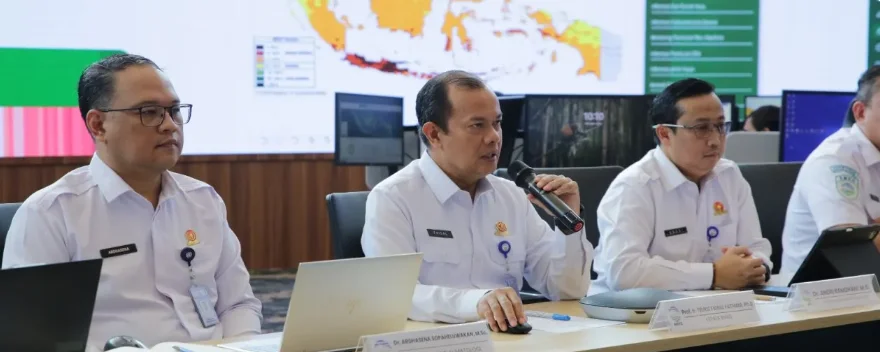
RRI.CO.ID, Jakarta - The Meteorology, Climatology, and Geophysics Agency (BMKG) predicts that the peak of the dry season in Indonesia will occur in August 2026 and will cover almost half of the national land area. The public and stakeholders are urged to enhance their preparedness to face the potential impacts of drought, forest and land fires, as well as disruptions in the food and water resource sectors.
The head of BMKG, Teuku Faisal Fathani, said that the peak of the dry season in August is expected to occur in 369 Climate Zones (ZOM) or about 48.84 percent of Indonesia's land area. The areas expected to experience the peak of the dry season during this period include most of Java, Bali, West Nusa Tenggara, parts of East Nusa Tenggara, most of Kalimantan, parts of Sulawesi, parts of Maluku and North Maluku, as well as most of Papua.
"The regions predicted to experience the peak of the dry season in July 2026 include parts of Sumatra, a small portion of Kalimantan and Java, the southern part of East Nusa Tenggara, the northern part of West Sulawesi, the western part of Central Sulawesi, a small portion of Maluku, the southern part of Southwest Papua, the central part of West Papua, and the eastern part of Papua," Faisal stated in Jakarta, Wednesday, June 10, 2026.
Deputy for Climatology at BMKG, Ardhasena Sopaheluwakan, explained that by the end of May 2026, 200 Climate Zones or about 11.83 percent of Indonesia's territory had entered the dry season. Meanwhile, in June, it is estimated that another 198 Climate Zones will begin to experience the dry season.
BMKG also warned that this year's dry season has the potential to be drier and longer than normal conditions. These conditions are influenced by the likelihood of the El Niño phenomenon, which is expected to last until early 2027.
"BMKG predicts that the El Niño phenomenon will continue until early 2027, with a 98 percent chance of moderate intensity and a 62 percent chance of strong intensity," Ardhasena said.
Facing these conditions, the BMKG urged the agricultural sector to adjust planting schedules and choose drought-resistant plant varieties. Meanwhile, the water resources sector was asked to ensure water supply availability thru reservoir revitalization and distribution network improvements.
In addition, the BMKG reminds local governments to enhance preparedness for the potential decline in air quality, drought, and forest and land fires. Mitigation efforts, including thru Weather Modification Operations (WMO), will continue to be strengthened in collaboration with local governments and relevant stakeholders.
Faisal emphasized that BMKG will continue to coordinate with local governments, BPBD, Forkopimda, and various other parties to support mitigation and adaptation measures for the evolving climate conditions.
"The public is expected to always refer to weather and climate information from official BMKG channels to avoid unverified information," he said.
News Recomendation
Loading latest news.....