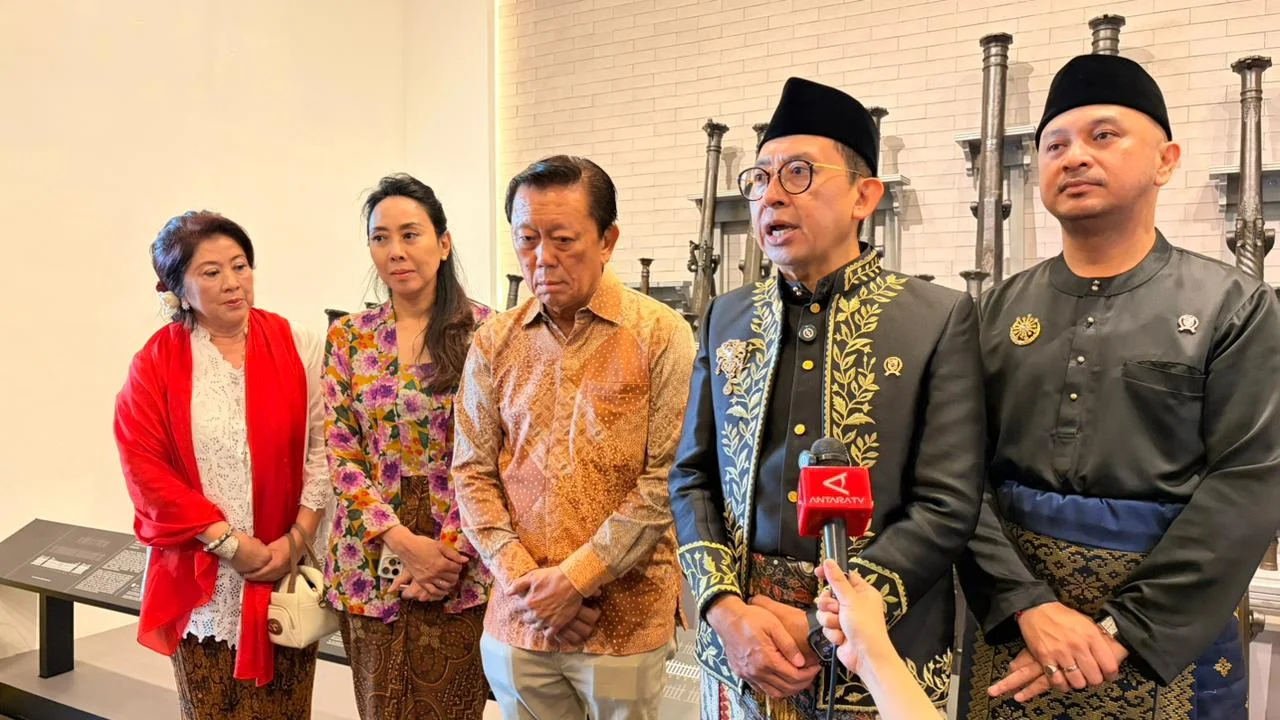
Minister Fadli: Indonesia’s Cultural Differences Should Serve as Unifying Force

  • 20 Mei 2026 14:52 WIB
  •  Voice of Indonesia

RRI.CO.ID, Jakarta - Indonesia's Minister of Culture, Fadli Zon, stated Indonesia’s vast diversity should become a source of strength rather than division. He made the statement during the commemoration of National Awakening Day at the National Awakening Museum Jakarta, on Wednesday, 20 May, 2026.

The event highlighted Indonesia’s effort to connect historical memory with contemporary cultural development. Speaking at the former STOVIA medical school building, widely regarded as the birthplace of Indonesia’s national awakening movement, Fadli Zon said the country must continue embracing its identity as a “mega-diverse” nation.

He stressed that Indonesia’s ethnic, linguistic, and cultural differences should serve as a unifying force for the future. “We must remain aware that our nation is a great nation, a mega-diverse nation, and those differences must become a source of strength, not a threat of division,” Fadli Zon said during his remarks to reporters.

According to him, the spirit of national awakening first emerged from the awareness among indigenous students and intellectuals during the colonial period that education and organization were essential for achieving independence. He noted that the values born at STOVIA remain relevant for Indonesia’s future development.

“If in the past we rose to achieve independence, today we must rise toward the ideals envisioned by our founding fathers to become a sovereign, just, and prosperous nation,” he stated.

The commemoration also featured several cultural programs aimed at making history more accessible to younger generations. Among them were the inauguration of a historic cannon exhibition, an art exhibition portraying Indonesian intellectuals and scientists, and the activation of public heritage spaces at the former STOVIA complex.

Fadli Zon said the government wants younger Indonesians to experience historical sites not merely as monuments, but as living public spaces connected to national identity and civic participation. He added that cultural preservation should involve not only the state, but also private philanthropists and cultural enthusiasts.

The minister also highlighted Indonesia’s growing international recognition in the cultural sector, including acknowledgment of the world’s oldest prehistoric cave paintings discovered in the country. He expressed appreciation for researchers from Griffith University, BRIN, and the Ministry of Culture for contributing to the preservation and promotion of Indonesia’s cultural heritage.

News Recomendation

Latest News

Loading latest news.....