



Minister Affirms Chattra Installation Will Not Alter Borobudur’s Structure
- 29 Apr 2026 23:01 WIB
- Voice of Indonesia
Key Points
- The planned chattra installation at Borobudur Temple will not alter the original structure, as it is reversible.
- The installation is considered essential to strengthen Borobudur’s role as a living heritage site and fulfills a long-standing necessity for Buddhists.
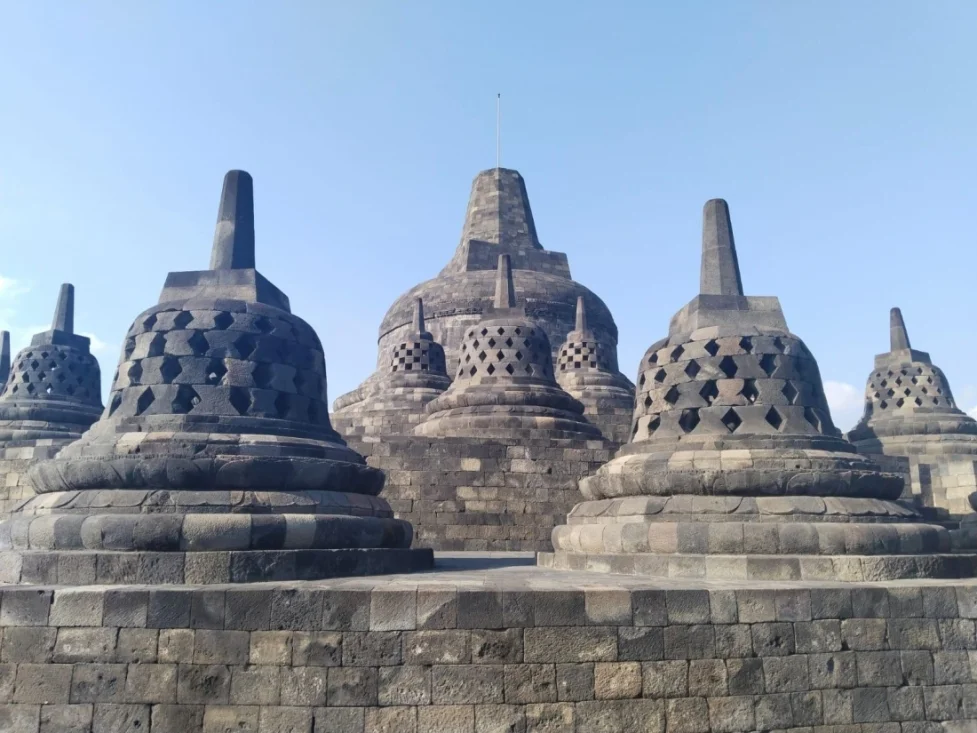
RRI.CO.ID, Jakarta – Minister of Culture, Fadli Zon, confirmed that the planned installation of a chattra (umbrella) at Borobudur Temple will not alter the temple’s original structure. He said the installation is intended to strengthen Borobudur’s role as a living heritage site.
Minister Fadli explained that the plan has long been proposed by the Indonesian Buddhist Association (Permabudhi), the Indonesian Buddhist Representatives (WALUBI), and the Directorate General of Buddhist Community Guidance. He also discussed the proposal with UNESCO officials in Paris.
“The installation of this chattra is part of the need for living heritage. Borobudur is not merely a dead monument, but a living heritage site,” he said after inaugurating the Tatah: Jepara Carving Art 2026 exhibition at the National Museum of Indonesia in Central Jakarta on Wednesday, April 29, 2026.
He emphasized that the installation is reversible, meaning it can be removed without altering the temple’s original structure.
The process remains under review, including the preparation of a Heritage Impact Assessment to ensure there will be no negative impact on Borobudur’s outstanding universal value. The government will monitor all stages and report progress to UNESCO. Installation is planned to begin this year once the assessment is complete.
“The chattra that will be installed this year will not cause any changes; it is reversible,” Minister Fadli reiterated.
UNESCO stressed the importance of completing technical stages before further discussion of the proposal. A Heritage Impact Assessment must be prepared and submitted for review by UNESCO and its advisory bodies.
“Borobudur is a living site and must remain so. What is important to us is ensuring that the technical process is carried out properly,” said Lazare Eloundou Assomo, Director of the UNESCO World Heritage Center.
The assessment is being prepared by the National Agency for Research and Innovation (BRIN) and the Ministry of Religious Affairs to analyze the cultural impact of the installation. (Misni Parjiati/Lasti Martina)
News Recomendation
Loading latest news.....