



Indonesian Senator Supports Mandatory Nutri-Level Labels to Tackle Rising Health
- 15 Apr 2026 20:01 WIB
- Voice of Indonesia
Key Points
- Senator Fahira Idris supports mandatory Nutri-Level labels, calling them a strategic step to improve public health.
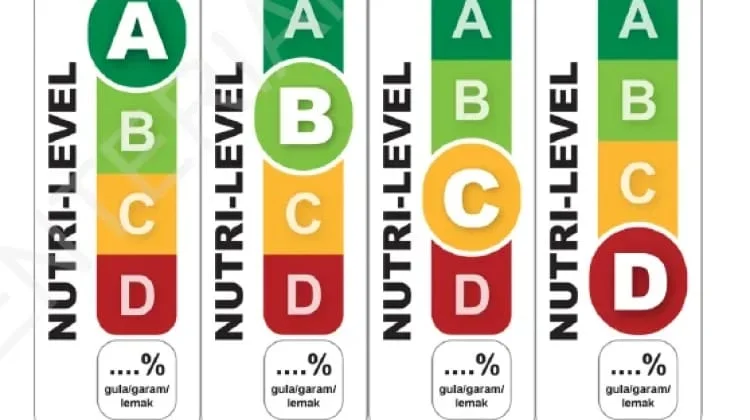
- The Nutri‑Level label simplifies sugar, salt, and fat (GGL) information, helping the public make healthier food choices.
RRI.CO.ID, Jakarta -Indonesian Regional Representative Council (DPD RI) legislator Fahira Idris has strongly supported the government’s policy requiring Nutri-Level nutrition labels on food and beverage products. The regulation, stipulated in a Health Ministry decree, is seen as a strategic step to improve public health.
Fahira said the new Nutri-Level label simplifies information on sugar, salt, and fat (GGL) content, making it easier for consumers to choose healthier foods. “This is a big step forward. People have had difficulty understanding nutrition tables. Nutri-Level makes the information simpler and easier to understand,” she said at the Parliament Complex, Senayan, Jakarta, on Wednesday, April 15, 2026, as quoted on her personal website.
According to the Food and Drug Monitoring Agency (BPOM), Nutri-Level categorizes processed foods based on their sugar, salt, and fat content. The labeling system uses letters A through D, paired with color indicators: A (dark green: low GGL content), B (light green: lower GGL content), C (yellow: consume wisely), and D (red: limit according to health conditions).
Fahira stressed the urgency of the policy, noting that excessive consumption of sugar, salt, and fat contributes to rising cases of non-communicable diseases such as diabetes, hypertension, stroke, and heart disease.
She added that the national healthcare budget is heavily burdened by illnesses linked to unhealthy consumption patterns, while obesity rates, including among children, continue to climb.
She emphasized that the policy's success depends on effective implementation. “Labels alone are not enough. We must ensure that the public understands, that industry adapts, and that the policy ecosystem operates as a whole,” said the senator representing Jakarta.
Fahira also outlined the importance of ensuring that label designs are simple, contrasting, and easily understood by all groups, including those with limited health literacy. She called for extensive and continuous public education to ensure people not only see the labels but also understand and use them in making consumption decisions.
She urged the government to accelerate the transition from voluntary to mandatory schemes with a clear roadmap, while strengthening oversight and enforcement to prevent manipulation of information.
She further encouraged industry players to reformulate products to be healthier, stressing that labeling should not only inform but also drive producers to improve nutritional quality.
In her view, labeling policies should be integrated with other measures, such as restrictions on unhealthy food advertising, school education programs, and fiscal policies, such as excise taxes on sweetened beverages. She added that businesses should receive support to ease adjustment costs, particularly in packaging and production processes, so the policy does not create excessive burdens.
Fahira highlighted the policy's long-term benefits for public health and the sustainability of the national health insurance system. She also underscored the role of families in shaping healthy consumption habits from an early age. “This label should be a tool for families to make wiser food choices, especially for children, to protect them from disease at an early age,” she said. ***
News Recomendation
Loading latest news.....