



BMKG Urges Preparedness for Prolonged Dry Season in 2026
- 14 Apr 2026 13:29 WIB
- Voice of Indonesia
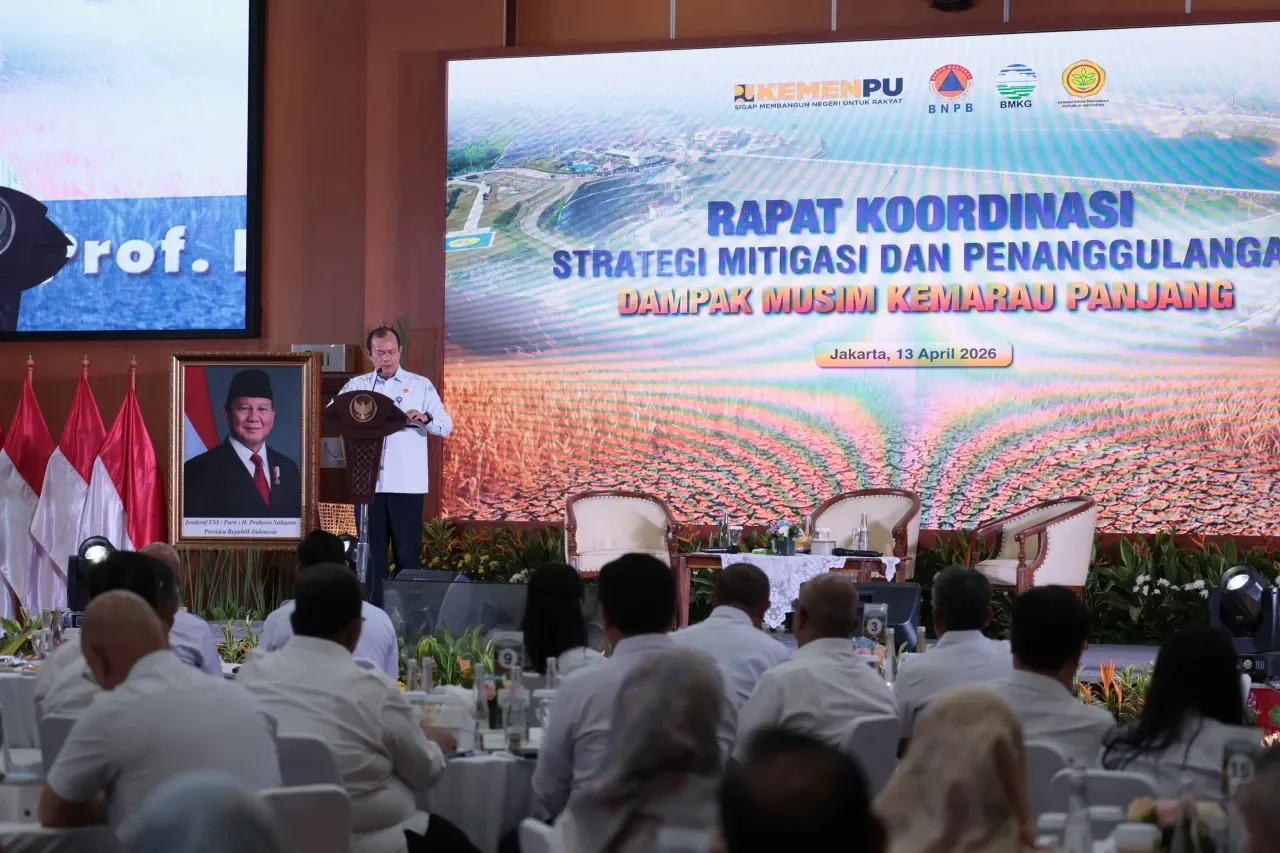
RRI.CO.ID, Jakarta – The Meteorology, Climatology, and Geophysics Agency (BMKG) has emphasized the importance of cross-sector preparedness in facing the 2026 dry season, which is forecast to be drier and longer than normal conditions. The statement was delivered during a Coordination Meeting on Mitigation Strategies and Handling the Impacts of the 2026 Prolonged Dry Season held at the Ministry of Public Works in Jakarta on Monday, April 13, 2026.
Head of BMKG, Teuku Faisal Fathani, expressed appreciation to the Ministry of Public Works for the invitation to present the latest developments in national climate conditions. He stressed that the provision of meteorological, climatological, and geophysical information is mandated by Law No. 31 of 2009, forming the basis of BMKG’s strategic role in supporting national development.
In his presentation, Faisal explained that current global climate conditions remain in a neutral phase, with the ENSO (El Niño–Southern Oscillation) index at around +0.28. However, in the second half of 2026, conditions are projected to shift toward a weak to moderate El Niño phase with a probability of 50–80 percent.
“It is important to understand that the dry season and El Niño are two different phenomena and do not always occur simultaneously. The dry season will come every year in Indonesia. But if El Niño coincides with the dry season, the conditions will become much drier,” he said.
To address these conditions, BMKG recommends several strategic measures, including anticipatory responses in areas with low rainfall potential, strengthening data-based reservoir and irrigation management, conducting weather modification operations, and promoting efficient use of water and energy. Faisal further emphasized that BMKG is ready to support various development sectors by providing up-to-date climate data and information.
“BMKG does not only deal with disasters, but also supports various development sectors such as agriculture, transportation (land, sea, and air), and public works infrastructure,” he said.
He also highlighted the importance of maintaining balance in water resource management to prevent both excess, which can trigger floods and landslides, and shortages that can lead to drought and forest and land fires.
“Hopefully, we can all move together in the same direction to anticipate the 2026 dry season, which is expected to arrive earlier and last longer,” Faisal said.
On the same occasion, Acting Director General of Water Resources at the Ministry of Public Works, Adenan Rasyid, stated that the potential for a prolonged dry season in 2026 poses a serious challenge that must be addressed in an integrated manner. He added that the impacts of drought will be felt across various sectors, ranging from declining river discharge and reservoir volumes, disruptions to cropping patterns, to increased risks of forest and land fires.
News Recomendation
Loading latest news.....