



House Urges Review of Rice Reserve Plan Amid Drought Risk
- 13 Apr 2026 13:25 WIB
- Voice of Indonesia
Key Points
- A lawmaker from the Indonesian House of Representatives said the policy of stockpiling rice as a precaution against a potential El Niño should be reevaluated, given the commodity’s limited shelf life.
- A lawmaker from the Indonesian House of Representatives said the policy of stockpiling rice as a precaution against a potential El Niño should be reevaluated, given the commodity’s limited shelf life.
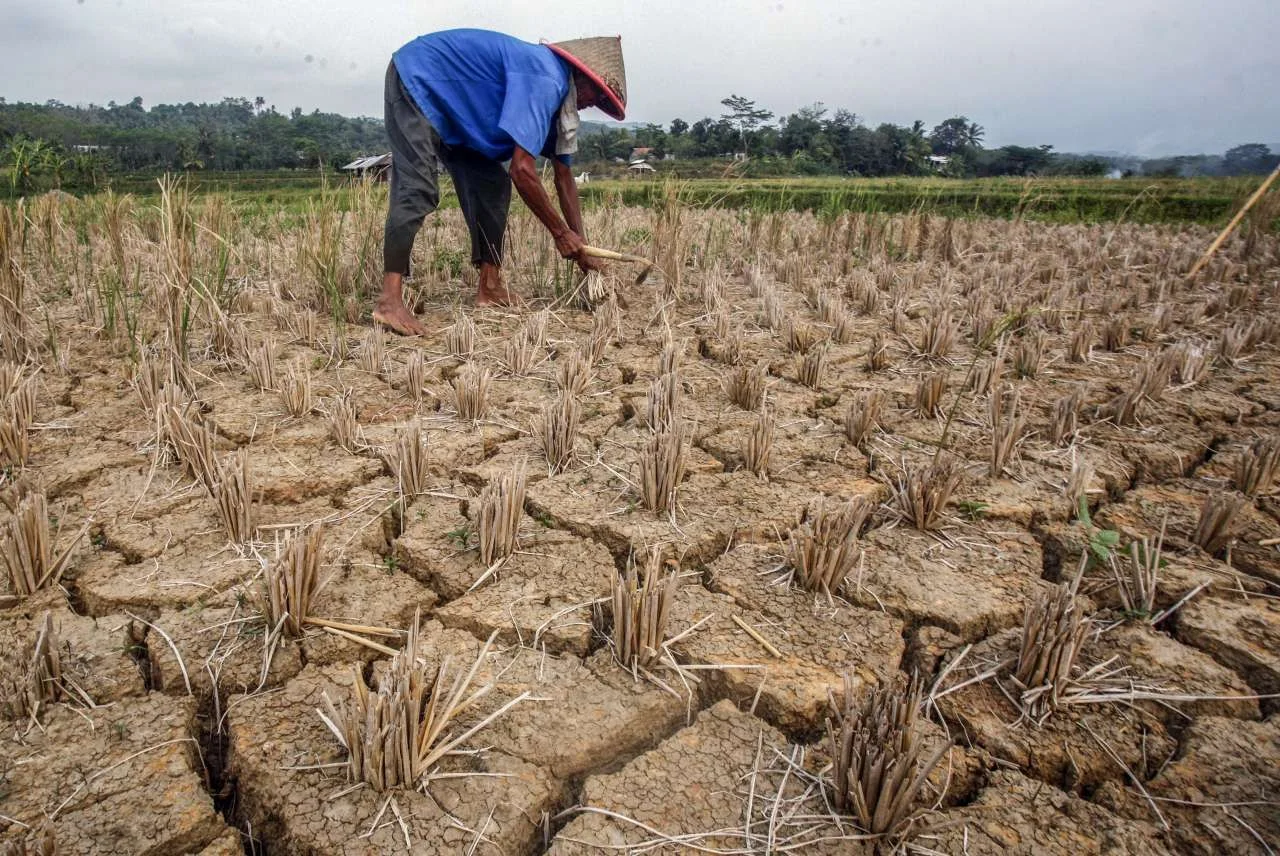
RRI.CO.ID, Jakarta – A lawmaker from the Indonesian House of Representatives’ Commission IV, Firman Soebagyo, has urged the government to take preventive measures to safeguard national food stocks, citing the risk of a prolonged drought in 2026.
Firman highlighted the government’s plan to increase national rice reserves but warned that rice has a limited shelf life. “Rice cannot be stored in warehouses for too long. Within three to four months, its quality can deteriorate and risk spoiling,” he said during a press conference in Jakarta on Monday, April 13, 2026.
He argued that the policy of holding rice stocks as a precaution against a potential El Niño should be reevaluated.
“If stocks are not managed properly and spoilage occurs, the state-owned food logistics company BULOG will bear the losses. This requires joint attention from both the government and BULOG,” Firman added.
As a precaution, he encouraged the development of gogo rice cultivation, which is suitable for planting during the dry season. A pilot program for gogo rice has already been developed by the Bogor Agricultural Institute in Pati Regency, Central Java.
Meanwhile, amid predictions of an earlier-than-usual dry season, the agricultural sector in Majalengka Regency has recorded positive performance in early 2026.
Data from the Majalengka Food Security, Agriculture, and Fisheries Agency (DKP3) show that the total harvested area from January to March reached 31,253 hectares, producing 204,261 tons of grain. This achievement is considered a crucial asset for regional food security amid potential climate pressures.
Majalengka DKP3 Head Gatot Sulaeman explained that some farmers are still harvesting the First Planting Season (MT I) due to uneven rainfall distribution. Several areas, including Jatitujuh, Ligung, and parts of Kertajati Subdistrict, faced irrigation water constraints that pushed back planting schedules.
“To anticipate the dry season, which is expected to arrive earlier, farmers are urged to immediately begin planting for the Second Planting Season (MT II) once the MT I harvest is complete,” Gatot said on Saturday, April 11. (Gusti Panji/Lasti Martina)
News Recomendation
Loading latest news.....