



Ministries Collaborate to Link Vocational Education with Creative Economy
- 09 Apr 2026 18:28 WIB
- Voice of Indonesia
Key Points
- The Ministries of Creative Economy and Elementary and Secondary Education discussed developing creative economy teaching materials for vocational schools.
- The collaboration includes scholarships, internships, and pilot projects in creative sectors such as games, animation, music, and culinary arts.
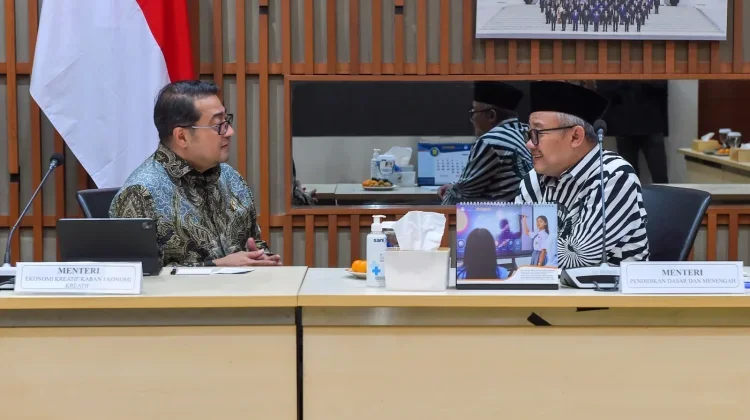
RRI.CO.ID, Jakarta - Indonesian Creative Economy Minister Teuku Riefky Harsya met with Elementary and Secondary Education Minister Abdul Mu’ti at the ministry’s office in Jakarta on Wednesday, April 8, 2026.
The two discussed vocational education and creative economy development, following up on a Memorandum of Understanding signed in November 2025.
The Creative Economy Ministry views the sector as a concrete solution for absorbing young workers. “Currently, the creative economy’s targeted workforce of 25.5 million has already reached 27.4 million,” Minister Riefky said in a press release received Thursday, April 9, 2026.
He noted that most of this workforce consists of young people who are adaptable to technological developments and creativity. This, he said, creates significant opportunities to reduce unemployment by strengthening educators' competencies in creative industry-based fields.
Minister Riefky added that collaboration with the Ministry of Elementary and Secondary Education is key to building a talent ecosystem starting from vocational schools. Potential initiatives include developing creative economy teaching materials for vocational high schools (SMK) and implementing scholarship programs to accelerate the development of outstanding talent.
Meanwhile, Minister Abdul Mu’ti hopes that follow-up initiatives will be implemented in the upcoming academic year. “The next challenge is how students’ creative products can be marketed widely and have economic value, which requires proper marketing,” he said.
Both ministries also agreed to synergize scholarship and internship programs, including opening access to international collaboration opportunities for students. In addition, pilot projects in culinary arts, games, applications, music, and animation are considered in line with vocational education. (Misni PArnjiati/Lasti Martina)
News Recomendation
Loading latest news.....