



Cross-Agency Preparedness Key to Prevent Wildfire Risks: Lawmaker
- 01 Apr 2026 09:31 WIB
- Voice of Indonesia
Key Points
- House Commission IV lawmaker Rajiv Singh stressed that coordination between the Ministry of Forestry and local administrations in wildfire-prone areas must be strengthened.
- Several regions in Indonesia, including Riau Province, have begun to experience an increase in hotspots in recent weeks.
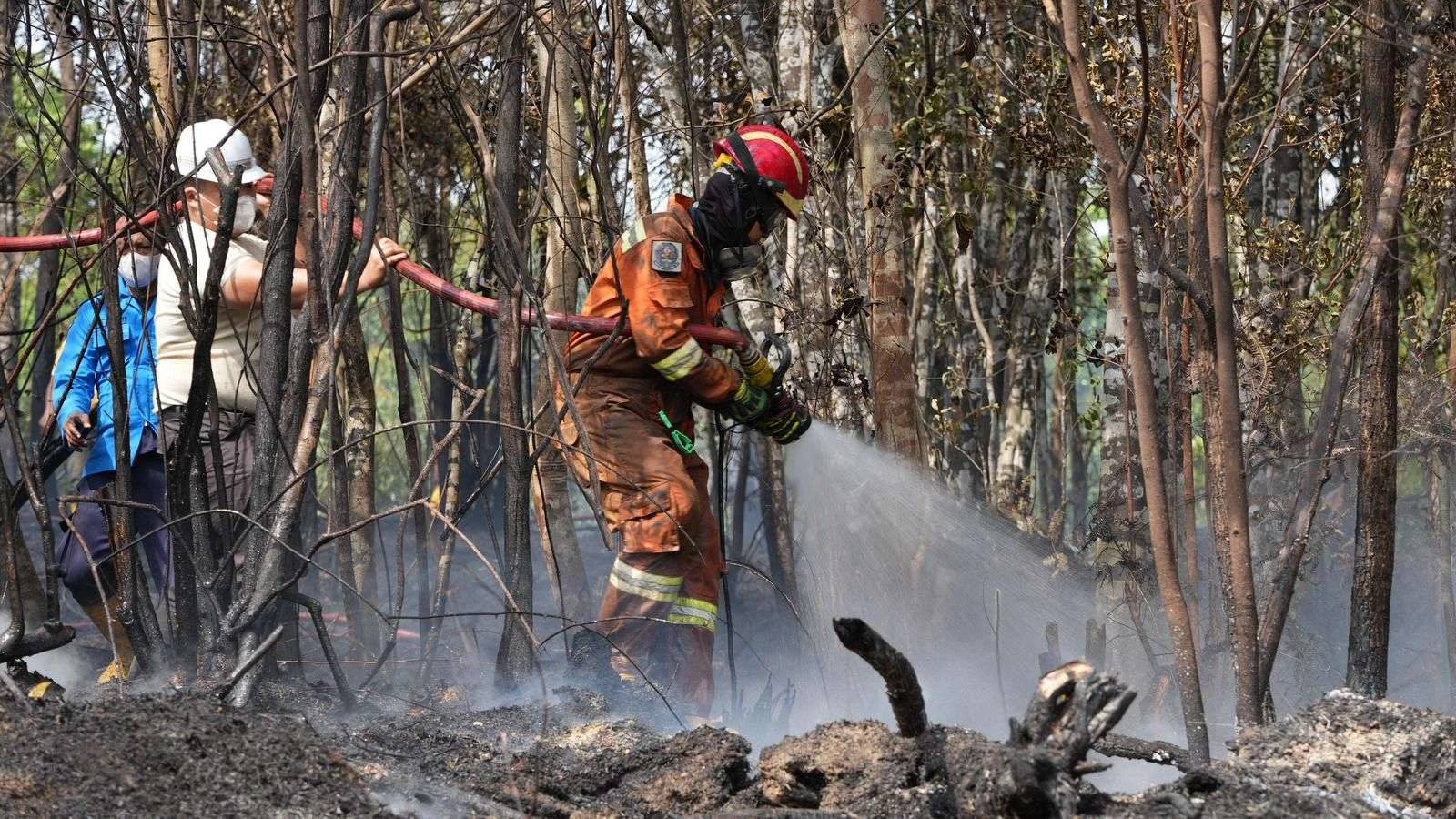
RRI.CO.ID, Jakarta - Indonesia’s Meteorology, Climatology and Geophysics Agency (BMKG) has forecast that the 2026 dry season will arrive gradually between April and June, with drier conditions expected across several regions, particularly central and southern Sumatra, Kalimantan, and parts of Sulawesi.
House of Representatives Commission IV lawmaker Rajiv Singh urged the Ministry of Forestry to strengthen coordination with local administrations in areas prone to forest and land fires as an anticipatory measure ahead of the prolonged dry season.
“Coordination with vulnerable regions must be reinforced. Preparedness activities such as drills and jamborees are already in place, but they need to be followed by concrete readiness on the ground,” Rajiv said in Jakarta on Tuesday, March 31, 2026, as quoted by Antara.
He noted that several regions have begun to show early signs of rising hotspots, including Riau Province, where hotspots have spread to other provinces in recent weeks. BMKG data recorded Riau as having the highest number of hotspots in Sumatra between January 1 and March 25, with 302 out of a total 582.
According to the National Disaster Mitigation Agency (BNPB), forest and land fires in Riau covered 2,713.26 hectares between January 1 and March 24. “Hotspots have already appeared in Riau. This should serve as an early warning, especially as we face a dry season predicted to be longer and drier,” Rajiv said.
He emphasized that the combination of an early, prolonged, and dry season poses serious risks. “BMKG data must serve as a serious alarm for all of us. We cannot afford to be caught off guard as in previous years,” he added.
Rajiv pointed out that forest and land fires are not driven solely by weather conditions. Land clearing by burning remains a major contributor. Each dry season, the number of hotspots tends to rise significantly, with concentrations in Sumatra and Kalimantan.
He called for stronger measures, including early hotspot detection, integrated patrols in vulnerable areas, readiness of firefighting equipment, and sustainable peatland management. “If fires are detected early, they are far easier and less costly to contain than when flames have already spread,” he said.
Rajiv warned that without early anticipation, the situation could escalate into large-scale fires that are difficult to control. He also stressed the importance of close cooperation between the government and law enforcement agencies, including the police and the Attorney General’s Office, to address cases of deliberate burning.
“Law enforcement must be firm and uncompromising. If enforcement is weak, violations will continue. This must be taken seriously,” he said.
He added that public education is equally important in fire-prone areas to discourage land clearing by burning. “Communities must be given understanding and safer, environmentally friendly alternatives. A persuasive approach is needed, not only law enforcement,” Rajiv said.
He further noted that the impact of forest and land fires extends beyond administrative boundaries, with haze spreading to other regions and even neighboring countries, creating cross-border challenges. “Forest and land fires are not just a local issue but a regional one. The government must strengthen regional cooperation, including sharing technology and information on fire mitigation,” he said. ***
News Recomendation
Loading latest news.....