



Parents Welcome New Social Media Restrictions for Children
- 29 Mar 2026 10:17 WIB
- Voice of Indonesia
Key Points
- The Indonesian government has introduced the Child Protection in Electronic System Governance Regulation (PP Tunas), requiring digital platforms to block harmful content and restrict social media access for users under the age of 16.
- Parents expressed approval of the new regulation limiting social media access for children under 16, citing concerns about addiction, mental health, and reduced social interaction.
- High-risk platforms like TikTok and YouTube face severe administrative sanctions or access termination if they fail to protect children’s privacy and data security.
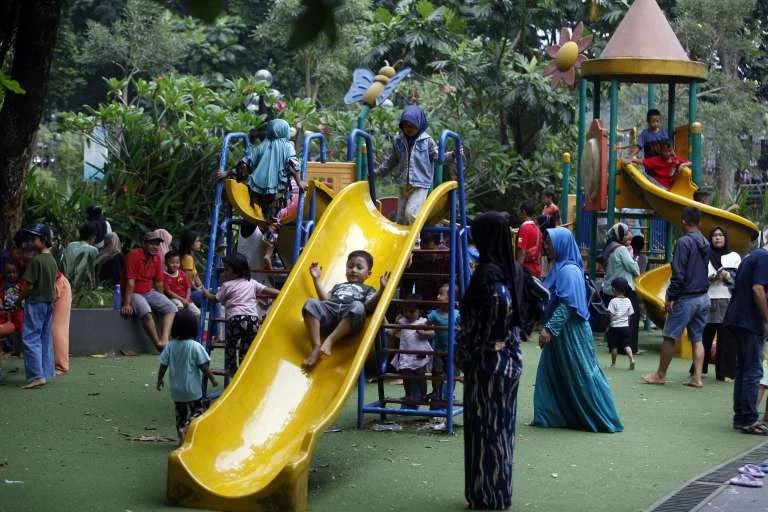
RRI.CO.ID, Jakarta - For many Indonesian parents, the newly enforced restrictions on children’s access to social media are more than just a government regulation; they are seen as a safeguard for family life in an era of digital overload.
The government officially implemented Government Regulation No. 17/2025 on Child Protection in Electronic System Governance, known as PP Tunas, on Saturday, March 28, 2026. The rule requires digital platforms to block harmful content and limit social media access for users under 16.
Aisyah, a 54-year-old mother from Bogor, expressed her approval in Jakarta on Sunday, March 29. She noted how social media has reshaped the habits of young people around her.
“Restricting access will help children learn,” she said, as quoted by Antara, likening social media to a knife: useful in the hands of a skilled chef, but dangerous if misused.
She acknowledged the transition may feel awkward at first but believes children will adapt. “Eventually they’ll realize there are activities more exciting than social media,” she added.
For Aisyah, the greatest challenge in raising children today comes from the flood of uncontrolled information -- whether through social media or artificial intelligence -- especially when genuine family communication is lacking.
Aisyah also practices her own household rules: no app downloads without parental permission, limited screen time, and no gadgets during family meals.
Deni, a 31-year-old father from South Tangerang, echoed similar concerns. He supports the restrictions to encourage children to socialize rather than retreat into their own digital worlds. “Like the 90s generation, they’ll interact more,” he said.
He recalled seeing a friend’s child cry uncontrollably when a gadget was taken away, a sign of unhealthy dependence.
Deni limits his own child’s screen time to 30-45 minutes daily and keeps the device away at night. He believes PP Tunas is timely, preventing children from becoming either overly dependent or left behind in technology.
Minister of Communication and Digital Affairs Meutya Hafid emphasized the urgency of PP Tunas, citing the need to protect children’s privacy and data in the digital space.
Similarly, Director of Vulnerable Group Health Services at the Ministry of Health, Imran Pambudi, warned of rising risks: addictive behaviors, sleep disorders, and mental health issues linked to excessive social media use.
The regulation is backed by Ministerial Regulation No. 9/2026, which outlines sanctions for non-compliant platforms, ranging from administrative warnings to temporary or permanent access termination. Initially, the restrictions apply to eight major platforms: YouTube, TikTok, Facebook, Threads, Instagram, X, Bigo Live, and Roblox.
While parents welcome the move, they also stress the importance of monitoring its implementation. Aisyah noted that, like any regulation, PP Tunas must be enforced carefully to achieve its intended results.
The broader challenge lies in striking a balance: protecting children from harmful digital exposure while ensuring they still benefit from technology in constructive ways.
For families, the regulation is not just about limiting access; it is also about reclaiming space for genuine interaction and guiding children toward healthier habits in a digital age. ***
News Recomendation
Loading latest news.....