



Indonesia’s Food Security Unaffected by Middle East Conflict, Minister Says
- 28 Mar 2026 16:09 WIB
- Voice of Indonesia
Key Points
- Coordinating Minister for Food Affairs Zulkifli Hasan confirmed that Indonesia’s food security remains secure despite the conflict in the Middle East.
- The government emphasized that the global conflict will not affect food availability in Indonesia.
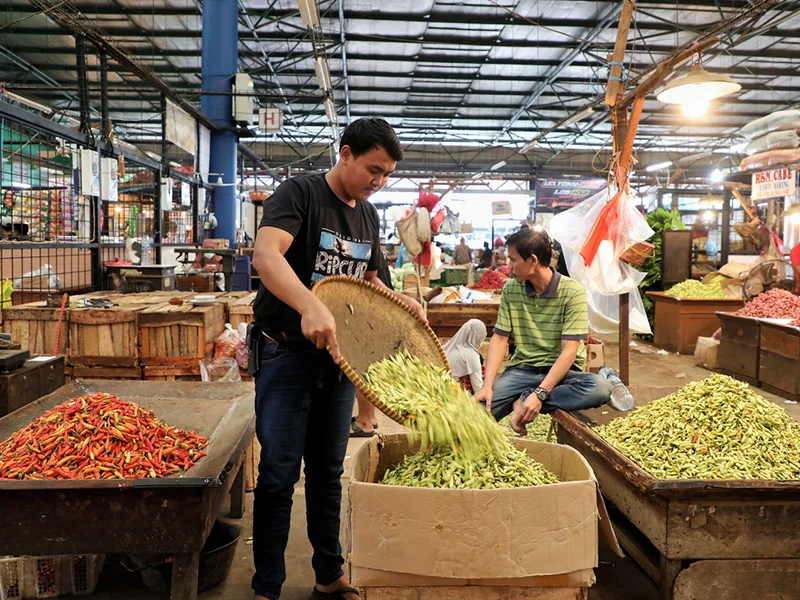
RRI.CO.ID, Jakarta - Coordinating Minister for Food Affairs Zulkifli Hasan (Zulhas) confirmed that Indonesia’s food security remains secure despite the conflict in the Middle East. The government stressed that Indonesia does not rely on food imports from the region.
Minister Zulhas said Indonesia’s main food commodities are sourced domestically and from other regions, such as Europe and the Americas, rather than the Middle East.
“No food depends on the Middle East. Wheat and soybeans come from Europe and America. So, no food depends on the Middle East,” Minister Zulhas said after reviewing staple food prices in Jakarta on Saturday, March 28, 2026.
He emphasized that the public need not worry about the impact of the global conflict on food availability. The government ensures that national food stocks and procurement remain secure and under control, while urging the public to avoid excessive purchasing.
The minister added that the government’s food self-sufficiency policy has been key to maintaining national food independence. Last year, Indonesia produced a surplus of around 4 million tons of rice, and a similar surplus is expected again this year.
“God willing, if we have rice supply this year and next year, we will be secure. We have sufficient corn, chicken, and eggs, and we grow our own vegetables,” he said.
During his visit to Pasar Minggu, Minister Zulhas also received complaints from traders about rising plastic prices. Gemi, a 58-year-old trader, said prices had increased significantly since Eid, reaching around IDR 6,000 per package.
In response, Minister Zulhas acknowledged that plastic prices had risen in almost all regions. He explained that the increase was due to higher prices of plastic pellets, which are derived from petroleum. The government plans to invite relevant parties to discuss the causes of the increase and find solutions to ease the burden on traders. (Misni Parjiati/Lasti Martina)
News Recomendation
Loading latest news.....