



Agriculture Ministry Promotes Water-Saving Irrigation to Boost Rice Resilience
- 27 Mar 2026 15:39 WIB
- Voice of Indonesia
Key Points
- The Indonesian Agriculture Ministry suggested that farmers adopt the Alternate Wetting and Drying (AWD) method or intermittent irrigation to deal with the dry season.
- This technology can save 17–20% of irrigation water.
- The technical application of AWD relies on monitoring soil moisture levels rather than visual flooding.
RRI.CO.ID, Jakarta - The Indonesian Agriculture Ministry is intensifying the adoption of efficient paddy field water management to mitigate the impact of the dry season. Central to this strategy is the "Alternate Wetting and Drying" (AWD) method, a calibrated irrigation technique designed to maintain productivity while significantly reducing water consumption.
Unlike traditional continuous flooding, the AWD method employs a measured irrigation cycle where fields are not constantly submerged. Implementation of this technology has proven capable of saving between 17% and 20% of irrigation water without compromising rice yields.
As water availability becomes increasingly scarce due to climate shifts, this efficiency has become a cornerstone of the national agricultural adaptation strategy.
Agriculture Minister, Andi Amran Sulaiman, emphasized that precise water management is the deciding factor in securing food production amid drought threats. "Water management is a crucial factor in the success of agricultural production. Planned and efficient water availability is vital in minimizing drought risks," remarked the Minister in an official release on Friday, March 27, 2026.
Echoing this sentiment, the Head of the Agricultural Research and Development Agency, Fadjry Djufry, noted that AWD offers a practical solution to water limitations. Developed by the International Rice Research Institute (IRRI) in 2009 and adapted by the Ministry since 2013, the technology has undergone rigorous testing.
"Based on results from six planting seasons, the AWD technique can suppress or even prevent water scarcity in paddy fields. This technology can save 17–20% of irrigation water," explained Fadjry.
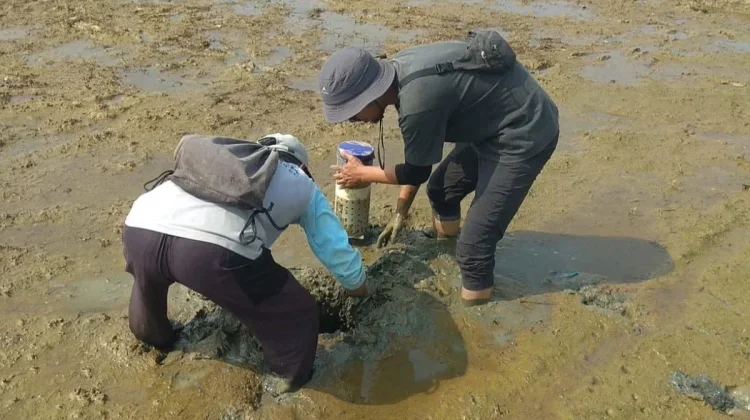
The technical application of AWD relies on monitoring soil moisture levels rather than visual flooding. An analyst at the Agricultural Environment Research Center (BRMP), Ali Pramono, explained that farmers use a simple perforated pipe, acting as a basic piezometer, submerged in the field to measure the groundwater table.
Irrigation is only reintroduced when the water level inside the pipe drops approximately 10 to 15 centimeters below the soil surface. Beyond water conservation, this intermittent drying improves root health and soil structure.
Furthermore, the method serves as a dual-purpose tool for "climate-smart agriculture" by significantly lowering greenhouse gas emissions from submerged fields. "AWD is not merely an irrigation technique; it is a mitigation strategy that strengthens the resilience of the rice production system," added Ali. (Annaila Azzahra/Bambang MBKA)
News Recomendation
Loading latest news.....