



BRIN: Over 80 Percent in West Java, Bangka Belitung Rate MBG Positively
- 05 Mar 2026 11:14 WIB
- Voice of Indonesia
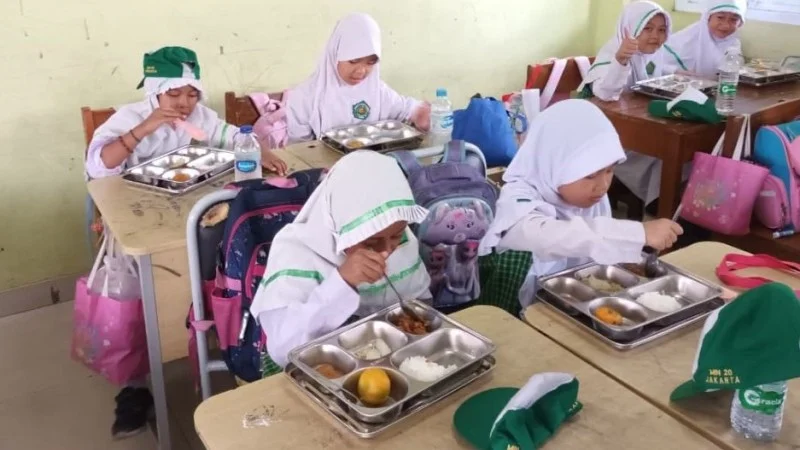
RRI.CO.ID, Jakarta - The National Research and Innovation Agency (BRIN) has found that the majority of people in West Java and Bangka Belitung hold a positive view of the government’s Free Nutritious Meals (MBG) program. The study, conducted throughout 2025, assessed the perceptions of beneficiaries which are students and parents as well as stakeholders regarding the implementation of the program.
Head of the MBG Research Team at BRIN’s Center for Industrial, Services, and Trade Economics Research, Iwan Hermawan, stated that more than 80 percent of respondents in both West Java and Bangka Belitung rated the MBG program positively.
“From the perspective of students and parents, approximately 80-90 percent in West Java and around 80 percent in Bangka Belitung consider the MBG program to be very good or good. Stakeholders demonstrate a similar pattern, although the figures in West Java are slightly lower,” Iwan Hermawan said.
He stated while presenting the findings of the research on the impact and effectiveness of the Free Nutritious Meals program at a seminar and press conference held at the BJ Habibie Building in Jakarta on Wednesday, March 4, 2026.
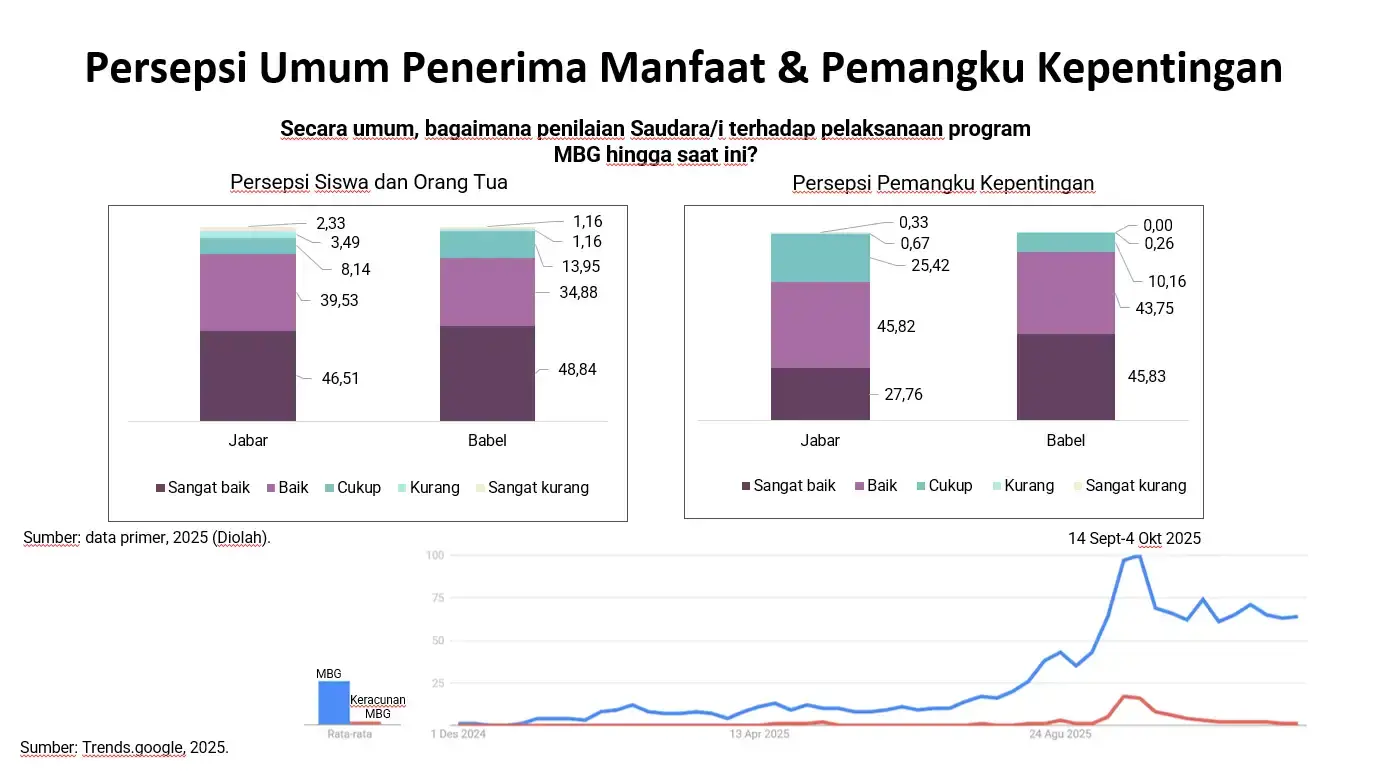
As quoted by BRIN’s official website, in West Java 46.51 percent of beneficiaries and 27.76 percent of stakeholders rated the program as very good, while 39.53 percent of beneficiaries and 45.82 percent of stakeholders assessed it as good.
Meanwhile, in Bangka Belitung 48.84 percent of beneficiaries and 45.83 percent of stakeholders rated the program as very good, while 34.88 percent of beneficiaries and 43.75 percent of stakeholders described it as good.
With regard to implementation, Iwan Hermawan noted that public perception generally indicates that the MBG program has been effective. Based on an Importance-Performance analysis, the program’s performance has approached, and in some cases met, the expectations of beneficiaries, with only a minimal gap between performance and expectations.
He further noted that food quality has emerged as one of the program’s principal strengths. Nevertheless, some beneficiaries have indicated that the portion sizes could be improved. “Many beneficiaries also feel that the portions remain insufficient,” he said.
From an operational standpoint, the program has been considered effective by both beneficiaries and stakeholders, with sound governance and clearly defined service standards serving as key factors supporting its implementation.
Besides, Iwan stated that strengthening the MBG program should include the development of a national dashboard based on output and outcome indicators to monitor nutrition standards, food safety, distribution, and governance performance in real time and in a transparent manner.
“The quality assurance system must also be strengthened through risk-based supervision and an independent quality assurance function to maintain the consistency of national service standards. Furthermore, enhanced coordination between the central and regional governments will be crucial to ensure the sustainability and consistency of the program’s implementation,” Iwan said.
News Recomendation
Loading latest news.....