



Yusril Advocates Party Mergers After Elections to Strengthen Political Unity
- 04 Mar 2026 09:25 WIB
- Voice of Indonesia
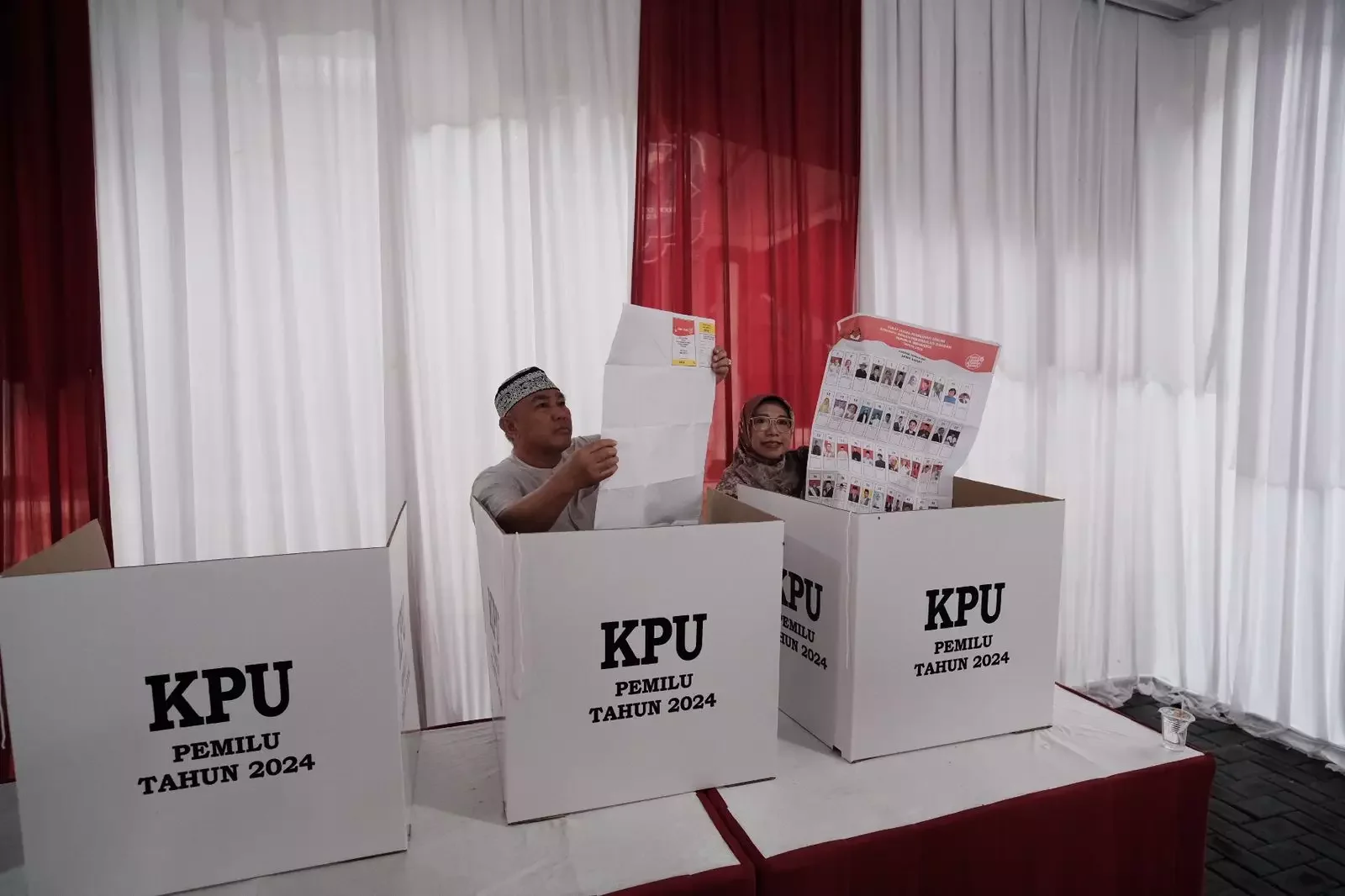
RRI.CO.ID, Jakarta - Coordinating Minister for Law, Human Rights, Immigration, and Corrections Yusril Ihza Mahendra has proposed a post-election merger mechanism that could reshape how political power is consolidated in parliament. Indonesia’s crowded party system may soon face a fundamental redesign.
Rather than merging before elections, a move he argues is politically risky and mathematically uncertain, Minister Yusril suggests parties should be allowed to merge after the final vote count. The goal: prevent wasted votes and gradually streamline Indonesia’s fragmented party landscape.
“I think the most practical way to implement this is if the merger is done at the end of the election. If it’s done at the beginning, we cannot calculate how many seats we will win,” Minister Yusril said in Jakarta on Tuesday, March 3, 2026, as quoted on the ministry's official website.
Under Indonesia’s current electoral system, parties that fail to meet the parliamentary threshold risk losing representation entirely, even if they secure significant national support. This has long been criticized as a source of “wasted votes” -- ballots that do not translate into seats in the House of Representatives.
Minister Yusril’s proposal would allow smaller parties that fall short of faction requirements to merge after the results are finalized. By combining their seats, they could meet the minimum threshold required to form a parliamentary faction.
For example, if two parties each secure seven seats, they could merge and collectively hold 14 seats, and that is enough to establish a formal faction in the House. “Instead of losing their seats, they merge. If they reach the required number, they can form a faction and enter the House,” he explained.
Beyond saving votes, Minister Yusril frames the idea as a long-term structural solution to Indonesia’s highly fragmented multiparty system. Since the Reform era, parliament has often consisted of numerous parties with relatively small seat shares, complicating coalition building and governance.
By allowing post-election mergers, smaller or non-parliamentary parties would be incentivized to consolidate organically, based on actual voter support rather than pre-election negotiations.
He argues that this mechanism could gradually encourage party simplification -- not through coercive thresholds alone, but through strategic alliances formed after the electorate has spoken. “I don’t think any party votes will be lost," MInister Yusril said.
He also suggested that merged smaller parties could emerge as formidable political blocs, potentially rivaling or even surpassing established major parties in vote share.
Under the proposed model, seat allocation would still be calculated based on national valid votes, as in the current electoral system. The merger would take place at the faction formation stage, not during the initial vote tabulation process. This distinction is crucial: it preserves electoral integrity while allowing political consolidation afterward.
If adopted, the proposal would mark one of the most significant changes to Indonesia’s electoral mechanics. Supporters may see it as a pragmatic fix to prevent democratic waste and strengthen governance. Critics, however, may question how ideological coherence would be maintained in post-election mergers driven primarily by seat arithmetic.
What is clear is that the idea goes beyond procedural adjustment. It signals a broader conversation about the future design of Indonesia’s democracy. ***
News Recomendation
Loading latest news.....