
Children’s Internet Future Depends on Parents’ Role: Govt
- 14 Feb 2026 19:09 WIB
- Voice of Indonesia
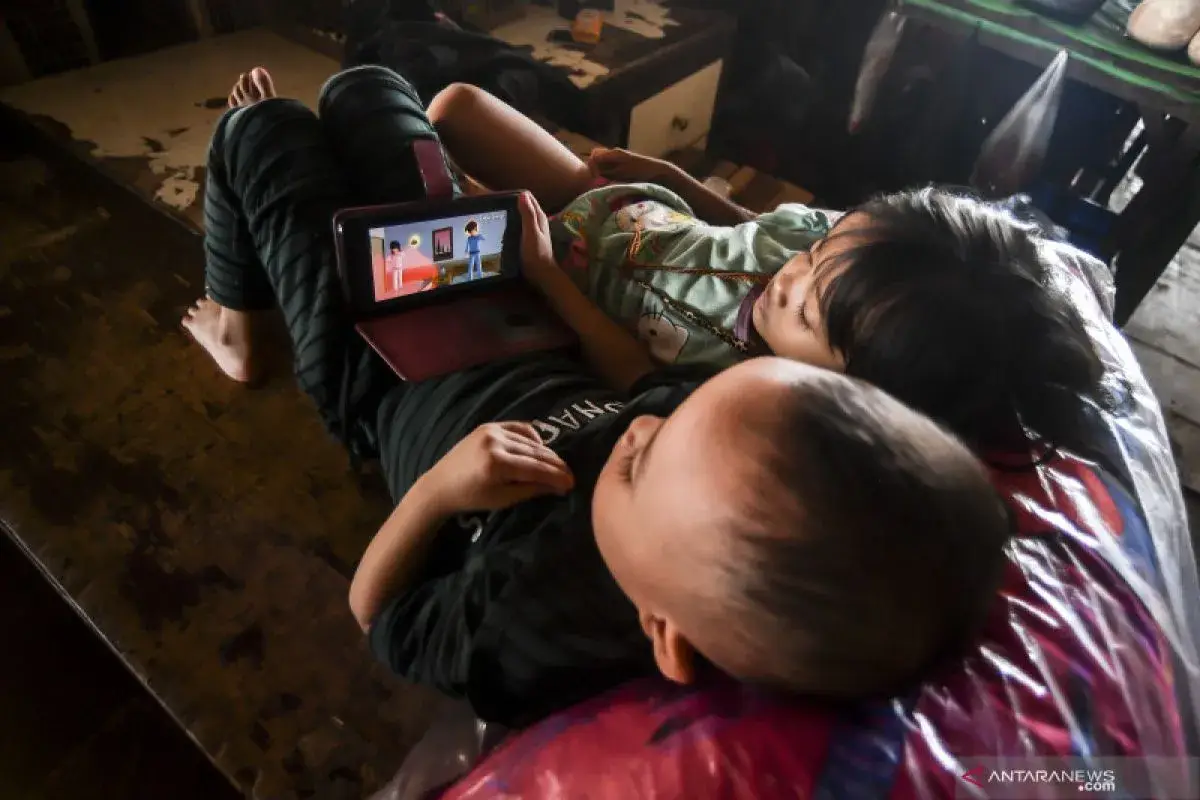
RRI.CO.ID, Jakarta – Families play a decisive role in shaping children’s internet use, with parental guidance more important than merely monitoring or restricting digital devices, a senior official has said.
Alexander Sabar, director general of digital space supervision at the Communications and Digital Affairs Ministry, said children’s online experiences depend heavily on the role of their families.
“The future of our children’s internet use is largely determined by the role of families. Data from the Indonesian Internet Service Providers Association (APJII) in 2025 show that 87.8 percent of Generation Z and 79.73 percent of Generation Alpha are connected to the internet,” Alexander said at the Futurefam Summit 2026 in Jakarta on Saturday, February 14, 2026.
He warned that the digital space poses serious risks to the physical and mental safety of children in Indonesia, including cyberbullying and non-contact sexual abuse.
A 2023 study conducted by ECPAT in collaboration with UNICEF and the Women’s Empowerment and Child Protection Ministry (PPPA) found that only around one-third of parents have adequate information about online safety, he said.
“This study shows how far behind many parents are,” Alexander added, noting that limited parental understanding of digital technology developments can endanger children’s safety.
The government has issued new regulations on child protection governance in the digital space. Under the latest legal provisions, digital platforms must be categorized based on their level of exposure to harmful content and the risk of personal data theft.
The education sector has also begun building a safe school culture to protect students from excessive gadget use. Effective implementation of child protection regulations requires collaboration between schools and parents, he said. “Child protection in the digital space requires collaboration. As the proverb says, it takes a village to raise a child,” Alexander said.
Indra Gunawan, acting deputy for special child protection at the PPPA Ministry, called for stronger joint commitments to protect children from online crimes. He said technological development must deliver positive impacts without neglecting child safety.
More than 4 percent of boys and girls in Indonesia have experienced non-contact sexual violence, he said, calling the figure a warning for all parties to tighten supervision of children’s use of digital communication devices.
“Parents also need to be digitally literate. That does not mean they must become technology experts, but they need to understand, supervise and continuously guide their children,” Indra said. ***
This article is adapted from an Indonesian-language report written by Eliana Zahra Devina and edited by Rini Hairani for RRI.
News Recomendation
Loading latest news.....