



Ministry Deploys 386 Digital Posts for 2026 Eid Exodus
- 13 Feb 2026 01:39 WIB
- Voice of Indonesia
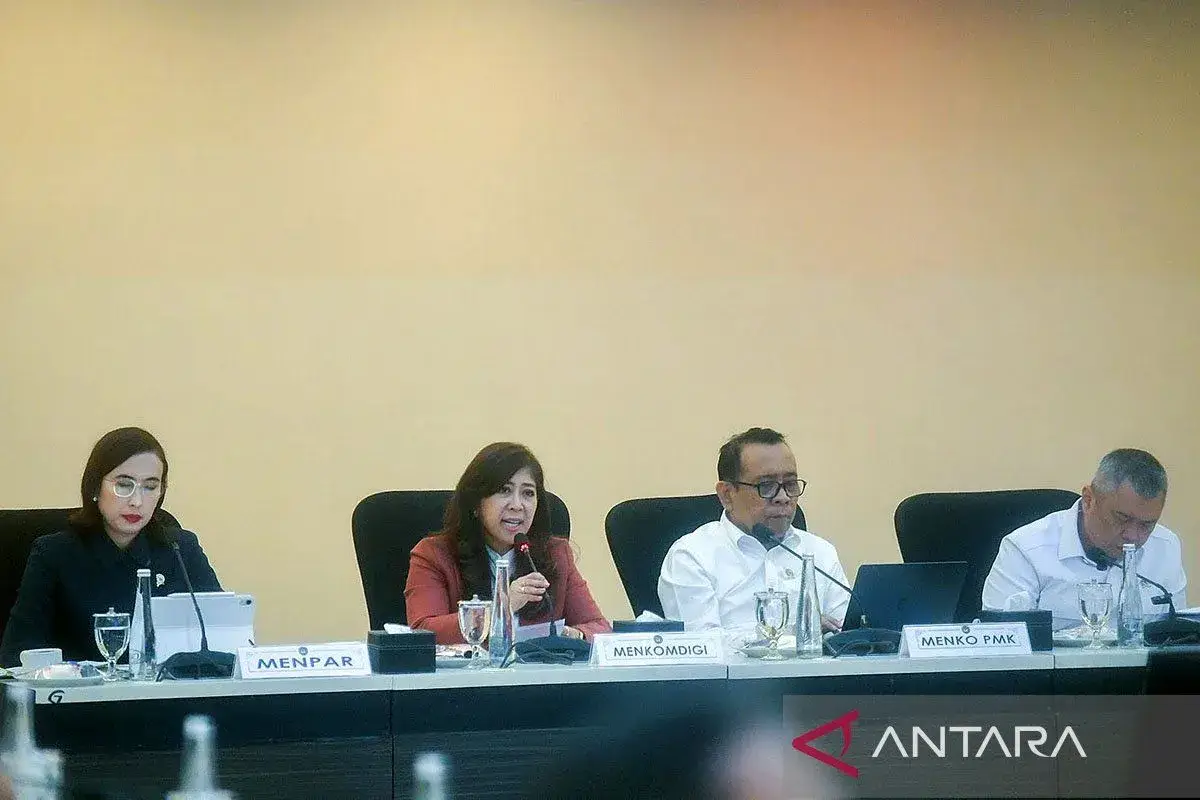
RRI.CO.ID, Jakarta - The Ministry of Communication and Digital Affairs has deployed 386 digital monitoring posts and an integrated surveillance system to safeguard network quality, transport safety, and digital transactions during the 2026 Ramadan and Eid al-Fitr exodus (mudik) period.
Communications and Digital Affairs Minister Meutya Hafid said telecommunications networks have become the backbone of public mobility during the annual exodus. Data traffic typically increases significantly along homecoming routes, transport hubs, tourist areas, places of worship, and residential zones during Ramadan and Eid.
“Digital infrastructure readiness must be integrated with transport preparedness and overall public safety,” Meutya said during a cross-ministerial coordination meeting at the Coordinating Ministry for Human Development and Cultural Affairs in Central Jakarta on Thursday, February 12, 2026, as quoted by Antara.
For the alert period from March 15 to 29, 2026, the ministry has prepared 386 posts across Indonesia. These consist of five main command posts, support from mobile operators and service outlets, and 35 Technical Implementation Units (UPT) in 35 provinces operating 24 hours a day to monitor service quality and potential network disruptions.
The ministry also operates an integrated monitoring dashboard that tracks real-time physical traffic density and cellular signal quality. The data will be coordinated across ministries and agencies to detect potential bottlenecks in both transport routes and digital communications.
Minister Meutya said that during the 2025–2026 Christmas and New Year holiday period, internet speeds averaged 80 Mbps for downloads and 35–36 Mbps for uploads. The figure shows a significant increase compared with the 2025 Eid holiday period, when average speeds were 44.75 Mbps for downloads and 24.43 Mbps for uploads.
“Our target is for the public to communicate smoothly, make video calls, access digital maps, and conduct online transactions without significant obstacles,” she said.
In addition to maintaining service quality, the ministry is strengthening supervision of the radio frequency spectrum to ensure the safety of air and rail transportation, including the Whoosh high-speed rail.
Minister Meutya said that during the recent year-end holiday period, a frequency interference incident that had the potential to disrupt operations was resolved within minutes through rapid field coordination.
To enhance public protection, the ministry has intensified cyber and spectrum patrols to anticipate fraud involving fake base transceiver stations (BTS), which often target areas with heavy traffic congestion. The scheme uses illegal transmitters disguised as official signals to send fraudulent messages to mobile phones.
“Fake BTS usually operate in a mobile manner, using box trucks equipped with transmitters and large batteries. They target dense areas, such as traffic-congestion points. The public must remain vigilant against suspicious messages claiming to be from official institutions,” Minister Meutya said.
The ministry has also ensured that the 112 emergency service remains active to provide the public with quick access to assistance. Network congestion risks will be mitigated through capacity optimization and traffic engineering in areas expected to experience the highest surge in data usage. ***
News Recomendation
Loading latest news.....