



House Commission VII Highlights Concerns Over Local Dairy Quality
- 05 Feb 2026 22:55 WIB
- Voice of Indonesia
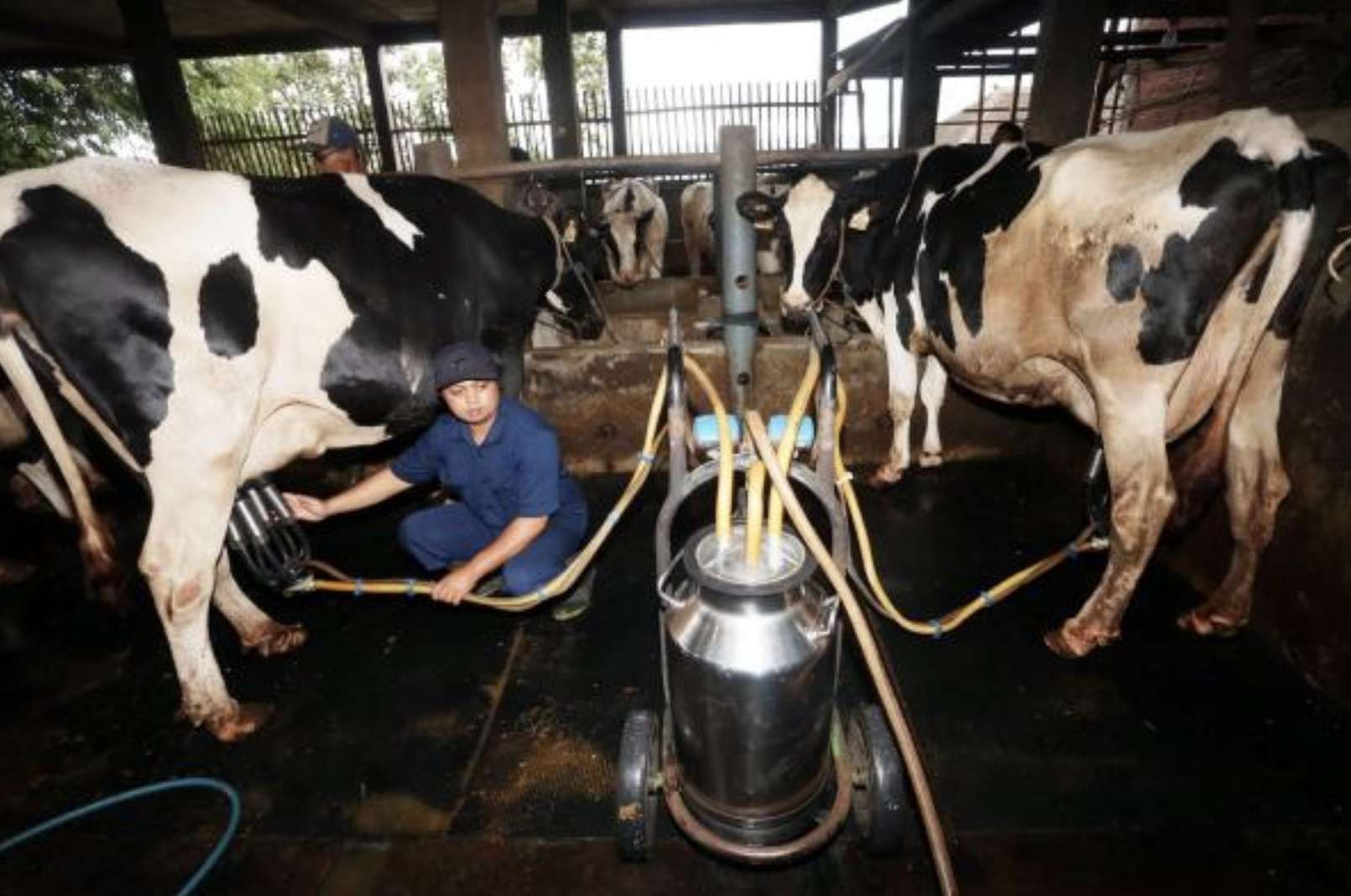
RRI.CO.ID, Bekasi - The Speaker of the House of Representatives’ Commission VII, Saleh Daulay, has raised concerns over the poor quality of locally produced milk, saying that it often fails to meet the standards required for large-scale processing.
He urged the government to immediately provide comprehensive technical guidance to local dairy farmers to ensure that domestic milk production can be fully absorbed by manufacturers.
“There is a lot of milk produced that turns out to be incompatible and does not meet the requirements of dairy companies. In this case, the Ministry of Industry needs to educate them so that they can become professional farmers,” Saleh said during a working visit to PT Frisian Flag Indonesia in Cikarang, Bekasi, West Java, on Thursday, February 5, 2026.
PT Frisian Flag Indonesia is one of Indonesia's largest dairy companies, producing well-known brands such as Frisian Flag, Friso, Susu Bendera, and Omela. It is a subsidiary of Royal FrieslandCampina, a Dutch-based cooperative and one of the world’s biggest dairy companies.
Saleh lamented that many Indonesian farmers are not yet able to work professionally as the industry expects. “This condition prevents them from meeting the requirements as expected by companies,” he said.
He added that this shortfall poses a significant obstacle to fulfilling national nutritional needs through the Free Nutritious Meals (MBG) program, stressing that improving the capacity of local farmers is a priority for parliamentary oversight.
Commission VII also highlighted the importance of farm location, noting that climate factors must be taken into account. Saleh explained that dairy cattle should not be raised in lowland areas, as highland conditions are more suitable for producing milk that meets industry standards.
He said these technical considerations should be included in government educational materials for farmers.
Saleh estimated that the current national demand for milk is approximately 66 million people, while domestic processing capacity can meet the needs of only about 20 million.
This leaves a 40 million shortfall between supply and demand. “This shortage must be addressed and pursued by the government,” he said.
Meanwhile, Acting Director General of Agro Industry at the Ministry of Industry, Putu Juli Ardika, said the government is working to improve the quality of domestic milk through technology and financial support.
He explained that the ministry is offering a 35 percent cashback incentive for the use of locally produced machinery and a 5 percent discount on bank interest rates to help improve liquidity for livestock farmers.
“From the government’s perspective, the first step is to maintain and improve the quality of milk produced by farmers and cooperatives. This improvement is necessary so that the milk meets the specifications for further processing in the industry,” Putu said. (Gusti Panji/Lasti Martina)
News Recomendation
Loading latest news.....