



Ministry Backs Conservation of Indonesia’s Endemic Warty Pigs
- 03 Feb 2026 08:04 WIB
- Voice of Indonesia
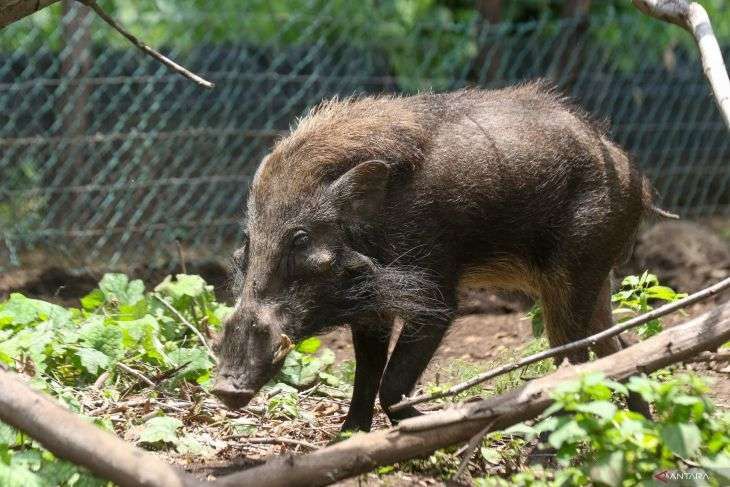
RRI.CO.ID, Pasuruan - The Indonesian Ministry of Forestry has pledged support for the conservation of two endemic species facing critical population declines: the Javan warty pig (Sus verrucosus) and the Bawean warty pig (Sus blouchi). Both species, unique to Indonesia, are struggling with severe habitat loss and a growing reputation as agricultural pests.
Ahmad Munawir, Director of Species and Genetic Conservation at the ministry’s Directorate General of Natural Resources and Ecosystem Conservation (DG KSDAE), said the government is ready to act as a facilitator to ensure the survival of these animals.
Speaking in Pasuruan, East Java, on Monday, February 2, 2026, he explained that the initiative aligns with Indonesia’s commitment to the Kunming-Montreal Global Biodiversity Framework (KMGBF), which aims to halt and reverse biodiversity loss by 2030.
The ministry plans to consolidate scientific research and localized solutions into a formal Conservation Strategy and Action Plan (SRAK). This effort is being developed in collaboration with the Wild Pig Specialist Group (WPSG) under the International Union for Conservation of Nature (IUCN) and the Indonesian Zoo and Aquarium Association (PKBSI).
One of the main challenges in conserving these species is their lack of “charisma” compared to more iconic animals such as tigers, coupled with their history of conflict with humans. Dr. Johanna Rode-White, Chair of the WPSG, noted that wild pigs are often perceived as pests because of their tendency to damage farmland.
“Wildlife conservation activities that have the potential to cause conflict with humans are not easy to undertake,” she said, as quoted by Antara. Rode-White stressed that despite their unpopularity, it remains a collective responsibility to preserve them as part of a balanced ecosystem.
The ultimate goal of the current framework is to elevate the legal status of both the Javan and Bawean warty pigs to officially protected species. By establishing a long-term program, stakeholders hope to stabilize their populations and reduce the conflicts that have led to their persecution by local communities. ***
News Recomendation
Loading latest news.....