



Prof. Henry Indraguna: The Importance of Intellectual Appreciation for Future of Education
- 31 Jan 2026 09:37 WIB
- Voice of Indonesia
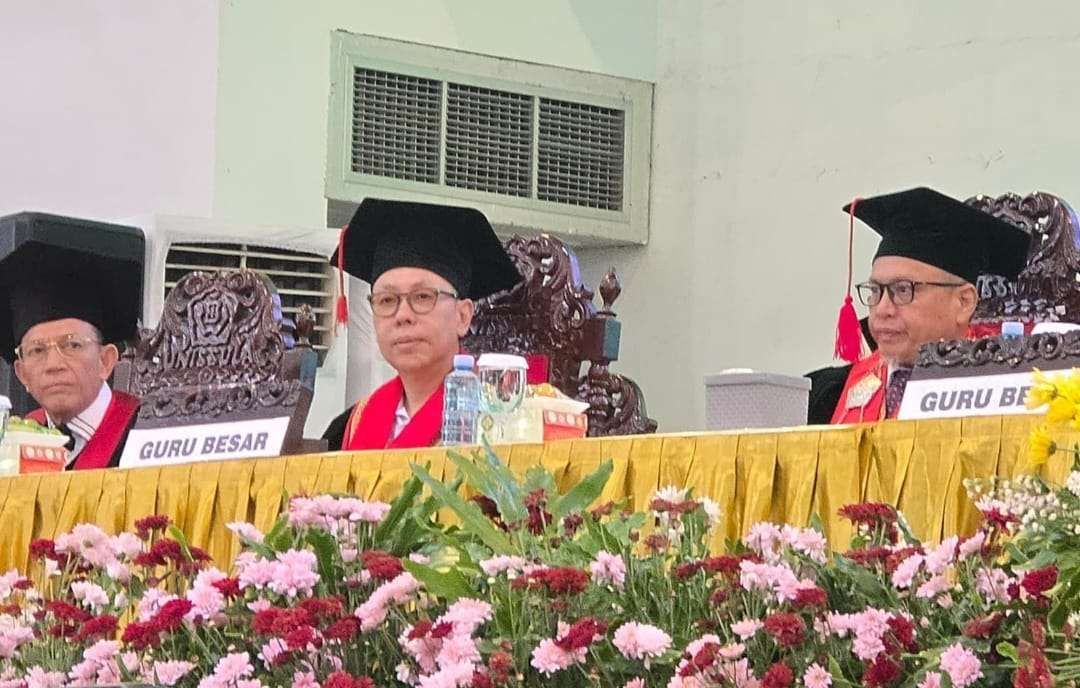
RRI.CO.ID, Jakarta- Indonesia has recorded a huge progress in the World Class University (WCU) rankings amid increasingly fierce competition in higher education. By 2025, it significantly increased which was marked by several leading universities reaching the QS World University Rankings.
Senior and renowned universities such as University of Indonesia (UI), Gajah Mada University (UGM) and Bandung Institute of Technology (ITB) have broken into the top 300 worldwide. UI reached 206th place, UGM 239th, and ITB 256th, supported by improvements in academic reputation and research.
The data was greatly appreciated by Professor of Sultan Agung University Semarang, Prof. Dr, Dr, Henry Indraguna, S.H., M.H. He stated that the Ministry of Higher Education, Science, and Technology deserves credit for this achievement. While, the Ministry of Higher Education, Science, and Technology noted that the ranking of Indonesian universities increased by 46 percent in 2025.
“In my point of view, to maintain this achievement, the government must continuously encourage collaboration between universities to foster research and international reputation,” Prof. Henry, who is also known as a legal expert, stated.
In an official statement received by RRI VOI on Friday, 30 January 2026, the improvement in WCU rankings, Prof. Henry conveyed, must certainly be grateful for, even though it will be faced with the challenge of a silent phenomenon in the Indonesian academic sector, in which many lecturers do not feel at home on their own campuses.
“Many lecturers spend more time and activities outside the campus, some as project consultants, speakers, or even engaged in business. What is even more ironic is that some have to resort to driving ride-hailing services due to economic necessity and the lack of opportunities that adequately recognize their intellectual contributions,” Prof. Henry said.
The Doctor of Law from Surakarta State University and Borobudur University of Jakarta also underscored that campuses should be comfortable homes for intellectuals, places where ideas flourish and creativity and innovation are born. They should not be rigid administrative spaces, even campuses must make breakthroughs in intellectual work.
“What is happening now is that lecturers are more often faced with piles of reports, teaching loads that are actually unproductive, and a work atmosphere that is more bureaucratic than academic. As a result, many lecturers feel that they are not growing in an institution that should be a fertile ground for knowledge,” Prof. Henry firmly said.
He mentioned that the many efforts made by universities to achieve world-class status should not result in campuses focusing solely on grandiose infrastructure, international accreditation, and reputable publications. “Ironically, lecturers and researchers, who are one of the important factors in the growth of universities, are often overlooked. Without lecturers who feel appreciated and emotionally involved, the vision of a world-class university will only become an empty slogan,” he said.
Furthermore, Prof. Henry provided input on how to make lecturers feel comfortable and happy in the campus environment. “The campus must be a healthy and inspiring work environment. Comfortable lecturer rooms, a digital library with broad access, and adequate research laboratories are basic requirements that must be met. In addition, an intellectual atmosphere that encourages lecturers to continue learning and engaging in dialogue must also be created in harmony,” he explained.
Hendri also encourages that visionary leaders are needed at the academic level. He also emphasizes the importance of special treatment by giving humane rewards or awards and fair welfare.
"Decent remuneration is indeed important. However, non-financial rewards, such as scientific recognition, opportunities for further study, scholarships, or participation in international conferences are also equally meaningful. Sometimes lecturers want to be appreciated not only for their output, but also for their dedication, loyalty, and devotion to science.
Moreover, Prof. Henry also mentioned that lecturers must be given the opportunity to develop. “An academic career requires space for experimentation, research, and collaboration. In many developed countries, sabbatical leave programs are an important means of academic refreshment,” Prof. Henry stated.
In Indonesia, the policy is still rare, although it has significant benefits for productivity and global networking. As a final point, Prof. Henry stated that if all these factors are implemented, it will increase lecturer satisfaction and serve as an important factor in leveraging the development and advancement of higher education institutions, both in Indonesia and around the world. (Ahmad Faisal)
News Recomendation
Loading latest news.....