



Spatial Planning Reform Needed After Landslide in West Bandung
- 26 Jan 2026 13:59 WIB
- Voice of Indonesia
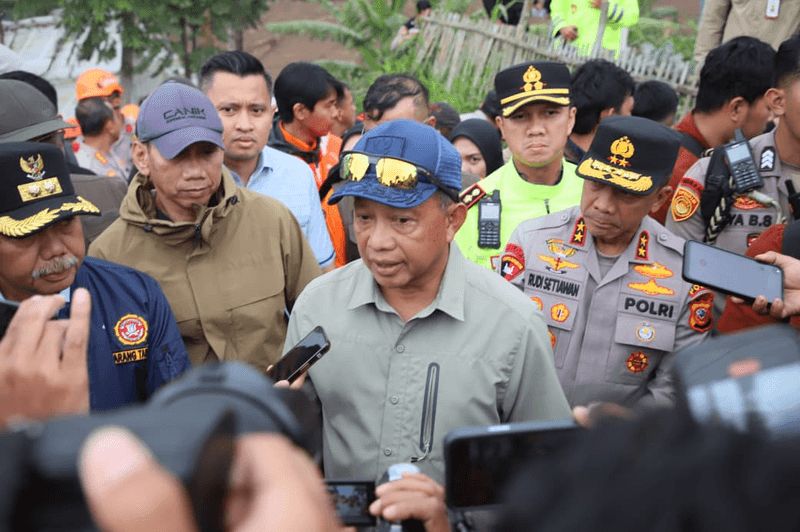
RRI.CO.ID, West Bandung – Indonesia’s Minister of Home Affairs, Tito Karnavian, encouraged strengthening spatial planning in all disaster-prone areas in Indonesia as a long-term preventive action. He made the statement after directly inspecting the landslide-affected location in Pasirlangu Village, Cisarua District, West Bandung Regency, West Java, on Sunday, 25 January 2026.
After inspecting the landslide in West Bandung, the Minister affirmed that relocating residents from disaster-prone areas is a must to ensure long-term safety. The step was taken because the location was considered no longer suitable for permanent habitation.
To support the relocation policy, he also instructed the acceleration of ecosystem restoration through the planting of strong-rooted vegetation to bind the soil structure back together.
“This must be reforested, planted. Plants with strong roots, so that the soil structure can strengthen again. If it returns, there will be another landslide,” he said in a press release on the Ministry of Home Affairs website.
The Minister added that the disaster in West Bandung should serve as a reminder for all local governments to be more serious in mapping disaster-prone areas in their respective regions. Preventive measures through strict spatial planning policies are considered more effective than post-disaster management.
“This is also a lesson for us in other regions to strengthen spatial planning. We must map out disaster-prone areas like this,” he conveyed.
Tito instructed all regional heads to be alert in carrying out mitigation, especially in facing the threat of hydrometeorological disasters that are often triggered by extreme weather. He emphasized, “We must map every regent, mayor, and governor nationally. We must consider the potential for hydrometeorological hazards such as heavy rain and torrential rain.”
Regarding the technical causes of the disaster, the Minister of Home Affairs explained that in addition to high rainfall, loose soil conditions were a major contributing factor. This condition was exacerbated by the loss of plants that functioned as soil binders, which have now been converted into short-term agricultural land.
“The protective plants with roots that penetrate deep into the soil, which can strengthen the soil structure, have been replaced by horticulture, vegetables, and other crops. This makes the soil very vulnerable to heavy rainfall,” Tito stated.
For the current emergency response in West Bandung, the Minister of Home Affairs confirmed that the government is focusing on efforts to search for missing victims and ensure the basic needs of evacuees are met. He expressed deep concern over the loss of life in the disaster and hopes the evacuation process proceeds smoothly.
News Recomendation
Loading latest news.....