



Mangrove Conservation Better than Restoration for Carbon Gains
- 14 Okt 2025 20:06 WIB
- Voice of Indonesia
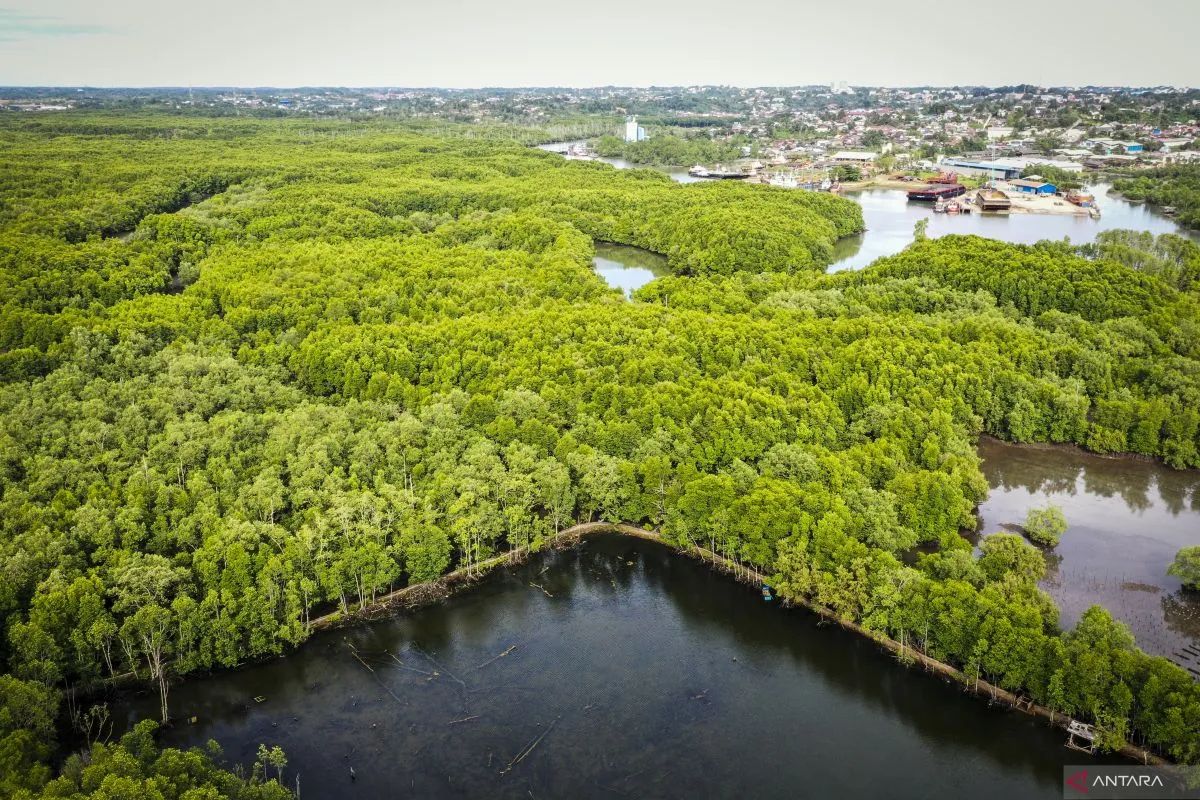
KBRN, Jakarta: Indonesia’s vast mangrove ecosystems hold immense potential for climate mitigation, but conservation, not restoration, may be the key to unlocking their value, according to Prof. Daniel Murdiyarso, Principal Scientist at the Center for International Forestry Research and World Agroforestry (CIFOR-ICRAF).
Speaking at a blue carbon seminar in Jakarta on Tuesday, October 14, 2025, Murdiyarso, who also chairs the Indonesian Academy of Sciences (AIPI), emphasized that Indonesia’s 3.9 million hectares of mangroves store an estimated 3.14 billion tons of carbon. He argued that protecting these reserves could be as impactful as delaying fossil fuel emissions.
“If we conserve this three-billion-ton carbon stock, aren’t we essentially postponing fossil emissions?” he said. “Blue carbon can remain locked for 13,000 to 15,000 years. What’s the difference from fossil carbon?”
Murdiyarso, a professor at IPB University, noted that while mangrove restoration is widely discussed, the concept of avoiding emissions through conservation is largely absent from blue carbon market agendas.
“Restoration is often promoted for its carbon absorption potential, but it’s a difficult process, prone to failure and high risk,” he explained.
He pointed out that many mangrove areas in Indonesia are degraded, yet conservation efforts remain underrepresented in carbon market strategies. “If we can schedule emission mitigation from oil reserves, why not apply the same logic to blue carbon in mangroves?” he asked.
A 2022 World Bank study found that mangrove restoration in Indonesia costs approximately USD 3,900 per hectare (around IDR 64 million). In contrast, spatial benefit-cost ratio (BCA) analysis shows that conservation yields a value greater than 5, meaning the benefits far exceed the costs, primarily because conservation is less expensive than restoration.
“Restoration shouldn’t be discouraged. It’s valuable. But the opportunity to monetize avoided emissions is much greater. The benefit-cost ratio is lower, and there are co-benefits, like supporting local communities who harvest shellfish,” Murdiyarso said.
He concluded by urging carbon markets to recognize and financially value emission avoidance through mangrove conservation, positioning it as a viable and impactful climate strategy. ***
News Recomendation
Loading latest news.....