


OJK: AI as a Key to Digital Transformation and Financial Inclusion in Indonesian Banking
- 30 Apr 2025 10:41 WIB
- Voice of Indonesia
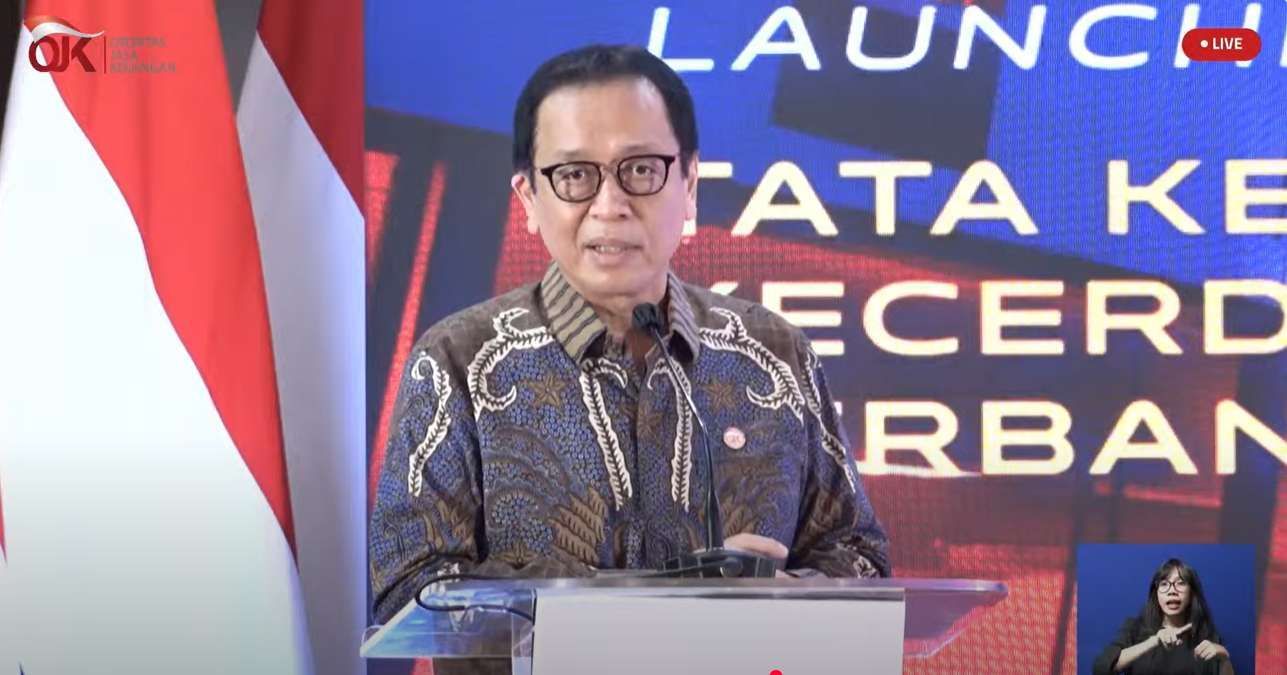
KBRN, Jakarta: Indonesian banks continue to show strong commitment to supporting digital transformation to improve service quality for the public. This transformation is expected not only to increase access to financial services but also to boost inclusive national economic growth through the adoption of artificial intelligence (AI). Dian Ediana Rae, Chief Executive of Banking Supervision and Member of the Board of Commissioners at the Financial Services Authority (OJK), emphasized this during the launch of the "AI Governance Framework for Indonesian Banking" on Tuesday, (29/4/2025), in Jakarta.
"Indonesian banking continues to show commitment in supporting digital transformation to improve service quality for the public. Going forward, we hope that artificial intelligence will become an enabler that makes it easier for people to access financial services and helps drive inclusive national economic growth," said Dian.
He further stated that this hope must be accompanied by a comprehensive understanding. It was emphasized that the integration of AI into banking operations must be seen as more than just a technological transformation—it reflects a structural shift in organizational culture and mindset. Therefore, a strategic framework, an innovative culture, and attention to ethical and sustainable aspects are all needed.
"This is an important event, as it addresses what I believe to be a core issue we face now and in the future," Dian remarked. "Aside from other challenges, such as those related to sustainable finance, which remain a homework for all of us in the banking sector."
He also mentioned recent developments in micro, small, and medium enterprises (MSMEs), saying, "Yesterday, I spent the whole day discussing two main issues with Commission XI: the new regulation on MSMEs, which I consider a potential turning point in how we manage MSMEs going forward—balancing banking interests with those of MSME clients."
Dian explained that AI is an emerging technology increasingly used in banking worldwide, including in Indonesia, although still on a limited scale. "Artificial intelligence is a transformational force in modern technology, replicating human intelligence through machines and software," he added.
A 2023 report by Fortune Business Insight found that the top three sectors globally adopting AI were information technology and telecommunications, financial services, and the automotive industry. Interestingly, banking—traditionally conservative and risk-averse—is now among the fastest sectors undergoing transformation.
AI is seen as enhancing customer experience, promoting efficiency, improving risk management quality, supporting fraud detection, credit risk assessment, and regulatory compliance. "Virtually no banking activity today is untouched by artificial intelligence," Dian noted.
Business Insider also reported in 2023 that 80% of banks recognized the potential of machine learning to reduce operational costs. Generative AI is projected to contribute up to USD 340 billion in added value globally.
However, AI adoption also brings challenges, such as misuse through deepfakes, lack of algorithm transparency (black box), decision-making bias, vulnerability to cyberattacks, and ethical and human resource readiness issues.
To address these challenges, the Indonesian Financial Services Authority (OJK) has issued the AI Governance Framework for Indonesian Banking. "This book reflects our support for accelerating digital transformation in the banking sector," said Dian. It incorporates international and national references, including discussions from global institutions and regulatory bodies like the Basel Committee on Banking Supervision, the EU's Artificial Intelligence Act, and guidelines from the U.S. Office of the Comptroller of the Currency.
The governance framework promotes responsible and trustworthy AI principles. While these values are universal, they are aligned with Indonesian norms and international standards to guide stakeholders in the banking sector.
The core values of AI governance are reliability, accountability, and human oversight. AI decisions must align with banks' strategies and goals, systems must be fully accountable, and human supervision is essential for building trust in AI systems.
Three key elements must be integrated into AI governance: human resources development through training and capacity building, ethical considerations, and a sustainable implementation approach to ensure AI benefits are maximized without compromising public trust or security.
News Recomendation
Loading latest news.....