



Bahlil Urged to Build 18 New Storage Facilities,Prof Henry:No Doubt
- 12 Feb 2026 09:44 WIB
- Voice of Indonesia
RRI.CO.ID, Jakarta – Indonesia’s Minister of Energy and Mineral Resources as well as Daily Chairperson of the National Energy Council (DEN), Bahlil Lahadalia, revealed that the Head of State’s directive is one of the four main focuses of President Prabowo’s energy policy. The minister further conveyed that Indonesia’s national energy resilience currently stands at around 21 days, and with the construction of the storage facilities, it is expected to increase to meet international standards of up to three months.
In addition to energy resilience, minister Bahlil stated that future energy policy will also focus on energy sovereignty without external intervention, energy independence, and energy self-sufficiency.
“Energy independence is the President’s top priority. We all know that this Republic still imports approximately 30 million kilolitres of fuel, both diesel and gasoline. Therefore, we must be determined to achieve energy self-sufficiency. Of course, this will be done gradually, with the ultimate goal of self-sufficiency in line with the President’s Asta Cita,” Bahlil stated. While, President Prabowo Subianto has instructed that national energy resilience be increased from 21 days to three months.
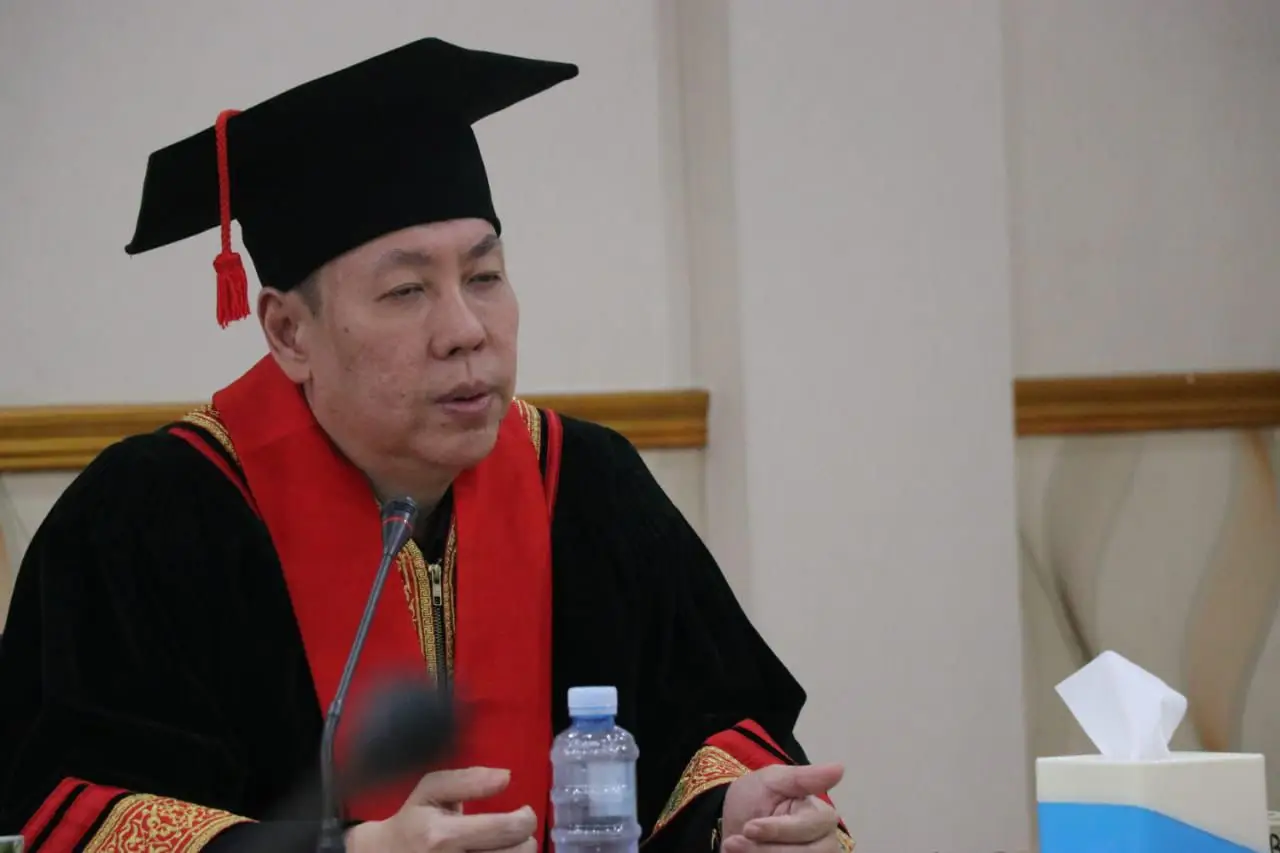
In response on this, Public Policy Observer Prof. Dr. Henry Indraguna believes that Minister of Energy and Mineral Resources (ESDM) Bahlil is capable of carrying out President Prabowo Subianto’s directive, with fuel storage facilities in 18 regions expected to be built by 2026.
He stated that he has no doubt about Minister Bahlil’s capacity and ability to realize President Prabowo Subianto and Vice President Gibran Rakabuming Raka’s Asta Cita, particularly the second point: strengthening the national defense and security system and promoting national independence through self-sufficiency in food, energy, water, creative economy, green economy, and blue economy; and the fifth point: continuing downstreaming and industrialization to increase domestic added value.
“The President’s order for the Ministry of Energy and Mineral Resources to immediately realize the construction of new fuel storage facilities in 18 regions is a strategic step to enhance and guarantee national energy resilience,” Prof. Henry stated to media in Jakarta, Wednesday,11 February 2026.
Moreover, Prof. Henry praised the brilliant move as part of a strategy to foster national reserves for the sake of energy sovereignty and resilience. He believes the strategic project, which requires an investment of Rp72 trillion, will contribute positively to Indonesia’s future, ensure national stability, and provide significant incentives for Indonesia’s economic growth supporting the President’s ambition of achieving 8 percent economic growth.
According to data from the Ministry of Energy and Mineral Resources, the project is included in the priority list for downstreaming and national energy resilience, with an investment value of Rp72 trillion and the potential to absorb 6,960 workers. This will also create a multiplier effect for employment opportunities and help reduce unemployment, which remains a challenge for the Prabowo-Gibran administration.
The construction of the new fuel storage facilities will be evenly distributed across 18 regions from western to eastern Indonesia. The project is planned for Lhokseumawe, Sibolga, Natuna, Cilegon, Sukabumi, Semarang, Surabaya, Sampang, Pontianak, Badung (Bali), Bima, Ende, Makassar, Donggala, Bitung, Ambon, North Halmahera, and Fakfak.
This is expected to contribute positively to economic growth in these regions. Prof. Henry believes that the project, which is included in the priority list being reviewed by the Danantara Investment Management Agency as part of downstreaming and energy resilience efforts, will receive priority attention as its strategic importance.
In addition, the Doctor of Law from Surakarta State University stated that the Rp72 trillion investment also guarantees security for the future of industry and community mobility, including for the younger generation. Energy stability, he added, is a key leverage factor to ensure sustainable economic growth.
“With stock resilience increasing to 90 days, Indonesia will certainly have an advantage in competing in an increasingly tight global economic competition,” he concluded. Henry added that improved stock resilience will ensure smooth logistics distribution and economic activities for industry and households, while also ensuring social and regional economic equity.
“Through programs such as One-Price Fuel, communities across all regions, including 3T areas (Disadvantaged, Frontier, and Outermost regions), will gain equal access to energy, thereby driving regional economic growth,” Prof. Henry stated.
News Recomendation
Loading latest news.....