



Culturally Rooted Sulur Yoga Reshapes Wellness Tourism in Yogyakarta
- 14 Jun 2026 15:58 WIB
- Voice of Indonesia
Key Points
- Sulur Yoga blends physical healing with traditional Javanese philosophy.
- The method delivers proven neurobiological and rehabilitative benefits.
- The practice serves as a highly marketable wellness tourism asset.
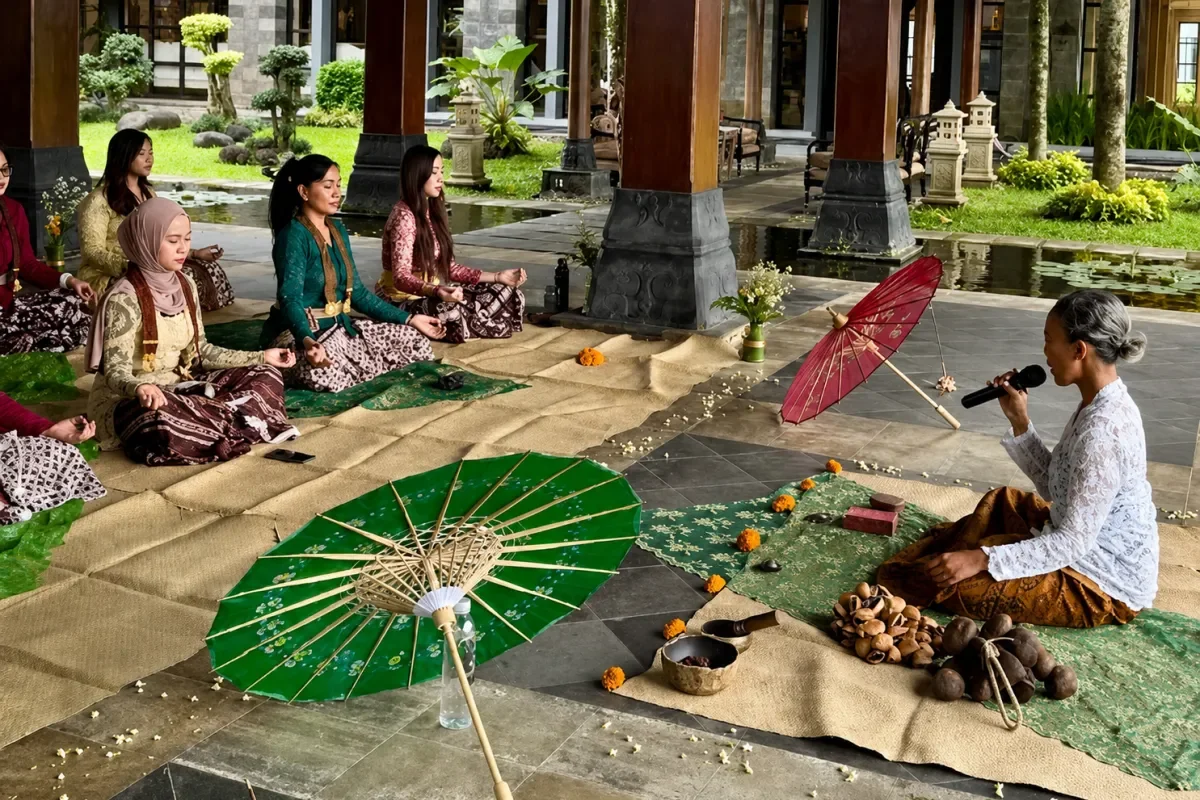
RRI.CO.ID, Yogyakarta - As global wellness tourism continues to expand rapidly, international travelers are increasingly seeking authentic cultural experiences rather than generic fitness routines.
In the heart of Java, a home-grown somatic practice called Sulur Yoga is emerging as a major catalyst for this shift by blending physical healing with Javanese philosophy.
Developed by certified yoga practitioner Agustin Sulistyawati, this unique method moves completely away from rigid classical poses to embrace a more natural approach.
"Sulur Yoga can be understood as a movement that makes the body move like plant tendrils, flexible, flowing, yet remaining strong and connected to the breath, the surrounding environment, and full of Javanese philosophy," Agustin explained recently, as quoted by Antara.
The fascinating origins of this practice trace back to 2018 when GKR Bendara of the Yogyakarta Palace envisioned a movement system rooted in local wisdom for internal use.
To fulfill this royal mandate, Agustin embarked on a multi-year creative journey and collaborated closely with diverse Indonesian traditional dancers and contemporary artists.
The isolation of the pandemic served as an unexpected catalyst that allowed Agustin to finalize the practice in the tranquil countryside of Sleman Regency. Sulur Yoga was officially launched at the Jogja Culture Wellness Festival 2025, where the experience unexpectedly moved some first-time practitioners to tears.
Though deeply Javanese in its philosophy, the innovative practice has already gained widespread international traction through digital classes and luxury resort placements. For instance, the method has successfully established a highly sought-after permanent residency at the prestigious Amanjiwo resort near Borobudur.
Dedicated practitioners worldwide credit the gentle fluid movements of Sulur Yoga with facilitating physical rehabilitation and emotional healing. Anditta, an Indonesian living in Australia who suffered from acute lower-back pain, noted that the specialized practice helped her safely navigate a difficult pregnancy.
"Practicing Sulur Yoga, I felt the emergence of awareness toward my own body during daily movements to prevent injury, considering I have a special condition that is potentially more fatal than normal people," she shared.
Anditta added that the mindful physical practice helped her effectively manage chronic pain and maintain normal human functionality.
Similarly, Sophia Shao, a Chinese national living in Tokyo, found immediate relief from chronic travel-related neck pain through these Javanese methods. "The main benefit of Sulur Yoga that is most real is to develop energy, physical awareness, as well as spiritual and understanding what the body needs," Sophia explained.
Neuroscientist Satwika Rahapsari from Gadjah Mada University (UGM) said, these powerful emotional releases during practice are fully grounded in human biology. "This psychological transition is not always smooth, which can then bring a sudden wave of emotion, one expression of which is by crying," she affirmed.
Satwika further noted that crying is simply a healthy neurobiological response rather than a mystical occurrence or a sign of weakness. Regular practice ultimately restores crucial interoceptive awareness, which is the valuable ability to consciously connect with the internal state of the body.
For the regional hospitality sector, this unique cultural practice has quickly become an incredibly lucrative and highly marketable asset. "Positive reviews from guests toward Sulur Yoga have triggered an increase in the selling value of the program in resorts or hotels," Agustin noted.
A representative from Wanasekar Resort, Awang, said that local hospitality providers often practice the method themselves to improve their product knowledge. "The alignment of movement with the soul will create harmony," Awang said while praising how the cultural touch helps preserve ancestral heritage.
But prominent industry experts strongly urge caution regarding the rapid commercial scaling of such delicate cultural traditions. Hairullah Gazali, Managing Director of the Jogja Tourism Training Center, explained that the practice successfully diversifies Indonesia’s evolving tourism products.
"Modern tourists are increasingly looking for authentic experiences that reflect the cultural identity of a region," he concluded regarding current travel trends. Nevertheless, Hairullah warned that operators must always strike a careful balance between commercialization and true cultural preservation. ***
News Recomendation
Loading latest news.....