



Bung Karno's Photos Exhibited at Lebak’s Iconic Multatuli Grounds
- 02 Jun 2026 16:44 WIB
- Voice of Indonesia
Key Points
- PDI-P launched the “Bung Karno Milik Kita Semua!” exhibition in Lebak to commemorate Pancasila Day and mark the start of Bung Karno Month 2026.
- The exhibition connects the anti-colonial legacy of Multatuli, Sukarno, and the Baduy community as symbols of justice, honesty, and Indonesian cultural identity.
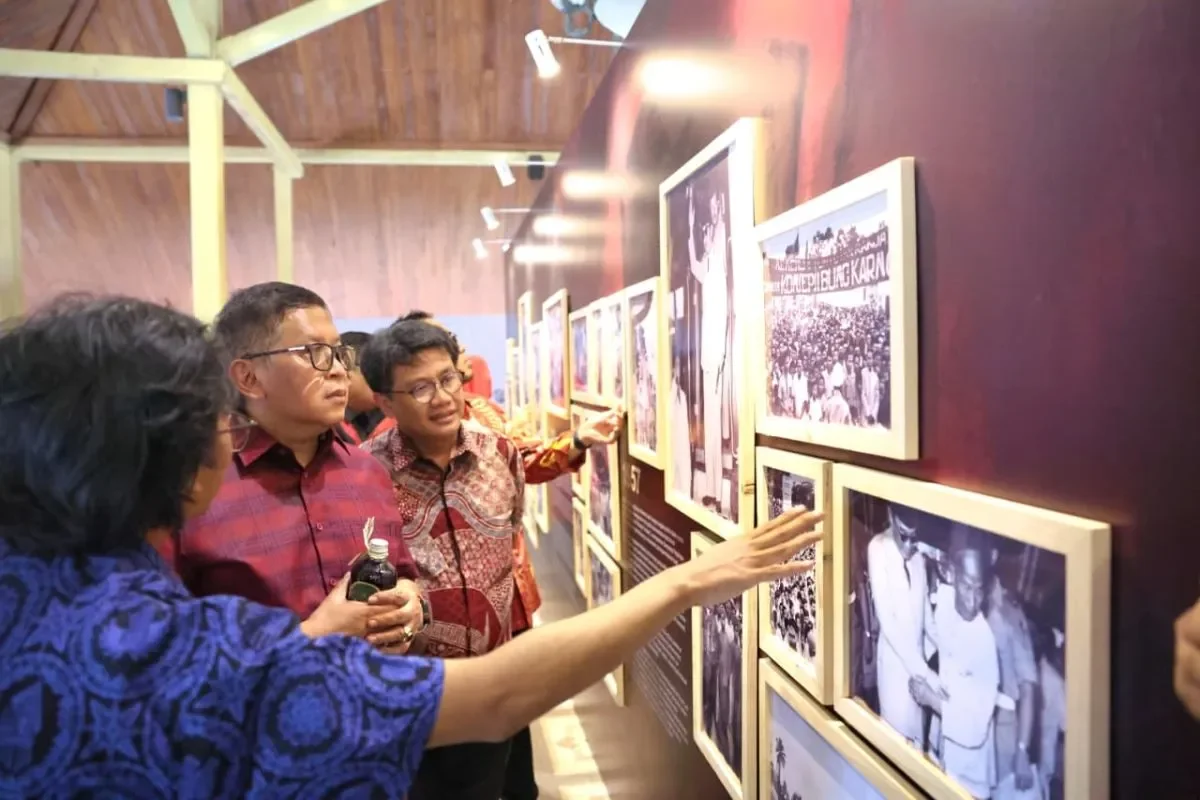
RRI.CO.ID, Rangkasbitung - Linking the historic struggle against colonial oppression with the modern legacy of Indonesia's founding father, the Indonesian Democratic Party of Struggle (PDI-P) officially launched a comprehensive exhibition of historical photographs, letters, and comics chronicling the life of Sukarno, on Tuesday, June 2, 2026, in the courtyard of the iconic Multatuli, Saidjah, and Adinda Statue in Rangkasbitung, Lebak Regency, Banten.
The exhibition, titled Bung Karno Milik Kita Semua! (Bung Karno Belongs to Us All!), is strategically timed to honor the birth of the state ideology, Pancasila, while marking the formal commencement of the month-long Bung Karno Month 2026 celebrations.
The opening ceremony drew a diverse crowd, predominantly composed of university students, alongside high-ranking political figures. PDI-P Secretary General Hasto Kristiyanto inaugurated the event, accompanied by PDI-P Central Executive Board (DPP) Chairwoman Ribka Tjiptaning and the head of the party's History Agency, Bonnie Triyana.
Addressing the audience under the intense mid-day heat, Hasto shared reflection from his own past struggles to inspire the gathered youths.
"Don't be afraid of the heat of the sun. When I was in prison for fighting for truth and ideals, sunlight became scarce. Be grateful that we can receive the rays of the sun, which have given us the energy of life," Hasto Kristiyanto remarked in Rangkasbitung on Tuesday, June 2, 2026, as quoted by Antara.
The PDI-P leadership emphasized that the core energy behind Bung Karno Month, which initiates immediately after the June 1 Pancasila Day commemoration, must serve a global purpose. Hasto asserted that Pancasila should not merely exist as a national ideology but must actively function as a foundational blueprint to construct a brand-new world order.
He reminded the audience that Sukarno's historic June 1, 1945, address was fundamentally a fierce indictment against centuries of entrenched Western imperialism and colonialism in the Indonesian archipelago.
The choice of location for the exhibition serves a deliberate historical parallel. Hasto highlighted the enduring legacy of Multatuli, the pen name of Dutch writer Eduard Douwes Dekker, whose seminal 1860 novel Max Havelaar exposed the cruelties of the colonial forced-cultivation system in Lebak, ultimately shaking the Netherlands and paving the way for the Ethical Policy.
The opening ceremony blended deep historical rhetoric with local cultural arts. The event featured a vibrant musical performance of Angklung Buhun by the local Sanggar Lebak Membara troupe. Following the collective singing of the national anthem, Indonesia Raya, the ceremony concluded with a traditional Celempung performance by indigenous artists from the Kanekes (Baduy) community.
According to Bonnie Triyana, who also serves as the event's organizing committee chairman and a PDI-P lawmaker in the House of Representatives (DPR RI) Commission X, the public exhibition is scheduled to run for a full month from June 1 to June 30, 2026.
The local administration warmly welcomed the cultural initiative, framing the exhibition as an educational milestone for the region. Lebak Deputy Regent Amir Hamzah delivered a morally resonant address, playfully introducing his speech with a traditional rhyme (pantun) to praise the enduring relevance of the state ideology.
"The cage bought palm sugar, / Its sweetness is as real as honey. / Let's prove it in a cool place: / Pancasila, Indonesia progresses!" Amir Hamzah stated.
The Deputy Regent reflected on the profound historical weight of the venue, noting that he stood directly at the site where Multatuli once put pen to paper to fight the systemic oppression of the Lebak people. He elegantly connected the figures of Multatuli, Sukarno, and the indigenous Baduy people as the three inseparable cultural heritages of Lebak.
"Multatuli through the pen, Bung Karno through speech, their goals are the same: to uphold justice. I answer firmly: both are defenders of the weak," declared Amir Hamzah.
Turning his attention to the third pillar, the Deputy Regent praised the Baduy community for their uncompromising commitment to absolute honesty, characterizing them as the ultimate embodiment of a living Pancasila.
He explained that within the Baduy way of life, the principles of Pancasila are not merely recorded on paper but are dynamically practiced through daily actions. He noted that their complete honesty toward nature, their sacred vows, and their fellow human beings reflects the true essence of integrity.
Amir concluded his remarks with a strong call for mutual cooperation (gotong royong) to develop infrastructure leading to Baduy territories. He urged the public to utilize local museums as sources of courage to speak the truth, while actively rejecting mindsets that lack honesty, justice, and solidarity.
"We must never abandon history. The Baduy will never abandon their history, nor will Multatuli ever leave his mark. These two names give Pancasila a face and hands to work with," Amir Hamzah concluded. ***
News Recomendation
Loading latest news.....