



Magetan’s Bamboo Artisans Pivot to Eco-Friendly Innovation
- 05 Apr 2026 18:47 WIB
- Voice of Indonesia
Key Points
- Artisans in Magetan are capitalizing on Indonesia's single-use plastic restrictions by positioning the besek as a sustainable, stylish lifestyle alternative.
- Traditional square boxes have evolved into over seven distinct designs, featuring vibrant colors, various shapes, and functional additions like handles to meet modern consumer tastes.
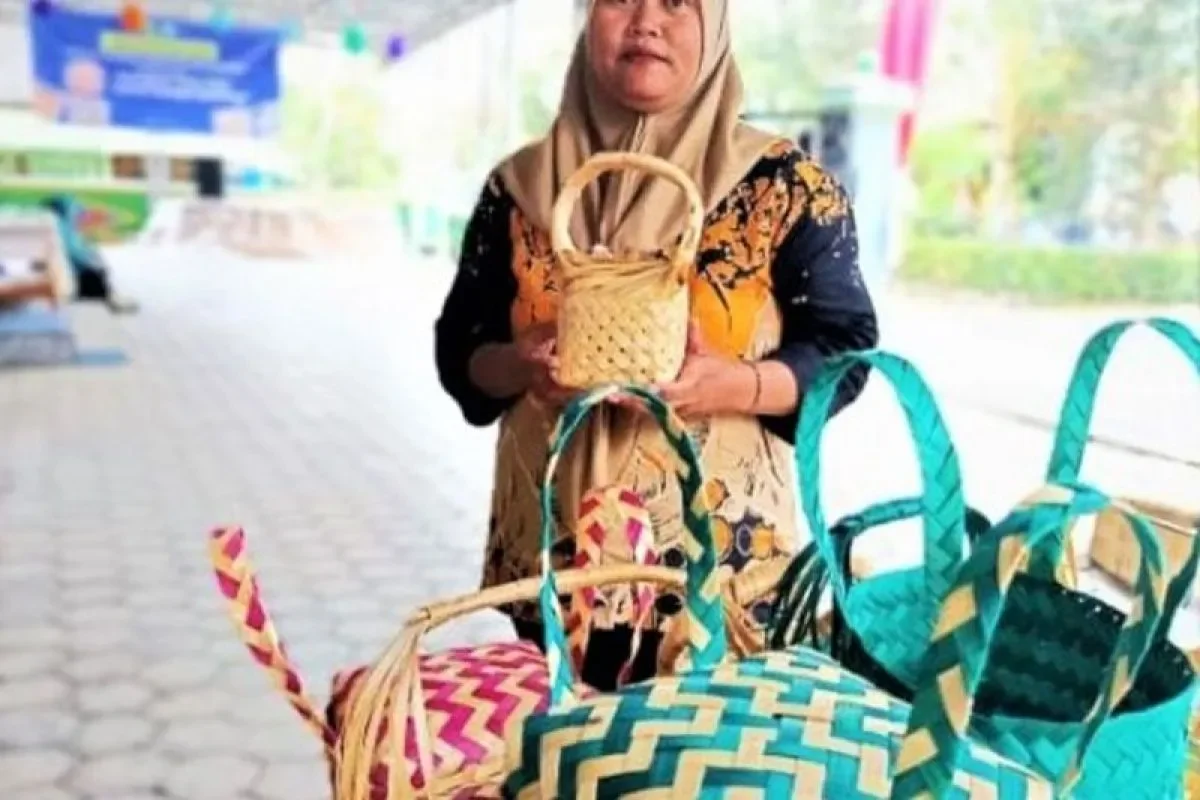
RRI.CO.ID, Magetan – As government restrictions on single-use plastics tighten across Indonesia, traditional bamboo artisans in Magetan, East Java, are experiencing a modern resurgence. They are transforming the humble besek (woven bamboo box) into a high-demand, stylish lifestyle commodity.
In Durenan Village, Sidorejo Subdistrict, local weavers are no longer just producing simple storage containers. They are now engineering diverse designs to meet a sophisticated digital market that favors sustainability over synthetic packaging.
Indah, a veteran artisan from Durenan, has become a central figure in this local economic shift. By blending traditional techniques passed down through generations of village women with aggressive social media marketing, she has ensured that her craft remains relevant in a competitive retail landscape.
Her workshop now functions as both a creative hub and a distribution point for neighbors’ handiwork, bridging the gap between rural craftsmanship and urban demand. Reflecting on the evolution of her trade, Indah noted that the days of uniform, plain boxes are over.
"The majority of people here do indeed make besek. In the past, the shapes were simple plain squares without variation. However, over time, artisans have innovated by creating various shapes and colors," explained Indah in Magetan on Sunday, April 5, 2026.
This drive for innovation was ironically accelerated by the global health crisis. While many industries foundered, the demand for hygienic, disposable yet eco-friendly food packaging surged.
"When the COVID-19 pandemic hit, orders actually flooded in. From that point, innovation began to grow," Indah said, as quoted by Antara.
This momentum has carried forward into 2026, with customers now requesting bespoke designs influenced by global trends they see online. "There are also requests based on images consumers see. From there, we learn as well," she added.
The complexity of the craft has grown alongside its aesthetic appeal. Indah currently manages over seven subdistinct designs, ranging from vibrant multi-colored baskets to complex miniature models.
She identified the small besek with integrated handles as the most challenging due to the meticulous weaving required. Despite the increased labor, she maintains a flexible pricing structure to remain accessible.
"Colors and models can be adjusted to the buyer's request, from red, green, to attractive multi-colored combinations," said Indah.
Prices vary widely, smaller baskets start at IDR 4,000 (USD 0.24) each. Larger baskets or those with special designs can cost up to IDR 20,000 (USD 1.18), depending on the shape and complexity.
The sustainability of the trade is bolstered by the abundance of raw materials in the region, which Indah often harvests directly from local bamboo groves. This logistical advantage is a cornerstone of Magetan’s identity as East Java’s premier bamboo hub.
The sector is a massive economic driver for the regency, boasting approximately 5,700 business units that contribute a staggering 85.69% to the local economy. With villages like Ringinagung and Nitikan specializing in baskets and Durenan leading in besek production, the region has successfully positioned its traditional heritage as a vital solution to modern environmental challenges. ***
News Recomendation
Loading latest news.....