



Yogyakarta Frozen Chili Peppers Penetrate Japanese and Singaporean Markets
- 15 Sep 2026 10:45 WIB
- Voice of Indonesia
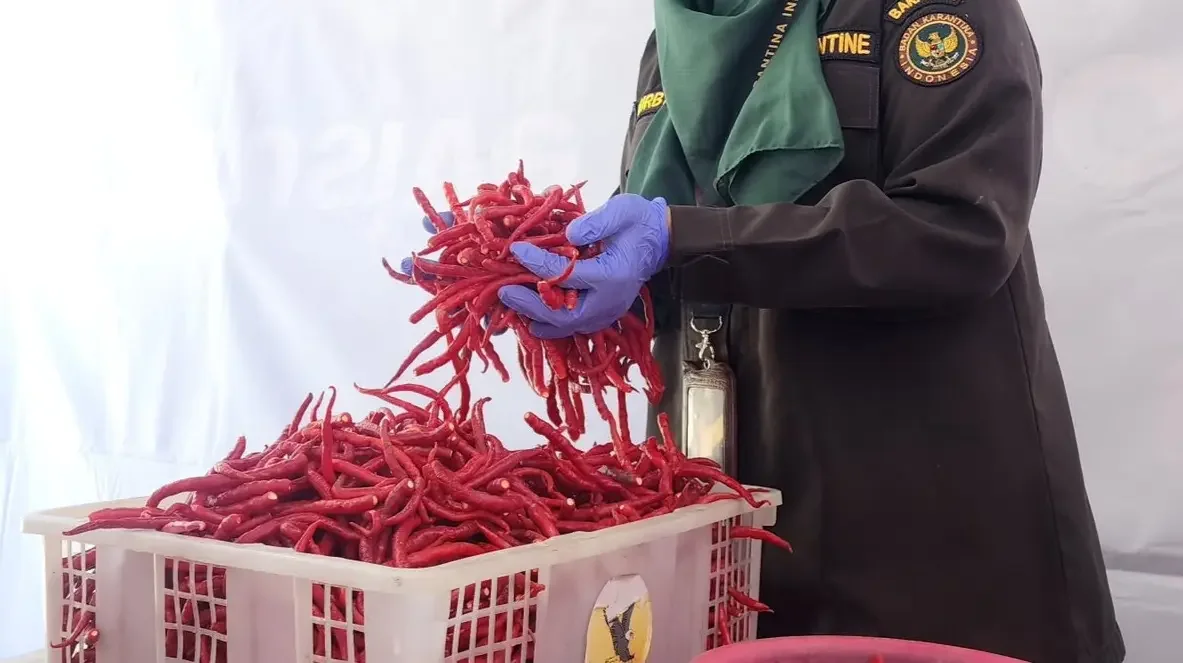
RRI.CO.ID, Yogyakarta – The Yogyakarta Quarantine Agency has recorded a significant surge in shipments of frozen chili peppers from the Special Region of Yogyakarta (DIY) to international markets. Throughout 2026, two shipments of frozen chilies were recorded, totaling Rp749.9 million, to Japan and Singapore, demonstrating the increasingly strong position of Yogyakarta-based commodities in the global market.
According to information received on Monday, September 14, 2026, this figure surpasses the total export value for the entire year of 2025, which saw six shipments totaling IDR 369.4 million. In the previous year, frozen chili exports were limited to Japan, while *cabai jamu* (Javanese long pepper) was exported to Russia, France, and India. In other words, the export value in 2026 has already exceeded the full-year total of the previous year, despite comprising only two shipments so far.
This opportunity was a key topic discussed during the 9th episode of Barantin’s "Go Ekspor" web series, titled "Jogja Frozen Chili Peppers Break into the Global Market." Through this forum, the Indonesian Quarantine Agency (Barantin) encouraged more farmers and MSME players in Yogyakarta to meet export requirements aligned with the standards of destination countries.
Barantin Principal Secretary, Shahandra Hanitiyo, emphasized the agency's desire to play a role beyond that of a mere regulator by providing guidance to business players, enabling them to penetrate global markets. "We at the Indonesian Quarantine Agency are committed to being a strategic partner for businesses, not just a regulator, but also accelerating certification services, strengthening export support for MSMEs, and acting as a bridge of trust for Indonesia in the global market, including paving the way for regional commodities like frozen Yogyakarta chilies," said Shahandra.
In terms of production, DIY holds great potential for the continued development of this commodity. Chili production in the region reached 5,183 tons from 3,842 hectares of land, with production centers spread across four regencies: Bantul, Sleman, Gunungkidul, and Kulon Progo.
Head of the Yogyakarta Agricultural Quarantine Agency, Obing Hobir, identified Japan as a highly promising non-traditional market for further development. "Japan is a market with great potential for frozen chili peppers. However, to enter this market, business operators must meet stringent quarantine and food safety standards. Through this webinar, we aim to bridge the information gap between regulations and actual field practices," Obing stated.
To facilitate business actors, Jogja Quarantine has arranged the export service flow starting from user application, verification through SSm-QC Export and the Best Trust system, document inspection, physical and laboratory inspection, to issuing quarantine decisions.
Director of Plant Quarantine Measures at Barantin (the Indonesian Agricultural Quarantine Agency), Abdul Rahman, affirmed the need to safeguard established market access by strictly adhering to phytosanitary requirements; failure to comply with the destination country's standards can result in commodities being detained or even rejected upon arrival.
Through the "Go Ekspor" program, Barantin hopes that the provided guidance will foster the emergence of new exporters from the MSME sector while simultaneously ensuring sustained international market access for Indonesian agricultural products.
News Recomendation
Loading latest news.....