



Japan’s Chinook Aid Highlights Corporate Role in West Kalimantan Fires
- 10 Sep 2026 18:29 WIB
- Voice of Indonesia
Key Points
- West Kalimantan Deputy Governor Krisantus Kurniawan welcomed Japanese CH-47 Chinook helicopters on September 10, 2026, to support firefighting operations in the province.
- Krisantus called on plantation concession holders to take active responsibility in fighting forest and land fires.
- Peatland fires and shrinking water sources continue to complicate firefighting operations across West Kalimantan.
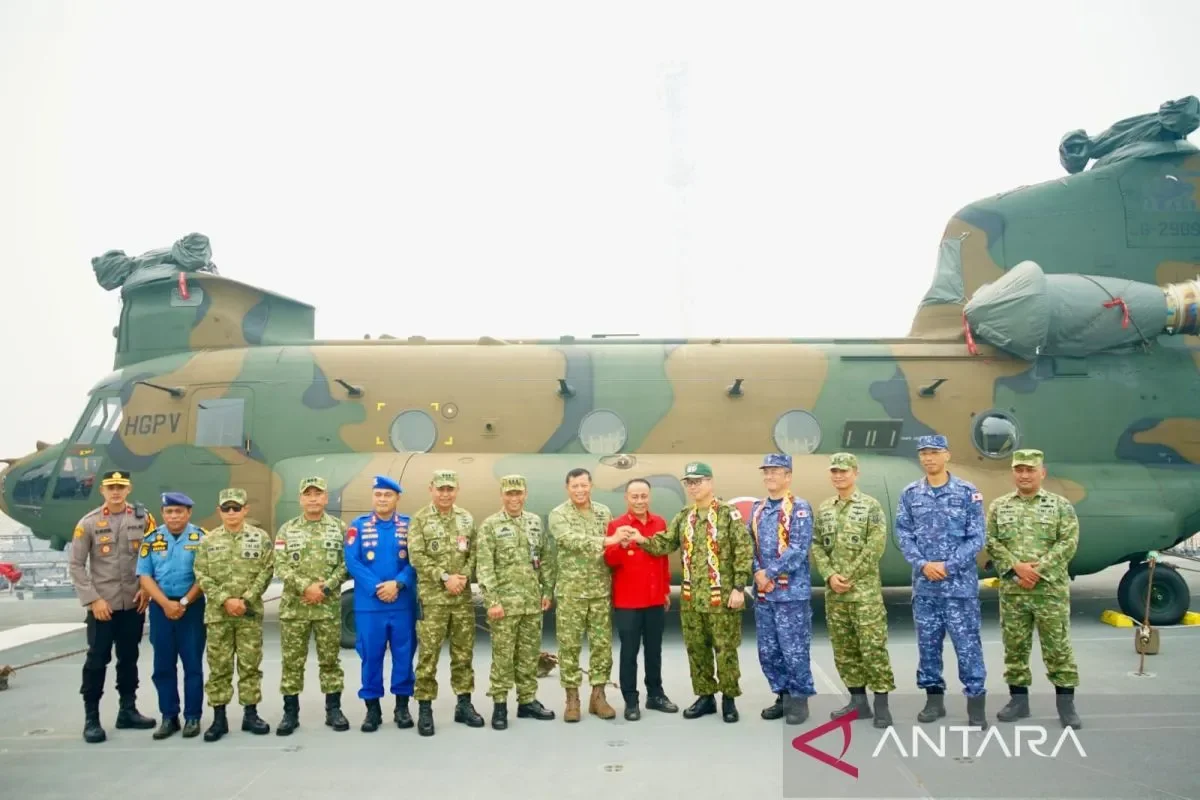
RRI.CO.ID, Pontianak - The arrival of three CH‑47 Chinook heavy helicopters from Japan to support firefighting operations in West Kalimantan has not only strengthened Indonesia’s aerial response but also reignited calls for greater accountability from plantation companies holding land concessions.
Welcoming the Japanese vessel JS Kunisaki in Mempawah on Thursday, September 10, 2026, Deputy Governor Krisantus Kurniawan expressed gratitude for the humanitarian assistance under the Japan‑Indonesia Humanitarian Assistance and Disaster Relief (HADR) mission, noting that the helicopters will be vital in tackling fires on peatlands and transporting logistics to remote areas.
He also stressed that government efforts cannot stand alone. “We expect concession holders to take responsibility. Do not just watch. Everyone must move together to help the government handle forest and land fires,” he said, as quoted by Antara.
The challenges in West Kalimantan are compounded by peatland fires that spread underground and by limited water sources, with rivers shrinking and seawater intrusion making water unsuitable for firefighting. These conditions demand not only advanced equipment but also proactive prevention measures from businesses operating in vulnerable areas.
Krisantus confirmed that the central government has instructed six governors in fire‑prone regions, including West Kalimantan, to strengthen cooperation with the private sector. Companies failing to uphold their obligations will face evaluation under existing regulations.
The Japanese support, which included personnel and equipment after an 11‑day voyage, underscores international solidarity. But the deputy governor’s remarks highlight that sustainable solutions require corporate responsibility, government‑business collaboration, and community involvement to ensure hotspots are extinguished quickly and do not spread further. ***
News Recomendation
Loading latest news.....