



Challenges and Opportunities for Refugee Management in Southeast Asia
- 24 Jun 2026 14:32 WIB
- Voice of Indonesia
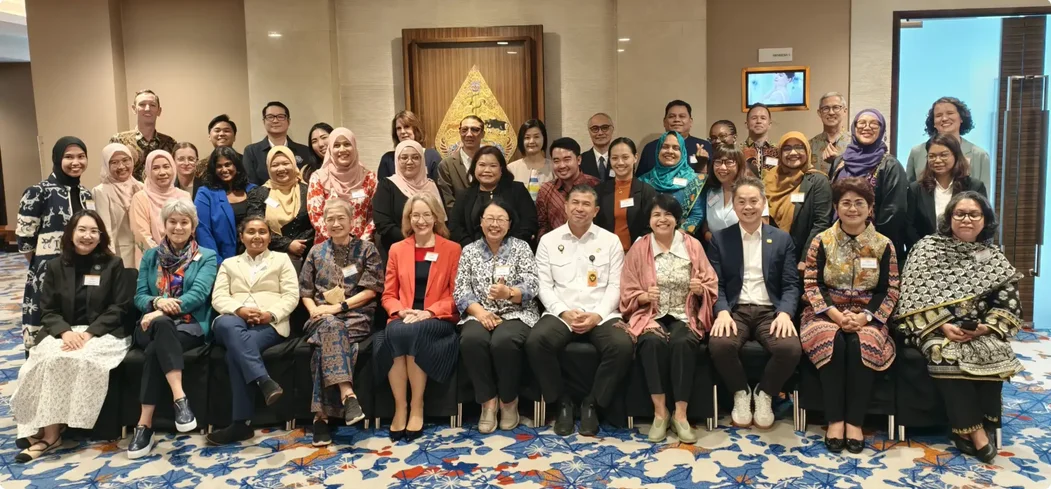
RRI.CO.ID, Jakarta - The impact of reduced international aid, the increasing risk of human trafficking, and the importance of building refugee self-reliance were the focus of discussions at the 15th Asia Dialogue on Forced Migration (ADFM) meeting, held on 23-24 June 2026, in Jakarta. This forum convened stakeholders from various Asia-Pacific countries to discuss the challenges and opportunities for addressing forced migration in the region.
The international forum was organized by the National Research and Innovation Agency (BRIN) in collaboration with the Center for Policy Development (CPD), the Faculty of Law, Chulalongkorn University, and the Institute of Strategic and International Studies. The forum gathered representatives from governments, international organizations, academics, human rights institutions, and research institutions from various countries.
Principal Researcher at BRIN's Political Research Center, Tri Nuke Pudjiastuti, explained that the Asia Dialogue on Forced Migration (ADFM) was established in 2015 to encourage a more dignified and sustainable response to forced migration in the region. According to her, a number of positive developments have emerged in recent years, including employment access policies for refugees in Thailand, the refugee registration process in Malaysia, and discussions on ASEAN guidelines regarding migration and refugee protection.
Tri Nuke added that BRIN's involvement in the ADFM is part of an effort to support the development of research-based knowledge and policy dialogue that can inform the formulation of forced migration policies at the national and regional levels. "This year's meeting discussed access to livelihoods for refugees, the risk of human trafficking, the division of responsibilities between countries, and the role of regional institutions such as ASEAN and the Bali Process," she said.
Meanwhile, Andrew Hudson, Chief Executive Officer of the Center for Policy Development (CPD), emphasized that the ADFM provides a platform for dialogue to exchanging views and seeking practical solutions to the increasingly complex challenges of forced migration. "It is important to identify opportunities and good practices that can be developed amidst challenging situations," he said.
In the discussion session, which took place under the Chatham House Rule, participants highlighted the impact of cuts in international aid on refugees in various countries. The reduction in funding support is considered to have worsened conditions in several shelters, including limited access to food, clean water, sanitation, and other basic services.
Nevertheless, participants also recognized the enormous potential of refugee communities to develop independent initiatives, ranging from informal education to strengthening community capacity. Therefore, a shift in the refugee response approach was deemed necessary, moving from solely humanitarian assistance to a long-term development strategy emphasizing education, skills training, and economic access.
Overall, participants agreed that strengthening access to education, skills, legal identity, and economic opportunities is a crucial foundation for a more sustainable solution to forced migration. Collaboration between countries, international organizations, research institutions, and civil society is considered key to strengthening protection and promoting refugee independence in Southeast Asia.
News Recomendation
Loading latest news.....