



Indonesian Parliament and EU Promote Public Role in Legislative Process
- 06 Jun 2026 15:15 WIB
- Voice of Indonesia
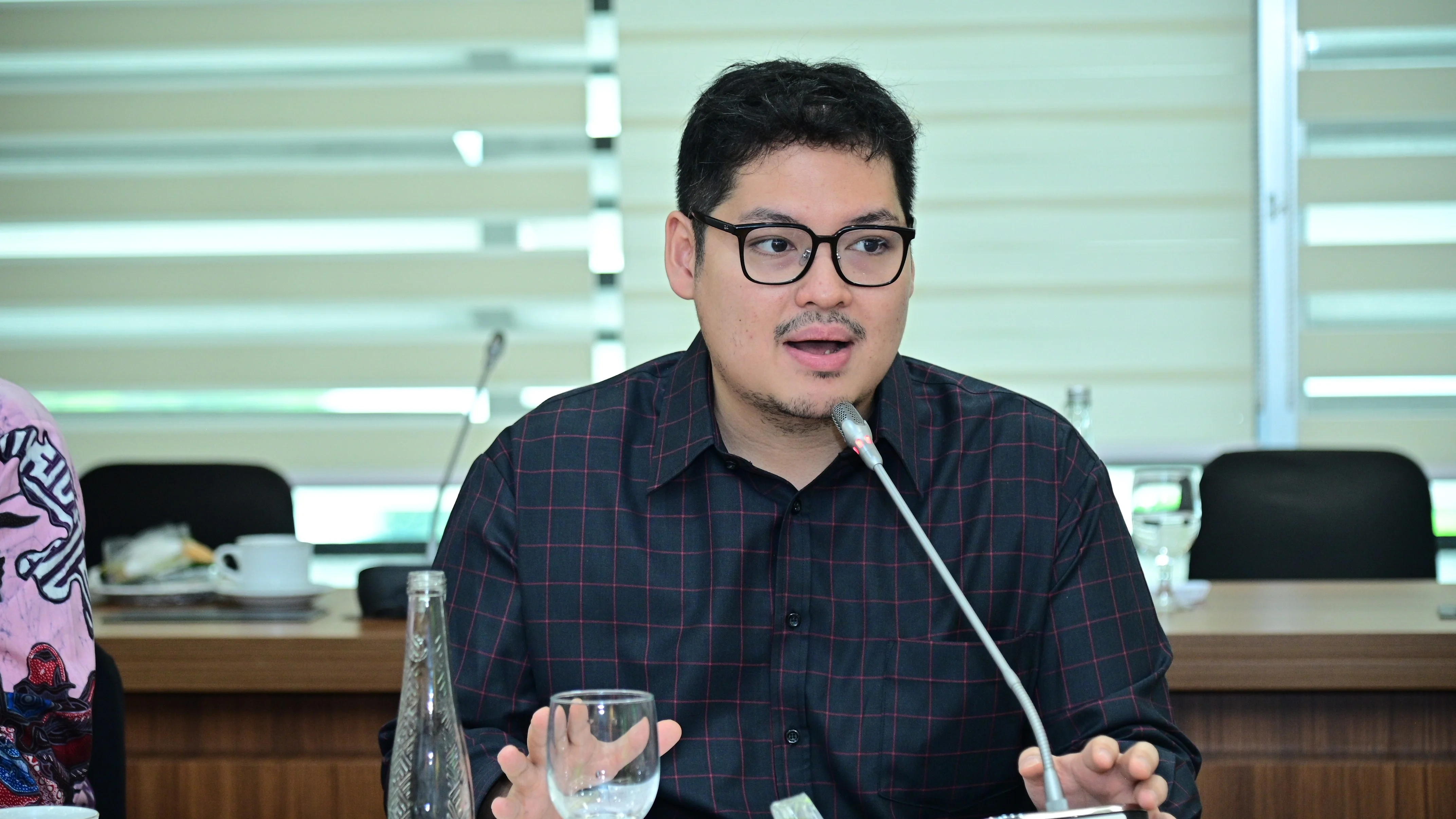
RRI.CO.ID, Jakarta - "Meaningful" public participation in the lawmaking process was discussed at a workshop at the Indonesian Parliamentary Complex in Jakarta on Tuesday, June 2, 2026. Indonesia's House of Representatives (DPR) hosted the workshop, alongside the European Union's INTER PARES.
In his remarks, Deputy Chairperson of the DPR's Inter-Parliamentary Cooperation Agency (BKSAP), Ravindra Airlangga, highlighted the challenges various countries face due to declining public trust in democratic institutions. He noted that this phenomenon is not unique to developing countries but is also experienced in developed nations. Therefore, he said, strengthening public participation in the policy-making process is critical to rebuilding public trust in state institutions.
"Public trust is the foundation for implementing long-term structural reforms, social capital in determining the direction of development, and a prerequisite for effective governance," Ravindra said at the forum.
He explained that legislative institutions have faced unique challenges in building public trust: one reason is the perception that the legislative process is closed and not fully accessible to the public. Therefore, the collaboration between the two parliaments is expected to provide a platform to learn from the best practices of other parliaments in various countries and encourage more substantial public involvement.
Furthermore, Ravindra emphasized that efforts to achieve meaningful public participation are an ongoing process. He said that no parliament has a perfect model for ensuring representation, participation, and accountability, and argued that every institution needs to continually learn and adapt to developments in society, technology, and increasing public expectations of the democratic process.
In the Indonesian context, Ravindra noted that the principle of meaningful public participation has been legally established through a 2020 Constitutional Court ruling. This decision affirms three primary public rights in the lawmaking process: the right to be heard, the right to have one's opinion considered, and the right to receive an explanation for input submitted.
According to him, these three principles clearly differentiate between truly meaningful public participation and merely formal public involvement. Therefore, the House continues to strive to strengthen public participation mechanisms at every stage of the legislation process so that the resulting legal products are increasingly responsive to public needs.
Ravindra, of the centrist Golkar Party, hopes the workshop will foster an exchange of experiences and lessons learned to make parliamentary practices more inclusive. This way, he hopes the legislative process will not only yield high-quality regulations but also increase public trust in democratic institutions and processes.
News Recomendation
Loading latest news.....