



Indonesia and Papua New Guinea Advance Cross-Border Frequency Coordination
- 19 Mei 2026 19:37 WIB
- Voice of Indonesia
Key Points
- Indonesia and Papua New Guinea are harmonizing cross-border radio frequencies in Yogyakarta's meeting.
- The 3rd Technical Coordination Meeting aims to resolve signal interference and synchronize regional spectrum plans.
- Papua New Guinea is adopting Indonesia's dual-platform digital radio technologies.
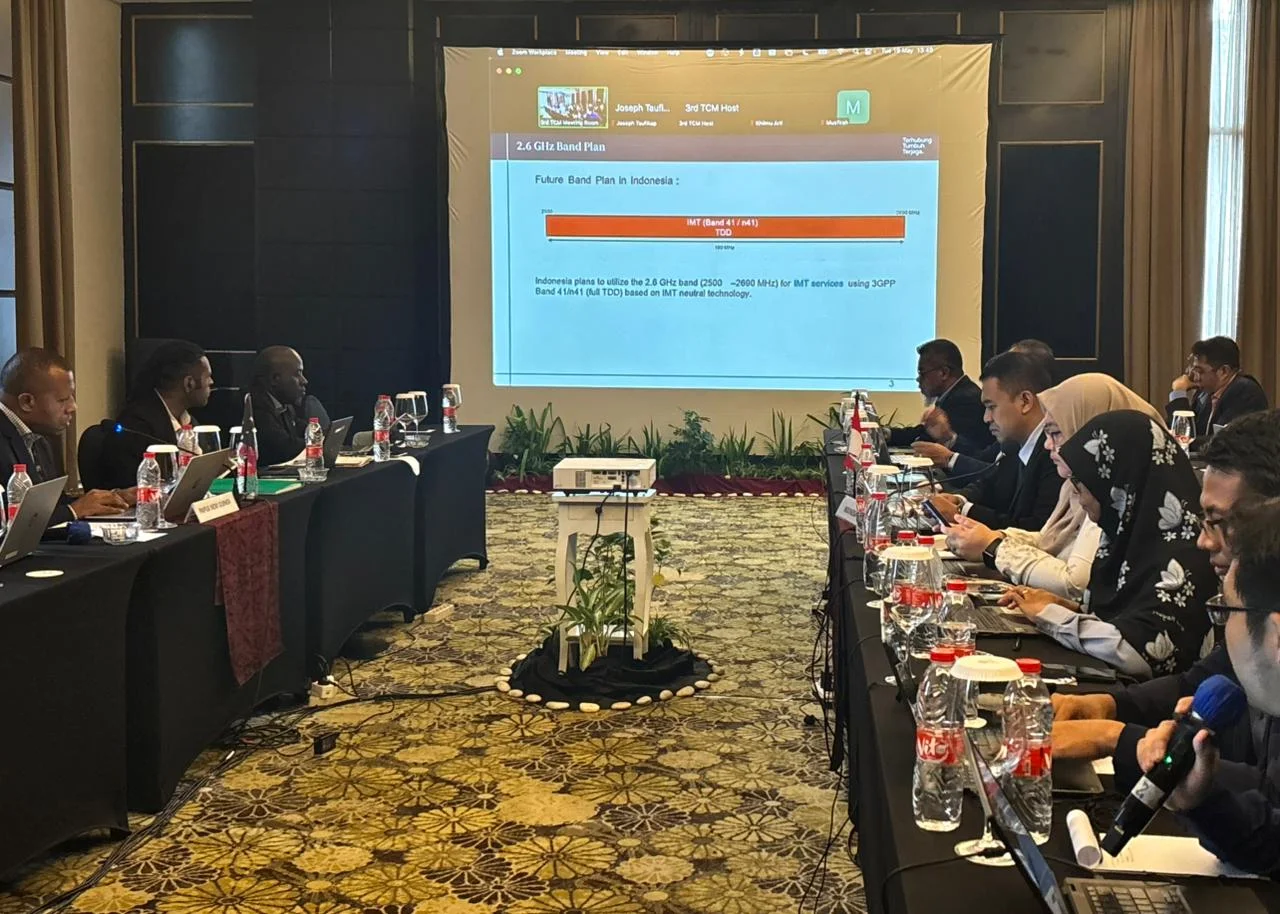
RRI.CO.ID, Yogyakarta - Indonesia and Papua New Guinea are strengthening cooperation in cross-border radio frequency management through the 3rd Technical Coordination Meeting (TCM), held in Yogyakarta from May 19–21, 2026.
Organized by the Indonesian Ministry of Communication and Digital and Papua New Guinea’s National Information & Communications Technology Authority (NICTA), the forum has been held regularly since 2024 to prevent interference and harmonize spectrum use along the border.
A key agenda item was Digital Sound Broadcasting (DSB), with both countries discussing technical parameters to ensure compatibility. Delegations also visited Indonesia’s public broadcaster RRI Yogyakarta station on Monday, May 18, to share experiences on the deployment of DRM (Digital Radio Mondiale) and DAB+ (Digital Audio Broadcasting) technologies.
Director of Radio Frequency Spectrum Management at the Indonesian Ministry of Communication and Digital, Adis Alifiawan, stressed the importance of coordination.
“This is not the first meeting, and it will certainly continue in the future. The goal is to harmonize frequency use between neighboring countries because signals cannot stop at borders,” he said on Tuesday, May 19.
“By sharing frequency plans, we know how our neighbors use the same spectrum, and this acts as a preventive step to avoid interference,” Adis added, highlighting that Indonesia and Papua New Guinea are aligned on the 2.6 GHz band, crucial for 5G deployment.
“If Indonesia rolls out 5G in border areas like Jayapura or Merauke, it will be compatible with Papua New Guinea’s 5G network. Both countries are using the same settings, ensuring seamless connectivity,” Adis explained.
Other topics included microwave links (6 GHz), cellular bands (2.6 GHz and 3.5 GHz), and VHF frequencies used for digital broadcasting.
Director of Technology and New Media at Public Broadcasting Institution - Radio Republik Indonesia (LPP RRI), Muhamad Sujai, explained Indonesia’s dual adoption of DRM and DAB.
“Digital radio has two platforms -- DAB and DRM. DRM can operate on medium wave, short wave, FM, and VHF, while DAB is limited to high frequencies," he said.
"Indonesia adopted both to serve diverse conditions, from disaster-prone areas to remote islands. Papua New Guinea is learning from our experience and plans to implement both DRM and DAB, making them the second country after Indonesia to adopt both technologies simultaneously,” he added.
Indonesia currently operates nine DRM transmitters in disaster-prone regions and six DAB transmitters in major cities such as Jakarta, Bandung, Surabaya, and Yogyakarta.
“One DAB transmitter can broadcast up to 16 radio programs, and it is not subscription-based. Regulations for receivers are being drafted, and once finalized, the public will benefit from wider digital radio access,” Sujai noted the efficiency of these systems.
Meanwhile Manager of Frequency Coordination & Satellite at NICTA, Richard Nepao, praised the collaboration. “This is one step forward in our plans to deploy digital broadcasting. We have pilots planned for Port Moresby and Buka, and disaster notification through broadcast technologies is a priority," he shared.
"RRI is working closely with our government, and we see this as a step toward adopting DRM and DAB+ standards,” he added.
Richard also mentioned future plans to introduce digital TV using UHF bands, while highlighting the potential for border-sharing agreements and MOUs between the two governments.
Engineer for Broadcast Planning at NICTA, Eugene Yerua, expressed interest in Indonesia’s pioneering work on dual-mode receivers. “Indonesia is piloting projects on receivers that can handle both DRM and DAB, something no other country is doing," he said.
"We want to work closely with the Ministry of Communication and Digital and RRI to help standardize these receivers across the Asia-Pacific and ITU Region 3,” he added, acknowledging challenges in the mountainous border terrain but said coordination would ensure coverage up to 50 kilometers on both sides.
The meeting reinforced a framework for data sharing, interference resolution, and joint planning, ensuring that future technologies--particularly 5G and digital broadcasting--remain compatible across the border.
This cooperation positions Indonesia and Papua New Guinea as regional leaders in cross-border spectrum management, while also advancing disaster resilience and digital connectivity for communities in remote and vulnerable areas. ***
News Recomendation
Loading latest news.....