



International Women’s Day 2026, a Stage for Solidarity and Resistance in Indonesia
- 09 Mar 2026 08:21 WIB
- Voice of Indonesia
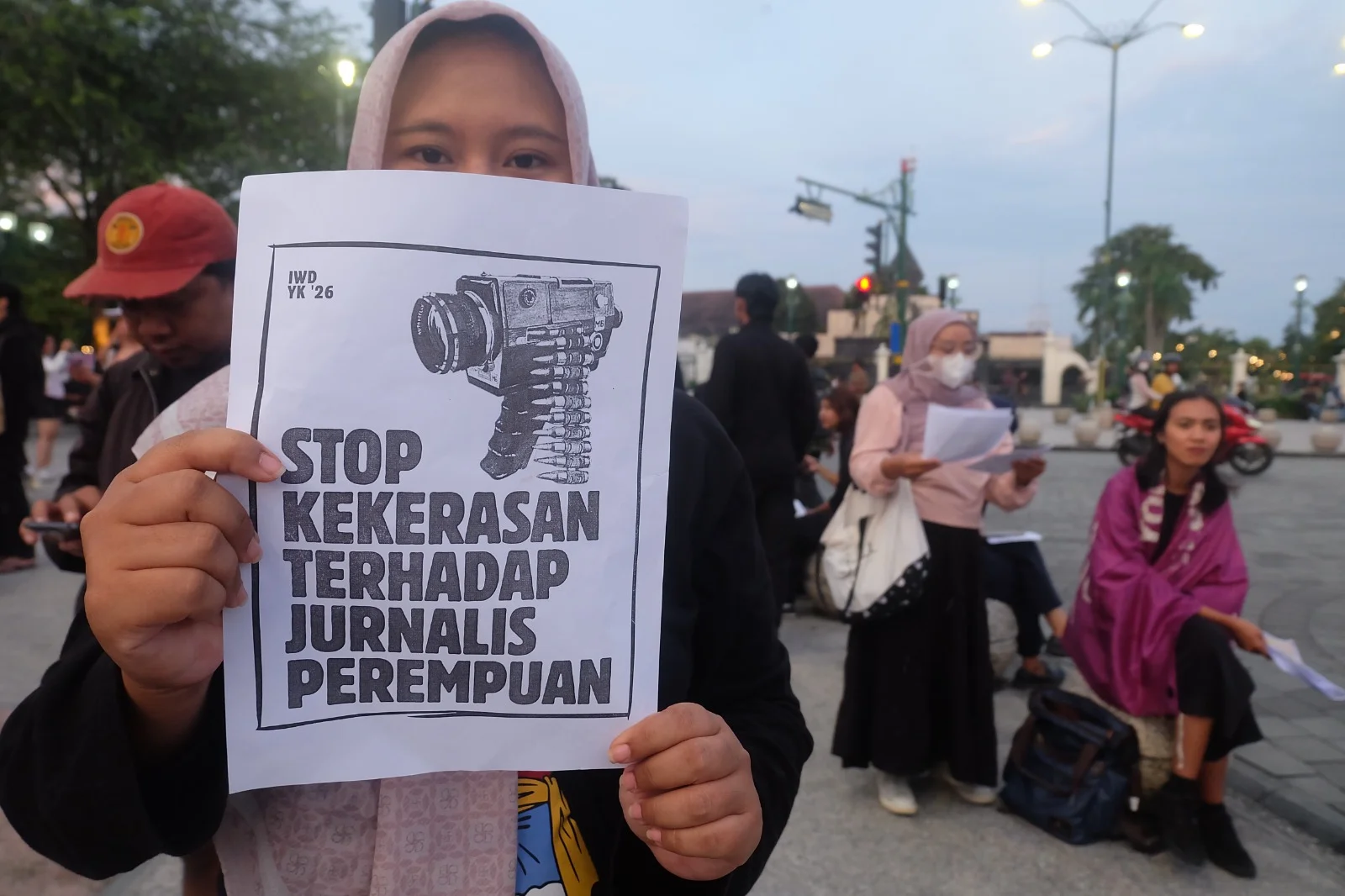
RRI.CO.ID, Jakarta - Taman Ismail Marzuki (TIM) in Central Jakarta became more than just a cultural stage on Sunday, March 8, 2026. It transformed into an arena of solidarity as the Indonesian Women’s Alliance -- an umbrella of more than 50 feminist organizations -- marked International Women’s Day with a powerful blend of art, performance, and political declaration.
Unlike previous years, this year’s commemoration took the form of Panggung Perempuan (Women’s Stage), combining installations, feminist booths, dance, stand-up comedy, music, and a collective reading of demands directed at the state.
Carrying the theme “Women United: Resisting Oppression of Women’s Bodies”, the event underscored how systemic violence continues to erode women’s lives. Organizers stressed that militarism, weakened democracy, extractive industries, and discriminatory laws have marginalized women’s voices and livelihoods. Against this backdrop, unity and solidarity were presented as urgent tools of resistance.
The program opened at 11 a.m. local time with the traditional Tari Kembang-Kembang Kemayoran performed by youth from Tambora, followed by comedian Sakdiyah Ma’ruf, who infused humor with feminist narratives. Singer Ghandiee from Surabaya, East Java, added a musical reflection on women lived experiences.
Beyond entertainment, the stage became a forum for dialogue, structured into three “acts” that highlighted different dimensions of women’s struggles.
In the first act, grassroots voices took center stage. Ika Ayu from Samsara emphasized the life-or-death stakes of reproductive health access, while testimonies from disabled women, fisherwomen, indigenous women, workers, and trans women revealed layers of stigma and exploitation.
“We are not criminals. Is being ourselves a crime?” asked Echa Waode from Arus Pelangi, confronting the prejudice faced by trans women, as quoted on a recent press release.
Discussions also touched on femicide, exploitative labor conditions for domestic workers, and the alienation of sex workers. Indigenous women spoke of land dispossession under the guise of development, linking state policies to the destruction of livelihoods.
Between discussions, performances by groups like Dialita -- a choir singing songs written by political prisoners of 1965 -- and Kaimata, known for championing gender rights, reinforced the spirit of resistance.
The second act highlighted resilience and collective struggle. Speakers reminded the audience that women’s movements have never stood still; they adapt, resist, and create alternative spaces of solidarity. Collective work, they argued, is the backbone of resistance against entrenched power structures.
The final act culminated in a declaration of demands. The Indonesian Women’s Alliance rejected state control over women’s bodies and labor, called for recognition of femicide as a crime against humanity, condemned militaristic economic policies, and demanded systemic change.
Among their appeals were the passage of the Domestic Workers Bill and the Indigenous Peoples Bill, an end to impunity for human rights violations, and the dismantling of extractive projects that devastate communities. The declaration insisted: women’s bodies and lives are not the property of the state.
The day closed with a reflection from Pera Sopariyanti of Swara Rahima, who framed the commemoration not merely as celebration but as a marker of struggle, memory, and reconstruction of women’s collective power.
The International Women’s Day in Jakarta this year was not only about art and festivity, but also a reminder that women’s resistance continues to grow, demanding justice, dignity, and freedom from oppression. ***
News Recomendation
Loading latest news.....