



Indonesia Reinforces Global Role in Sustainable Forest Transformation
- 04 Mar 2026 15:28 WIB
- Voice of Indonesia
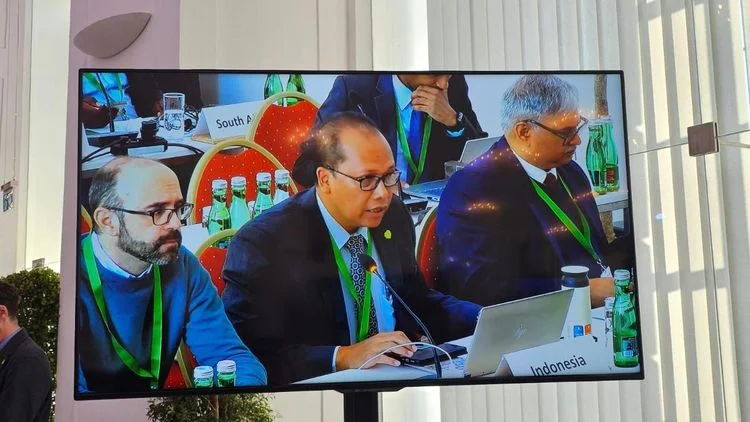
RRI.CO.ID, Jakarta - Indonesia reaffirmed its role as a key player in global forest management by presenting its Multi-Usaha Kehutanan (MUK) strategy at the Global Summit: Advancing Sustainable Forest-Based Bioeconomy Approaches in Vienna, Austria.
According to a press release issued by the Indonesian Ministry of Forestry, the initiative was highlighted as a concrete step in implementing sustainable forest management while boosting global forest productivity.
Director of Forest Product Levies and Administration (IPHH) at the Forestry Ministry, Krisdianto, explained in Indonesia's Country Report that the country’s forest-based bioeconomy now rests on a strong legal foundation through Law No. 6/2023 (Job Creation Law).
“The economic benefits of forests are no longer limited to timber. They now encompass non-timber products, environmental services, and eco-tourism. Under the MUK framework, all these uses are integrated into the Forest Utilization Business Licensing system (PBPH),” he said.
He added that the transformation has been accompanied by revisions to business work plans (RKU) and annual work plans (RKT) by license holders, ensuring inclusive economic potential from forests.
“Sustainable forest management is not only the government’s responsibility but also that of all stakeholders who benefit from forests. Indonesia fully supports the Vienna Call for Actions as a global guide for the future,” Krisdianto emphasized.
The summit was opened by Austria’s Federal Minister of Agriculture and Forestry, Norbert Totschnig, who stressed that forests are central to addressing climate change and advancing a sustainable bioeconomy. He underscored that sustainable forest management must underpin economic value while safeguarding biodiversity.
Attended by representatives from 60 countries and 120 international organizations including FAO, UNFF, and ITTO, the summit highlighted shared priorities among nations such as Indonesia, Finland, Japan, and Australia. These included technological innovation, legal certainty, and supply chain traceability to strengthen global market confidence in forest-based products.
Key strategic points discussed included: promoting low-carbon solutions for future buildings; enhancing local value from non-timber forest products to improve community welfare; and expanding financial instruments and public-private partnerships to close global forestry funding gaps.
The outcomes, captured in the Vienna Call for Actions and Co-Chairs Summary, will be brought forward to the 21st UN Forum on Forests (UNFF) in May 2026 and the 28th Committee on Forestry (COFO) in September 2026.
Through this forum, Indonesia reinforced its position as a global leader capable of aligning national economic interests with forest conservation commitments, advancing both sustainability and resilience in the international forestry sector. ***
News Recomendation
Loading latest news.....