



Indonesia Sets Guinness World Record with Lunar New Year Feast
- 01 Mar 2026 21:56 WIB
- Voice of Indonesia
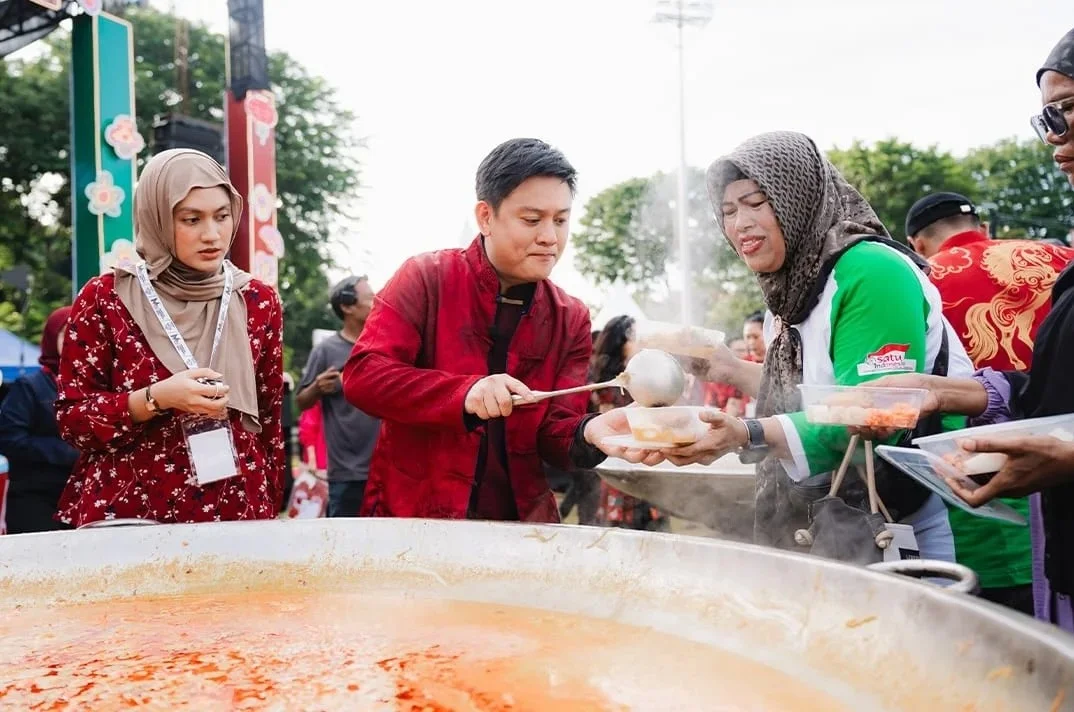
RRI.CO.ID, Jakarta - Jakarta’s Lapangan Banteng became the stage for a historic culinary celebration on Saturday, February 28, 2026, as the National Lunar New Year Festival culminated in the “Grand Feast with Bobon Santoso,” officially breaking a Guinness World Record.
The event served 5,054 portions of Lontong Cap Go Meh within eight hours, earning recognition in the category Most Servings of Lontong Cap Go Meh Served in 8 Hours.
The achievement was warmly welcomed by Deputy Minister of Creative Economy/Creative Economy Agency Deputy Head Irene Umar who highlighted the cultural and creative significance of the dish.
"The serving of Lontong Cap Go Meh became a symbol of cultural acculturation, culinary creativity, and inclusivity,” she said in an official statement released in Jakarta on Sunday, March 1, 2026, as quoted by Antara.
Irene emphasized that the feast provided a platform for small businesses, content creators, and local communities to showcase innovation while preserving culinary traditions that are part of Indonesia’s creative economy.
“Because Lunar New Year coincided with Ramadan, the dish Lontong Cap Go Meh symbolized the culinary acculturation of Chinese heritage and Indonesia’s Ramadan tradition,” Irene added.
Thousands of people from diverse backgrounds joined the celebration, enjoying the signature dish together. Irene noted that the event was about more than food. “This is not only about enjoying the dish, but also a moment to share, interact, and celebrate the richness of culinary traditions and Cap Go Meh,” she said.
The “Grand Feast with Bobon Santoso” highlighted the broader role of traditional cuisine in Indonesia’s creative economy. “It shows that Indonesian cuisine is not only about taste, but also a symbol of unity, a platform for creativity, and a driver of growth within the nation’s creative economy ecosystem," she said.
"The values of togetherness, mutual cooperation, and respect for culinary traditions were evident in public participation, affirming that the creative economy is built on creativity, culture, and community involvement; not solely on large industries,” Irene concluded. ***
News Recomendation
Loading latest news.....