



YLKI Urges Easy-to-Read Warning Labels on Packaged Products
- 01 Okt 2026 07:55 WIB
- Voice of Indonesia
Key Points
- Providing GGL information through warning labels helps fulfill consumers' right to information.
- Nutrition labels on packaged food and beverages should clearly display sugar, salt and fat content to help consumers make informed choices.
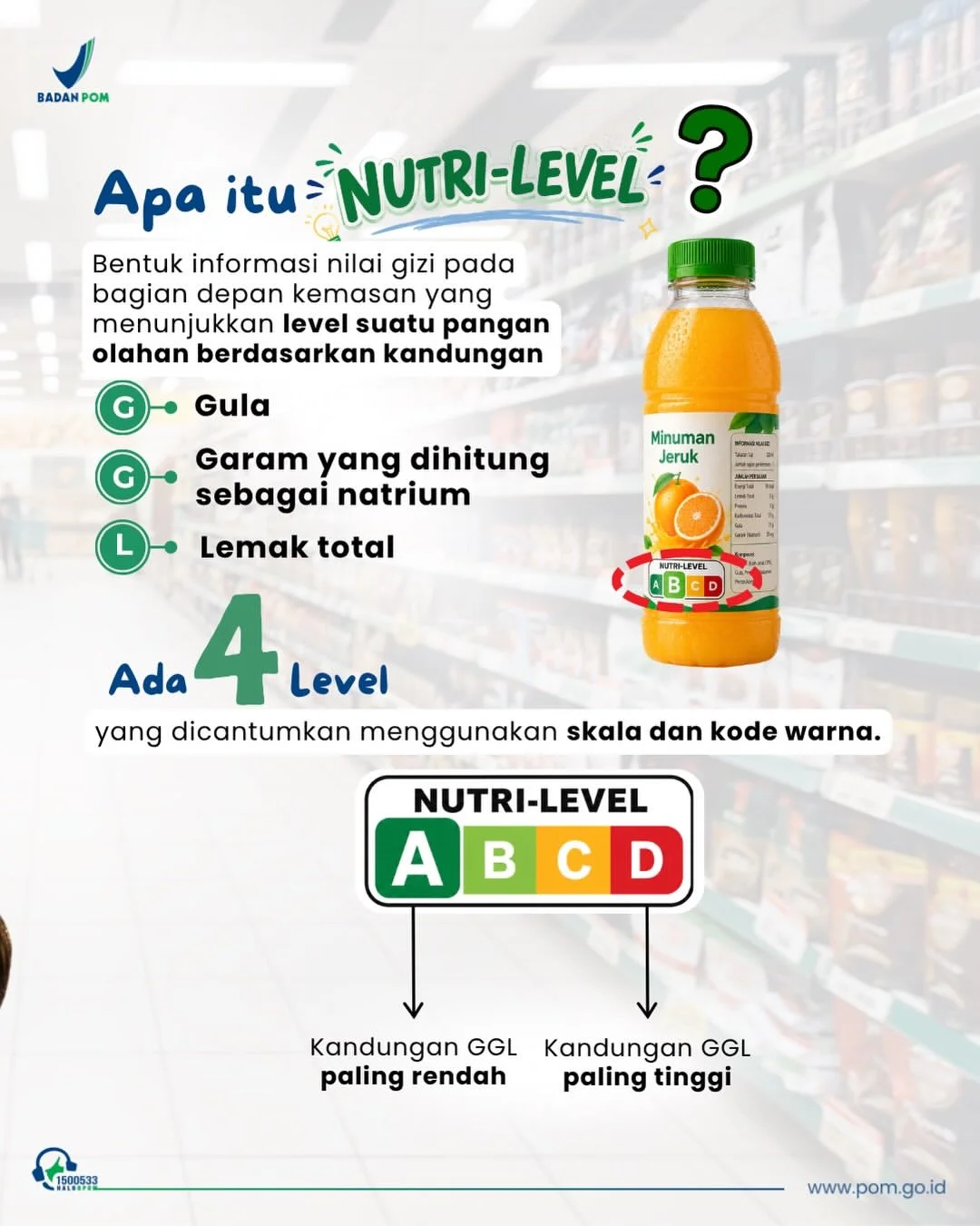
RRI.CO.ID, Jakarta – The Indonesian Consumers Foundation (YLKI) has urged the government to involve consumers in designing nutrition labels and setting labeling standards to ensure the public fully understands information on sugar, salt, and fat (GGL) content in packaged food and beverages.
YLKI chairperson Niti Emiliana made the call in response to Constitutional Court ruling No. 110/PUU-XXIV/2026, which partially granted a petition challenging Law No. 8/1999 on Consumer Protection and Law No. 17/2023 on Health regarding information on sugar, salt and fat content in packaged food and beverages.
"The Constitutional Court ruling should serve as momentum for the government to strengthen the disclosure of sugar, salt and fat content on packaging labels so that consumers can obtain clear and immediate information before buying and consuming products," Niti said, as quoted by Antara.
YLKI believes stronger GGL labeling should go hand in hand with implementing an excise tax on packaged sugar-sweetened beverages (MBDK).
The organization said displaying GGL information through warning labels is part of fulfilling consumers' right to information, while the MBDK excise tax can serve as a tool to control consumption, increase state revenue and encourage product reformulation by manufacturers.
"The government should immediately draft and enact regulations requiring GGL information that is easy for consumers to read and understand through warning labels. Information on sugar, salt and fat content must be visible, readable and understandable to consumers before they buy and consume products. Warning labels on packaging are expected to encourage consumers to choose healthier products," Niti said.
She also called on businesses to comply with the Constitutional Court ruling in the interest of consumer protection.
In addition, Niti said the government must ensure effective oversight and enforcement of business compliance, while maintaining a transparent policymaking process that prioritizes consumer interests.
"Industry should be involved in providing technical input, but the policymaking and decision-making process must remain transparent and place consumer protection and public health at the center of policy," she said.
YLKI also urged the government to immediately implement the MBDK excise tax as both a consumption-control measure and a fiscal policy instrument.
"With the right design, the revenue could support the funding of health programs and the prevention of non-communicable diseases, while also encouraging the industry to reformulate products to be healthier," Niti said.
YLKI said it would continue monitoring the implementation of Constitutional Court ruling No. 110/PUU-XXIV/2026 and push for stronger GGL warning-label requirements and the implementation of the MBDK excise tax as part of efforts to protect consumers and improve public health. ***
News Recomendation
Loading latest news.....