



Bali's Loloh Paya Gamongan Gains Popularity as Herbal Drink
- 29 Sep 2026 12:16 WIB
- Voice of Indonesia
Key Points
- Loloh Paya Gamongan is a traditional Balinese herbal drink made primarily from bitter melon (paya) and lempuyang (gamongan).
- The drink has long been used by local communities as a traditional remedy and part of daily health practices.
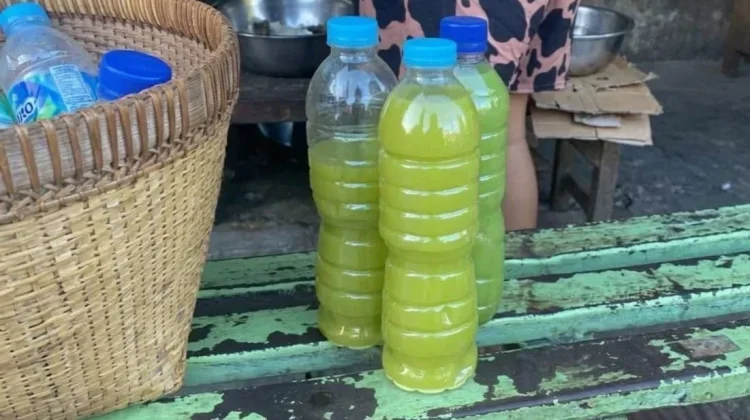
RRI.CO.ID, Singaraja - Bali’s growing trend toward natural ingredients is driving renewed interest in traditional herbal medicine, with Loloh Paya Gamongan standing out as one of the island’s most renowned ancient healing legacies. This distinctive jamu (traditional herb drink) beverage blends the bitter taste of bitter melon leaves or stems (paya) with the warming sensation of lempuyang ginger rhizome (gamongan), forming a trusted remedy for maintaining overall health.
For local communities, consuming this loloh has become a daily habit for disease prevention. The warming properties of lempuyang, combined with bitter melon extract, have proven effective in relieving bloating, preventing constipation, and naturally boosting appetite.
Beyond digestive health, this liquid herbal concoction is also relied upon to alleviate internal heat symptoms and soothe sore throats.
The strong public interest has created tangible economic opportunities, as experienced directly by Gusti Biang Putu Sasih, a resident of Baktiseraga Village, Buleleng, Bali. She produces and sells Loloh Paya Gamongan daily, alongside Loloh Don Belimbing Buluh.
To accommodate customers, Gusti Biang typically sets up along the main road in Baktiseraga and tours the village if her stock remains unsold.
“Astungkara (by God’s grace), my loloh always sells out within a day. My customers aren’t just adults, many children also enjoy buying it,” said Gusti Biang on Monday, September 28, 2026.
She explained that all ingredients used are entirely natural and processed hygienically using boiled water, not raw water. For Loloh Paya Gamongan, she blends bitter melon, lempuyang, and a touch of lime juice. Meanwhile, Loloh Don Belimbing Buluh combines belimbing wuluh (starfruit) leaves, lime juice, and asam lunak (tamarind).
In the ancient manuscript Lontar Taru Pramana, the lempuyang plant (gamongan) is described as possessing hot energy effective for treating cramps or nerve disorders: Tityang mewasta wit gamongan, daging tiyang panes, daun tiyang panes, tityang dados tamba tangan kiting, ambil umbin tityang, madaging minyak nyuh ring abu awon, tempel sakitnya.
It means that the tuber and leaves of lempuyang have warming properties. The tuber can be mixed with coconut oil and kitchen ash, then applied to cramped or tingling hands for quick relief.
According to Indonesia’s Ministry of Health, the government now regulates the integration of traditional medicine into formal hospitals through national law. This framework enables modern medical treatment and traditional remedies to coexist safely and with scientific validation.
At the regional level, this policy is implemented by establishing traditional health service clinics (yankestrad) in various regional public hospitals (RSUD) and community health centers (Puskesmas). This allows residents to access comprehensive, safe, and affordable treatment.
Through the combined influence of the ancient Lontar Taru Pramana teachings, regional government support, and a national legal framework, Loloh Paya Gamongan has evolved from a household remedy into a trusted local health product.
This renewed awareness not only helps preserve Bali’s cultural heritage but also opens pathways for modern medical research to scientifically validate the efficacy of Nusantara’s medicinal plants. (Annaila Azzahra-EN)
News Recomendation
Loading latest news.....