



Kimia Farma Expands Local Drug Ingredient Production to Cut Imports
- 26 Jun 2026 08:51 WIB
- Voice of Indonesia
Key Points
- Kimia Farma is increasing domestic API production to reduce Indonesia’s heavy reliance on imported pharmaceutical raw materials.
- The company is expanding local manufacturing, boosting domestic content (TKDN), and supporting national healthcare resilience through locally produced medicines.
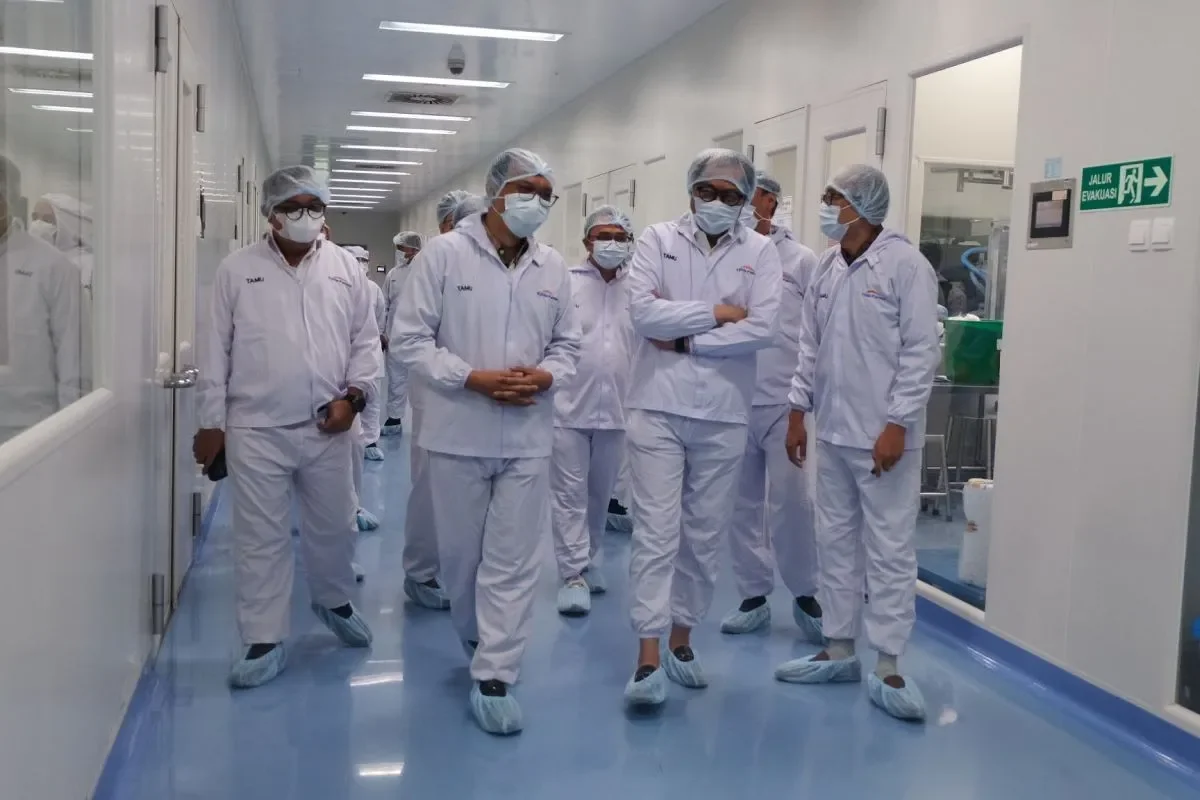
RRI.CO.ID, Jakarta - State-owned pharmaceutical giant PT Kimia Farma is systematically boosting its domestic production of active pharmaceutical ingredients (APIs) to shield Indonesia’s healthcare system from volatile global supply chain shocks.
The industrial push arrives as an important countermeasure against the country’s chronic vulnerability to foreign suppliers, which leaves domestic pharmaceutical manufacturing exposed to geopolitical disruptions, rising energy costs, and fluctuating logistics rates.
Kimia Farma Production and Supply Chain Director Hadi Kardoko revealed on Thursday, June 25, 2026, that international vendors still dictate the vast majority of the domestic market's supply lines.
"The national pharmaceutical industry's dependence on imported raw materials is very high, reaching more than 95 percent. This places Indonesia's health security in a highly vulnerable position to global shocks," Hadi said in an official release, as quoted by Antara.
To break this dependency and secure the long-term viability of the National Health Insurance (JKN) program, Kimia Farma is driving maximum factory utilization, anchored by its specialized API production facility in Cikarang, West Java, operated via its subsidiary PT Kimia Farma Sungwun Pharmacopia (KFSP).
The Cikarang plant has successfully secured Good Manufacturing Practices (CPOB) certification from the Food and Drug Authority (BPOM) for 19 distinct drug ingredients, with 18 of them also gaining official halal certification from the Halal Product Assurance Organizing Agency (BPJPH). These locally synthesized ingredients target high-priority therapeutic sectors, including cardiovascular health, antibiotics, and antiretroviral treatments for HIV.
Kimia Farma President Director Djagad Prakasa Dwialam explained that cultivating a robust local raw material catalog is part of the state firm’s broader "change of source" corporate master plan.
"With this initiative, Kimia Farma will gradually reduce its dependence on imported raw materials," Djagad said, noting the incremental but steady pivot away from overseas suppliers.
The state enterprise is aggressively integrating these locally manufactured materials into national critical healthcare items. For instance, the company's TLE antiretroviral tablets (300 mg and 600 mg) used in the national HIV response now boast a Domestic Component Level (TKDN) of 52.78 percent, while its cardiovascular drug, Rosuvastatin, has reached a TKDN of 59 percent.
Expanding its downstream commercial portfolio, the firm also introduced four new specialized medical products in 2025: Fentakaf (Fentanyl Injection), Sildenafil, Pantokaf (Pantoprazole), and Moxifloxacin.
This dual focus on upstream chemical mastery and portfolio refinement yielded a massive 124 percent year-on-year growth in both domestic and export API sales in 2025.
"We are focused on sustainable, long-term growth. Mastering the upstream sector, launching innovative products, and achieving a 59 percent local content standard (TKDN) are the main foundations of Kimia Farma's current performance. With a more efficient cost structure, the company is more resilient in facing global economic dynamics," Djagad added.
Government officials have thrown their full weight behind the localized supply chain shift. Deputy Industry Minister Faisol Riza underscored the importance of deep public-private partnerships to achieve structural autonomy.
"Through strong collaboration between the government and industry, we are optimistic that we can realize an Indonesian pharmaceutical industry that is increasingly independent, globally competitive, and sustainable, to support national health resilience," Faisol said.
Speaking after an executive tour of Kimia Farma’s massive 51,000-square-meter Plant Banjaran facility in Bandung, West Java, on Tuesday, June 23, Faisol pledged that the state would continue to deploy regulatory refinements, local procurement mandates, and targeted fiscal incentives to elevate the domestic pharmaceutical sector's global competitiveness. ***
News Recomendation
Loading latest news.....