



BRIN Discovers Probiotics in Stingless Bee Honey with Anticancer Potential
- 06 Jun 2026 07:29 WIB
- Voice of Indonesia
Key Points
- BRIN researchers discovered probiotic lactic acid bacteria in Indonesian stingless bee honey and bee pollen with antibacterial, antioxidant, and anticancer potential.
- The study identified strains capable of suppressing harmful bacteria and supporting blood sugar management, paving the way for future functional food and probiotic products.
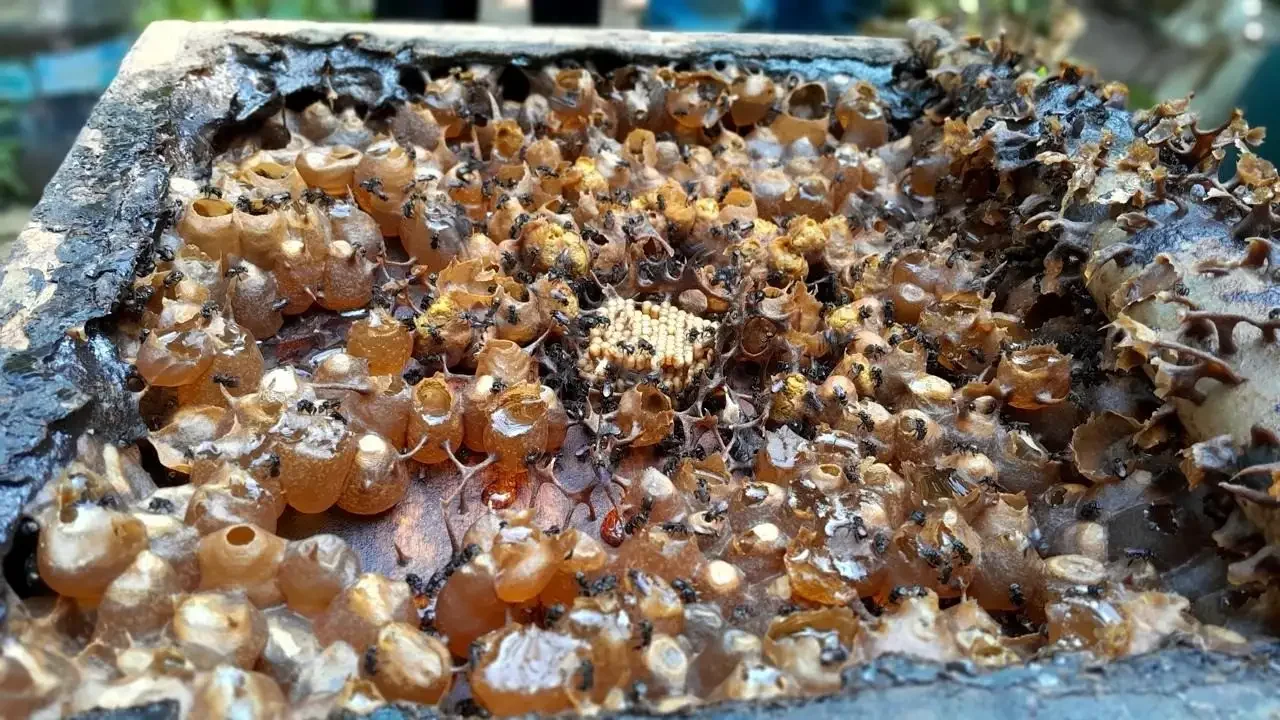
RRI.CO.ID, Yogyakarta - Researchers from the National Research and Innovation Agency (BRIN) have successfully identified probiotic lactic acid bacteria from the honey and bee pollen of Indonesian stingless bees (stingless bee). This discovery reveals a wide range of important biological activities, including antibacterial, antibiofilm, antioxidant, and anticancer properties, alongside the potential to help manage blood sugar levels.
The findings open up major opportunities for developing functional foods and nutribiotics anchored in Indonesia's rich biodiversity. The study was carried out by a research team from BRIN's Research Center for Food Technology and Processing (PRTPP) in collaboration with partners from Universitas Gadjah Mada (UGM).
The joint project utilized honey and bee pollen sourced from seven different species of stingless bees across Yogyakarta and Sumbawa. The research outcomes have been published in the international journals Antonie van Leeuwenhoek and International Microbiology, and the discovery has formally secured a patent registration under number S00202605018.
PRTPP BRIN Researcher Ema Damayanti explained that while Indonesian stingless bee honey is already famous for being rich in bioactive compounds, the probiotic microorganisms living inside the honey and bee pollen have rarely been studied locally.
"We found that Indonesian stingless bee honey harbors lactic acid bacteria which are not only able to survive digestive tract conditions, but also have excellent antibacterial, antibiofilm, anticancer and antioxidant activity. This shows its potential as a probiotic candidate for functional food," Ema Damayanti detailed, as quoted on BRIN's official website.
During the investigation, the team successfully isolated several strains of lactic acid bacteria from the honey and bee pollen of various stingless bee species. Regarding the Heterotrigona genus, samples were successfully gathered from Heterotrigona itama.
For the Tetragonula genus, the researchers isolated bacteria from a wide variety of species, including Tetragonula laeviceps, Tetragonula clypearis, and Tetragonula sarawakensis. Furthermore, this genus was also represented in the study by Tetragonula drescheri and Tetragonula biroi. Finally, in terms of other stingless bee varieties, the scientific team successfully extracted isolates from Lepidotrigona terminata.
From the numerous isolates extracted, the team selected the top seven isolates based on their superior ability to suppress the growth of pathogenic bacteria. These seven elite isolates were evaluated using whole-genome sequencing (WGS) technology, UHPLC-HRMS-based metabolomics, and various probiotic characterization tests. The analyses officially identified these premium isolates as Lacticaseibacillus rhamnosus and Pediococcus acidilactici.
According to Ema, laboratory trials demonstrated that these isolated bacteria effectively inhibit the growth of common pathogens like Escherichia coli, Staphylococcus aureus, and Pseudomonas aeruginosa. Crucially, they also prevent the formation of biofilms, which are a major culprit behind rising bacterial resistance against medical treatments.
Beyond fighting bacteria, these probiotic strains demonstrated strong anticancer activities against the WiDr colon cancer cell line. They also displayed high antioxidant capabilities when measured through DPPH, ABTS, and FRAP testing frameworks.
"We also found significant α-amylase inhibitory activity. This potential is interesting because it is related to controlling blood sugar levels, so it has the potential to be developed into a healthy food product," Ema added.
Advanced genomic analysis uncovered the presence of biosynthetic gene clusters (BGCs) that dictate the production of multiple bioactive compounds, including bacteriocins and natural antimicrobials.
Concurrently, metabolomic profiling successfully mapped a diverse array of bioactive metabolites that support the overall health benefits of these bacteria. Integrating genomic and metabolomic methods marks a pivotal milestone toward comprehensively understanding the biological mechanisms of Indonesia's local probiotics.
Moving forward, the BRIN research team plans to advance this project into the product formulation stage, testing applications in fermented foods and probiotic supplements. Additional follow-up studies will be required to guarantee the safety, stability, and long-term efficacy of these probiotic bacteria on an industrial manufacturing scale.
This breakthrough solidifies BRIN's active role in advancing functional food research derived from domestic biodiversity while fostering natural health innovations that enhance national competitiveness. ***
News Recomendation
Loading latest news.....