



BPOM Launches Jamu Week 2026 to Expand Indonesia’s Global Herbal Market
- 02 Jun 2026 15:56 WIB
- Voice of Indonesia
Key Points
- BPOM launched Jamu Week 2026 to promote Indonesia’s traditional herbal medicine as a competitive global export commodity.
- Authorities estimate Indonesia’s herbal industry could grow from IDR 1.2 trillion domestically to a IDR 350 trillion global market opportunity.
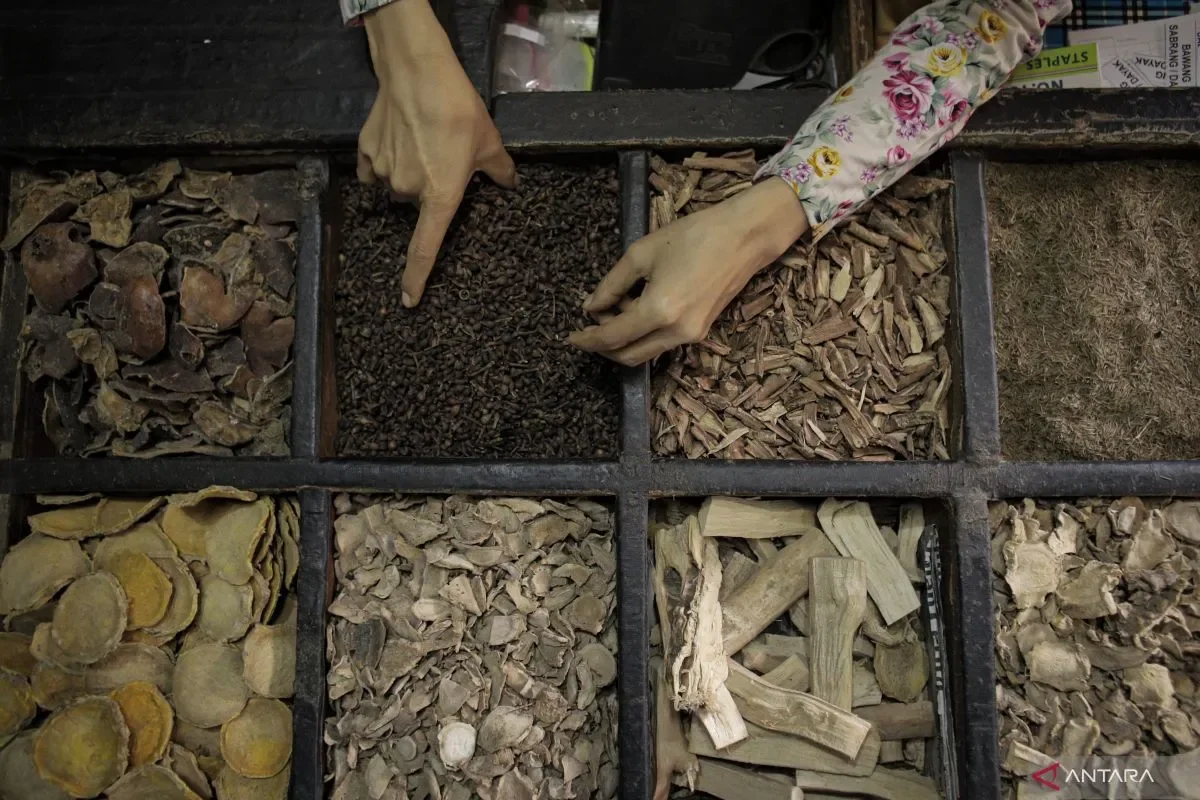
RRI.CO.ID, Jakarta - The Indonesian Food and Drug Authority (BPOM) has officially commenced Jamu Week 2026, a week-long exhibition running from June 2 to June 7, 2026, designed to showcase the nation's massive herbal biodiversity and prove its readiness to compete on the global stage. The initiative aims to shift the perception of traditional herbal medicine (jamu) from a conventional heritage drink into a high-value export commodity.
During the Kick Off Jamu Week 2026 press conference held at the BPOM headquarters in Jakarta, Head of BPOM, Taruna Ikrar emphasized that Indonesia holds an extraordinary ecological advantage.
The archipelago is estimated to house approximately 75 percent of the world's herbal biodiversity, representing immense natural wealth that extends beyond raw medicinal plants to the deeply rooted cultural heritage of jamu that has sustained public health for generations.
"Indonesia has approximately 75 percent of the world's herbal biodiversity, demonstrating the immense potential of the nation's natural resources. This wealth includes not only medicinal plant raw materials but also the herbal medicine culture that has been passed down through generations and utilized for public health," Taruna Ikrar stated in Jakarta on Tuesday, June 2, 2026, as quoted by Antara.
Through this national campaign, BPOM aims to demonstrate that jamu has evolved far beyond its traditional bottled liquid form. Modern processing techniques have allowed it to be developed into various diversified products with significant export potential.
Taruna urged the public to recognize, support, and optimally utilize jamu, pointing to its prestigious historical roots as a health beverage served exclusively to kings, royal families, and dignitaries, which gave the word jamu its noble and grand connotation.
"The public is expected to become more familiar with, support, and utilize herbal medicine optimally because historically, during the kingdom era, herbal medicine was a health drink served to kings, royal families, and important guests, the word 'jamu' itself is considered to have a noble and sublime meaning," Taruna Ikrar explained.
To successfully scale up the domestic jamu industry, BPOM stressed the urgency of building strong collaborative models uniting academics, business enterprises, and government bodies. According to data from the National Research and Innovation Agency (BRIN), Indonesia is home to roughly 30,000 to 31,000 of the world's 40,000 biodiversity species.
This unique biological richness is a product of the archipelago's complex geological history, which merged Asian and Australian flora over millions of years of evolution. However, a vast portion of these 31,000 natural resources has yet to be fully explored for phytopharmaca—natural medicine formulations derived from plants, animals, or minerals.
"Of the approximately 40,000 species of global biodiversity, approximately 30,000–31,000 are found in Indonesia, according to data from the BRIN, Indonesia's rich biodiversity was formed through the geological history of the archipelago, which combines elements of Asian and Australian flora and an evolutionary process over millions of years. Therefore, the economic potential of Indonesian herbal medicine is enormous," Taruna Ikrar asserted.
The economic stakes for this industrial modernization are exceptionally high. Based on current industrial records, the domestic economic value of the jamu sector stands at approximately IDR 1.2 trillion (USD 73.6 million).
However, BPOM estimates that if Indonesia’s rich natural biodiversity is utilized to its full potential, the country's share in the global health and jamu market could skyrocket to an estimated IDR 350 trillion, driving unprecedented economic growth. ***
News Recomendation
Loading latest news.....