



Borneo Bay Cat Redocumented, Kayan Mentarang Strengthens Wildlife Monitoring
- 01 Okt 2026 15:47 WIB
- Voice of Indonesia
Key Points
- The Borneo bay cat (Catopuma badia), locally known as kucing merah, has been redocumented in Kayan Mentarang National Park (TNKM), North Kalimantan.
- TNKM records show the species has been detected in the area since 2003, with subsequent sightings in 2023 and 2025.
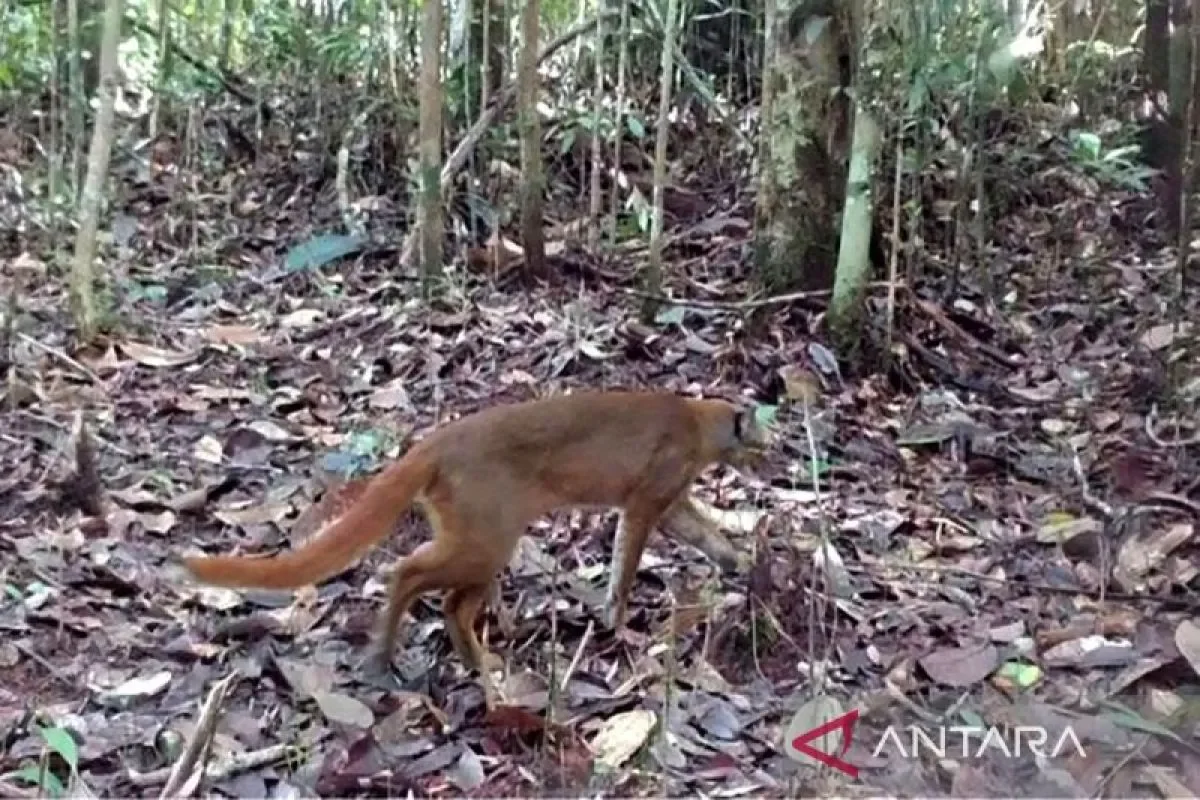
RRI.CO.ID, Malinau - The Borneo bay cat (Catopuma badia), locally known as kucing merah, continues to be detected within Kayan Mentarang National Park (TNKM) in North Kalimantan. The species, recognized as one of Borneo’s key wildlife assets, has been redocumented through camera traps and field observations by park staff.
Head of the TNKM Center, Seno Pramudito, explained that the bay cat remains one of the species under continuous monitoring. Records of its presence in TNKM date back to 2003, with subsequent detections in 2023 and 2025. “The first sighting was in 2003, then it was found again in 2023, and most recently in 2025,” Seno said on Thursday, October 1, 2026.
According to Seno, bay cat occurrences have also been reported from several areas in Malinau Regency, including Bahau and Mentarang. In Nunukan Regency, TNKM staff successfully located and documented a bay cat in the Krayan area in 2023.
“Our staff, our officers also found and obtained video footage of this bay cat in Krayan, Nunukan Regency,” he explained.
This information adds to data on the distribution of the bay cat across the TNKM landscape, which spans Malinau and Nunukan regencies. For park management, every sighting or report provides critical input to support monitoring and conservation management.
Targeted monitoring has also been conducted by the Mentarang Tubu Resort using camera traps. Head of Mentarang Tubu Resort, Mahfu’at, said the devices were deployed in early September 2025 and retrieved in August 2026.
The camera traps were primarily aimed at capturing clouded leopards and bay cats. From this effort, staff successfully documented bay cats in the Halian Tubu and Long Pala areas.
“In this deployment, our targets were the clouded leopard and the bay cat. Thank God, we succeeded; there were captures of the bay cat in the Halian Tubu area, and we also obtained captures in the Long Pala area,” said Mahfu’at.
According to Mahfu’at, successfully documenting the bay cat represents a positive outcome in monitoring key species within TNKM. He noted that camera traps help staff obtain wildlife presence data more effectively without requiring direct contact with animals in their habitat.
Beyond camera traps, information on the bay cat also comes from direct field observations. A staff member at Krayan Resort, Ferli, once spotted the animal near his farm, located about two kilometers from the TNKM boundary.
At the time, Ferli was resting at his farm before noticing an animal appear nearby. He admitted he initially did not know what species he had seen. After seeking further information, the animal was identified as a bay cat.
The experience shows that local residents and staff working around the park can also contribute valuable wildlife occurrence reports. Ferli expressed hope that the bay cat’s presence can be sustained through collective care for its habitat and for wildlife.
“Looking ahead, our hope is that the community can help protect and preserve it so that it remains safer and well-conserved,” he said.
Meanwhile, Seno urged communities and stakeholders around TNKM to support bay cat conservation efforts. He emphasized that protecting habitat and reporting wildlife sightings are essential components of conservation support.
“Therefore, we call on all communities and all parties to help us preserve this bay cat, which is highly rare and an endemic species in North Kalimantan in general,” stressed Seno.
The TNKM Center continues to monitor biodiversity as part of conservation area management. Data from camera traps, staff observations, and community reports serve as complementary sources to determine wildlife presence and distribution
The redocumentation of the bay cat at multiple points within TNKM constitutes an important element of conservation monitoring. These findings also underscore the importance of habitat protection and community involvement in sustaining wildlife within conservation areas. (Annaila Azzahra-EN))
News Recomendation
Loading latest news.....