



RRI.CO.ID Jakarta - Picture a planet, and a star is usually nearby. In our solar system, the sun provides the light and heat that makes life possible. But astronomers have now discovered that this is not always necessary.
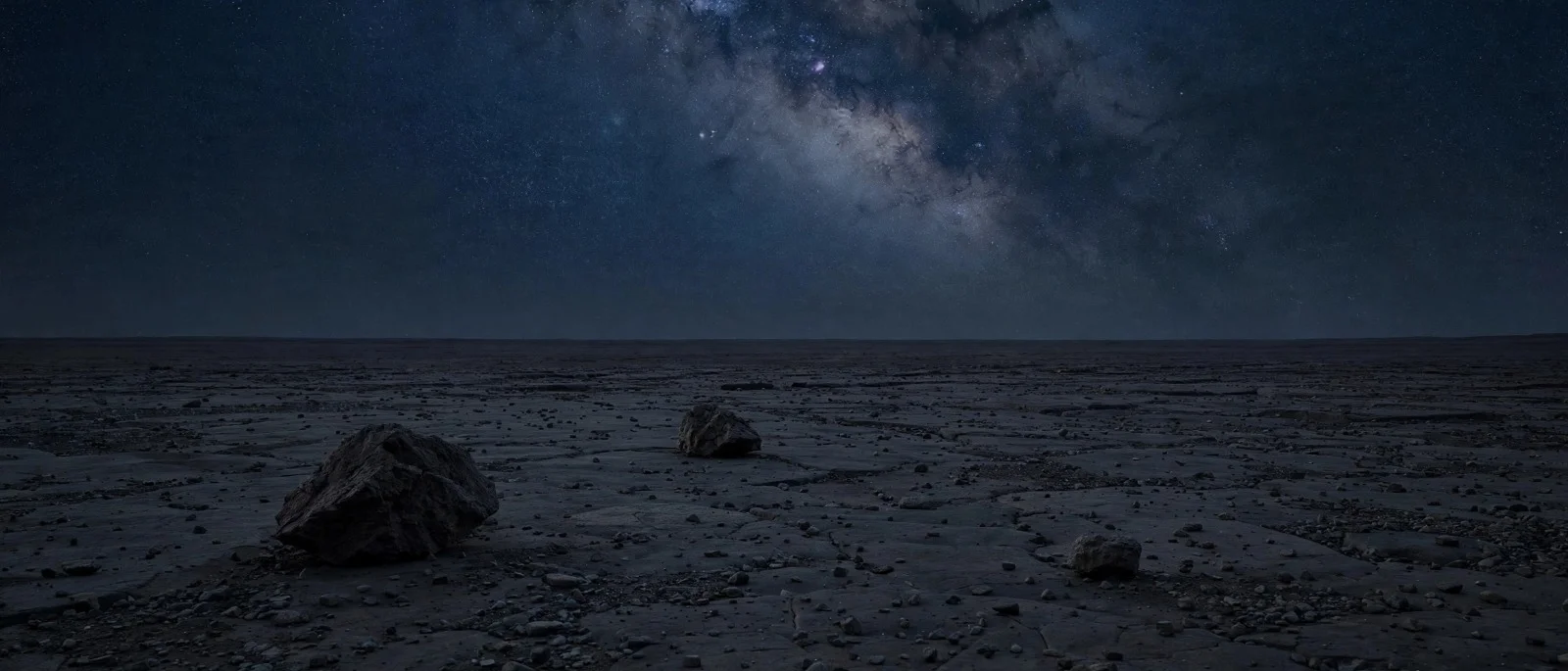
Across the galaxy, there are planets roaming alone, without the guidance of any star. These free-floating worlds, called rogue planets, are changing our understanding of how planets can exist.
Astronomers have already found hints of at least 70 rogue planets in the Milky Way. However, models suggest the reality is much bigger. Our galaxy could be home to 20 times more rogue planets than stars, meaning trillions of these lonely worlds. This year, scientists confirmed the existence of one for the first time by precisely measuring the mass and distance of a Saturn-sized rogue planet located about 10,000 light-years from Earth.
How does a planet become a loner? A small number might be failed stars that never gathered enough mass to ignite. But most likely formed like normal planets around a star and were then kicked out. In their first few million years, young planetary systems are chaotic. A young planet can cross the orbit of a larger object and get gravitationally ejected. As astrophysicist Barbara Ercolano said, catastrophic encounters have probably happened in every solar system that has formed.
The big question is whether a world without a star could still host life. In Star Trek, a starless planet had trees and oceans, but reality would be much colder. A rogue planet would lose its formation heat quickly and would likely not have liquid water on its surface. However, scientists speculate that a rocky planet could stay warm internally from radioactive decay, like a slow cooker, potentially allowing water to exist deep underground.
A more promising home for life might be a moon orbiting a rogue planet. According to a recent study in the Monthly Notices of the Royal Astronomical Society, when a rogue planet is ejected, its moons can stay with it in a highly elliptical orbit. These moons could be heated internally through tidal heating, where the planet's changing gravitational pull squeezes the moon and creates heat. It is the same process that makes Jupiter's moon Io the most volcanically active body in our solar system.
| Baca juga: World Rhino Day Brings Hope to Ujung Kulon |
Generating heat is only half the puzzle; retaining it is the other half. On Earth, carbon dioxide traps heat, but it would freeze in the deep cold of space. Researchers modelled an atmosphere full of hydrogen instead, which can trap heat through molecular collisions. Combined with tidal heating, this hydrogen blanket could keep water liquid on a moon's surface for up to 4.3 billion years. Interestingly, early Earth may have also had a hydrogen-rich atmosphere where life first began.
Finding these dark worlds is incredibly difficult. Scientists detect them through gravitational microlensing, when a rogue planet briefly magnifies the light of a distant star as it passes in front. These events are rare and last only hours. Now, new tools will change the game. NASA's Nancy Grace Roman Space Telescope, with a view 100 times wider than Hubble, could find up to 400 Earth-sized rogues. China's Earth 2.0 mission in 2028 and the Extremely Large Telescope in Chile in 2029 will follow up, helping us learn not just about them, but about our own origins.
Source : Nat Geo
News Recomendation
Loading latest news.....