



Indonesia Intensifies Forest Fire Control Amid Shifting Hotspot Trends
- 15 Sep 2026 00:08 WIB
- Voice of Indonesia
Key Points
- The Ministry of Forestry reported a sharp decline in wildfire hotspots in key priority provinces like Central and West Kalimantan.
- Joint task forces continue active firefighting operations to tackle persistent peatland blazes and haze.
- President Prabowo Subianto ordered immediate hotspot responses, village outreach, and strict legal enforcement against illegal land burning.
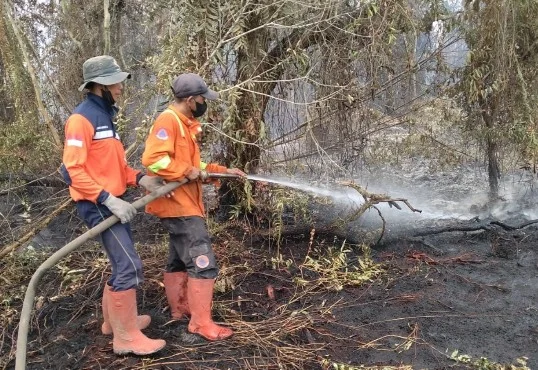
RRI.CO.ID, Jakarta - The Indonesian Ministry of Forestry, supported by joint task forces, is ramping up forest and land fire (karhutla) control through ground operations, water bombing, aerial patrols, and weather modification efforts.
Recent monitoring shows a sharp decline in high‑confidence hotspots in Central and West Kalimantan, while Riau remains free of such hotspots, according to a press release issued by the ministry on Monday, September 14, 2026.
Data from the ministry's SiPongi wildfire monitoring system -- sourced from NASA Terra/Aqua, SNPP, and NOAA‑20 satellites -- recorded 592 high‑confidence hotspots nationwide as of September 13, up slightly from 567 the previous day.
Within six priority provinces, Central Kalimantan dropped from 197 to 89 hotspots, and West Kalimantan from 91 to 14. South Sumatra fell to 49, while Jambi registered 17 after reporting none the day before. South Kalimantan rose to 28, and Riau maintained zero.
Authorities caution that hotspots indicate surface temperature anomalies, not necessarily active fires. Verification through ground checks remains essential, as a single blaze may appear as multiple hotspots.
Manggala Agni teams, alongside the military, police, National Disaster Mitigation Agency (BNPB), Meteorology, Climatology and Geophysics Agency (BMKG), local administrations, businesses, and communities, continue patrols, direct suppression, firebreak construction, and cooling operations.
Active firefighting persists in South Sumatra, where joint forces have battled peatland fires for over a week. Officials stress that declining hotspot numbers do not guarantee extinguished fires, especially in peat areas where underground embers can reignite.
To bolster response, 53 aircraft remain on standby, four for water bombing and 19 for aerial patrols and weather modification. Japan has also deployed three CH‑47 Chinook helicopters to West Kalimantan, integrated into Indonesia’s firefighting operations.
Weather modification campaigns in Central and West Kalimantan have already produced millions of cubic meters of rainfall, using thousands of kilograms of salt dispersal.
President Prabowo Subianto has directed early intervention at every hotspot, reinforced public education down to village level, and emphasized strict law enforcement against deliberate burning, including corporate violations.
Air quality monitoring shows mixed conditions. Most regions remain in the “good to moderate” range, but parts of Sumatra and Kalimantan report unhealthy to hazardous levels.
Visibility dropped to 2–4 kilometers in Banjarmasin, Pontianak, and South Sumatra’s Tanjung Api‑Api due to haze. BMKG warns that smoke persists amid dry season conditions, with localized rain offering limited relief.
The Health Ministry urges residents in affected areas to limit outdoor activity, wear masks, stay hydrated, and seek medical care if experiencing respiratory issues. The Forestry Ministry again reminded communities not to clear land by burning and to report any signs of fire immediately for rapid response. ***
News Recomendation
Loading latest news.....