



Team Monitors 11 Evacuated Orangutans in East Kalimantan for Stress Risk
- 04 Sep 2026 17:15 WIB
- Voice of Indonesia
Key Points
- Eleven orangutans in Samboja were evacuated after forest and land fires threatened their rehabilitation area at KHDTK Samboja, Kutai Kartanegara.
- The orangutans were moved from a 130‑hectare Forest School to confined evacuation cages at KM 38 Samboja, raising concerns about stress and behavioral changes.
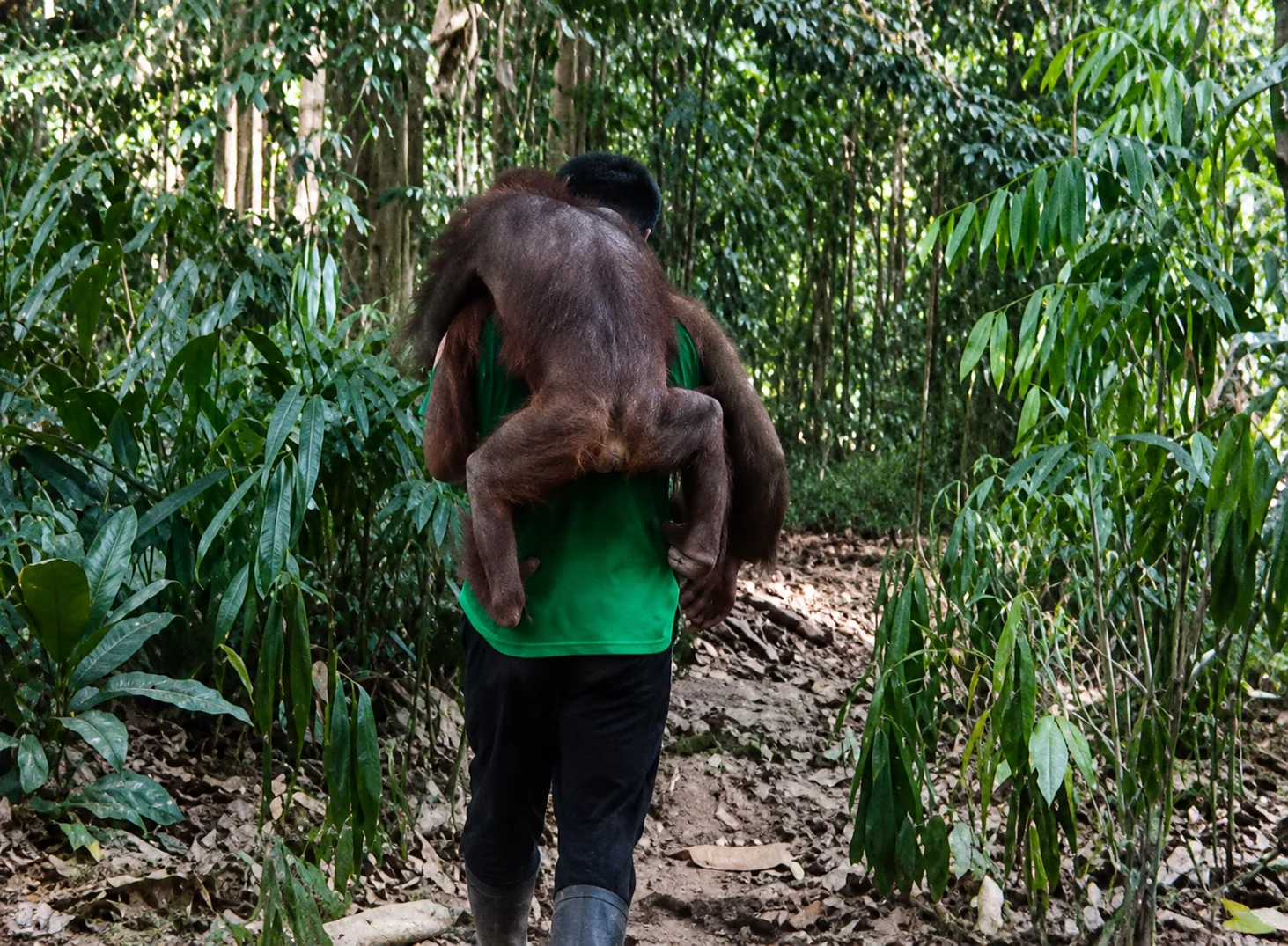
RRI.CO.ID, Samarinda - Following an emergency evacuation triggered by forest and land fires, 11 orangutans in Samboja now face the risk of severe stress after being abruptly moved from a 130‑hectare Forest School to confined cage spaces.
A joint medical team and animal keepers have been deployed to provide intensive companionship to safeguard the cognitive condition and mental health of the protected animals.
“Monitoring continues to be carried out strictly by the medical team, animal keepers, and the East Kalimantan Natural Resources Conservation Center (BKSDA). All 11 orangutans are now in safe and healthy condition despite facility limitations,” said Head of BKSDA East Kalimantan, M. Ari Wibawanto, in Samarinda on Friday, September 4, 2026.
The orangutans were evacuated after forest and land fires struck the Special Purpose Forest Area (KHDTK) Samboja in Kutai Kartanegara on Tuesday, September 1, 2026. The blaze breached the boundaries of the ecosystem where the orphaned orangutans were undergoing rehabilitation.
A joint team comprising the Jejak Pulang Foundation, BKSDA East Kalimantan, the Manggala Agni Fire Brigade, and the Wildlife Rescue Unit (WRU) successfully evacuated the 11 orangutans to safer rescue facilities.
Forest and land fires are not new in East Kalimantan, especially during expanded El Niño cycles. Mitigation efforts at KHDTK Samboja highlight the importance of designing emergency scenarios through layered coordination well in advance, not only when fires are already burning.
“The thorough evacuation response within less than two hours reflects a high level of operational readiness at the field level,” Ari said, as quoted by Antara.
The sudden relocation from the 130‑hectare Forest School to evacuation cages at KM 38 Samboja has triggered fundamental behavioral changes in the orangutans, including boredom due to limited natural stimulation from the forest canopy.
“To minimize stress impacts and maintain the animals’ cognitive continuity, the joint medical team is currently focused on accompanying them during the post‑disaster observation period,” he said.
Ari recounted the evacuation timeline:
On Tuesday, September 1, from 8 a.m. to 12:30 p.m. local time, Jejak Pulang monitoring teams conducted routine patrols three times a day. Conditions were relatively under control, with no signs of immediate threat, although small residual embers were detected outside the area.
At 12:30 p.m., the fire was detected growing in the Other Use Area (APL) directly bordering KHDTK Samboja.
By 2 p.m., the flames had intensified. Initial mitigation efforts by the internal team were hampered by strong winds pushing the fire toward the rehabilitation area.
At 4 p.m., the fire jumped the APL boundary and entered the KHDTK area. Emergency status was activated. Animal keepers began directing the 11 orangutans out of the Forest School toward evacuation routes along the riverbank.
From 4 p.m. to 6 p.m., an integrated evacuation process took place using support fleets from Jejak Pulang and BKSDA East Kalimantan. All orangutans were moved in stages to the evacuation cages at KM 38 Samboja.
“At 6:30 p.m., Manggala Agni and the joint firefighting team fully extinguished the forest and land fires in the KHDTK area,” Ari said. ***
News Recomendation
Loading latest news.....