



Wildfires Threaten Rare Orangutans in West Kalimantan
- 01 Sep 2026 13:57 WIB
- Voice of Indonesia
Key Points
- The survival of the Pongo pygmaeus pygmaeus orangutan subspecies, locally known as Mayas, is increasingly threatened by forest and land fires in West Kalimantan.
- Around 2,470 individuals of the subspecies are estimated to remain in Kapuas Hulu Regency, according to the 2016 Orangutan Population and Habitat Viability Analysis.
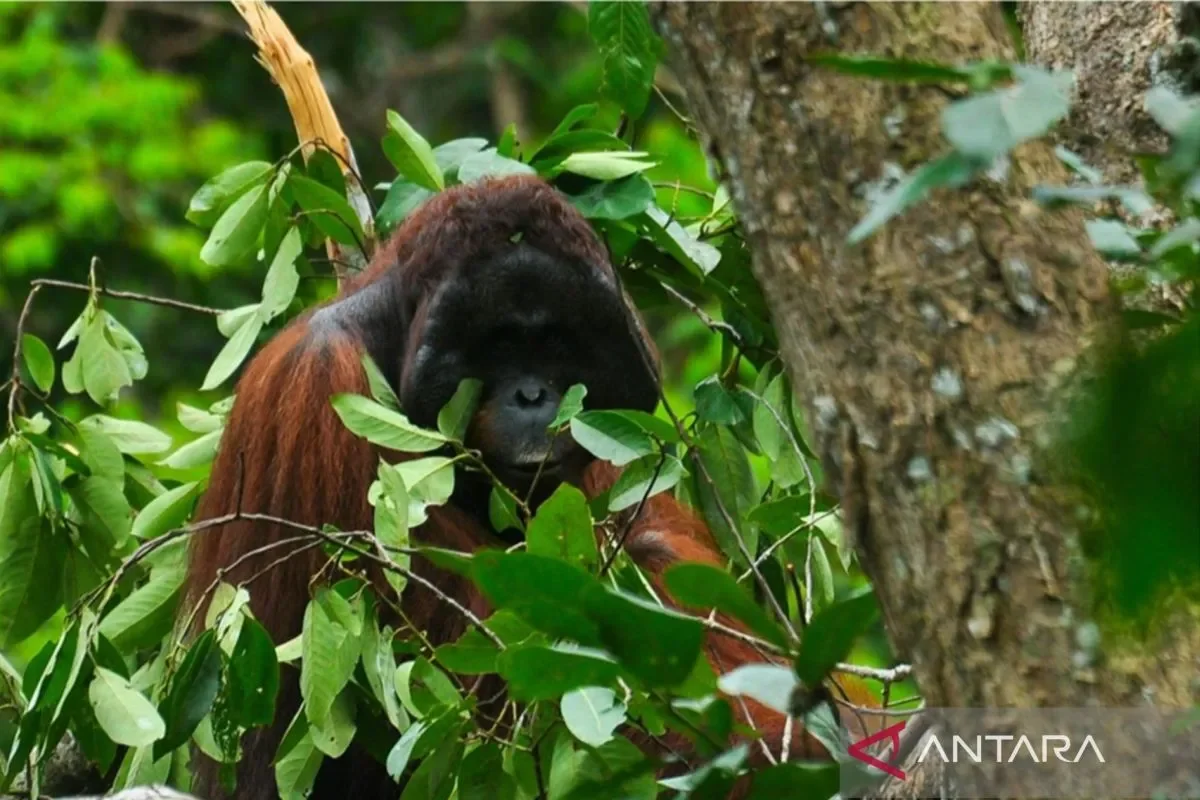
RRI.CO.ID, Pontianak - As haze blankets West Kalimantan and the dry season raises the risk of forest and land fires, the survival of Pongo pygmaeus pygmaeus, a rare orangutan subspecies locally known as Mayas, has reached a critical point. With only about 2,470 individuals remaining in Kapuas Hulu Regency, fires that continue to erode forest cover are not only destroying their habitat but also accelerating the decline of a species that serves as a vital safeguard for the ecosystem’s balance.
“Efforts to protect and conserve orangutans and their habitats are among the priorities of the West Kalimantan Natural Resources Conservation Center (BKSDA). To ensure the safety of protected wildlife amid the peak of the dry season and potential habitat disturbances, field officers continue conducting firefighting operations in forest and land fire areas,” said Head of Administration at the West Kalimantan BKSDA, Imam Setyo Hartanto, in Pontianak on Tuesday, September 1, 2026.
He said the center has prepared rescue and translocation measures for orangutans affected by or threatened by forest and land fires. According to Imam, forest and land fires not only damage forest cover but also threaten wildlife safety, while reducing the orangutans’ home range and food sources.
As reported by Antara, the West Kalimantan BKSDA previously rescued orangutans from fire-affected areas in Ketapang Regency as part of efforts to mitigate the threat posed by forest and land fires to protected wildlife. Fires and habitat fragmentation can force orangutans out of forest areas and increase the potential for human-wildlife conflict.
Imam conveyed that efforts to address threats to orangutans cannot be undertaken by the administration alone. Therefore, the involvement of indigenous peoples, local communities, academics, the business sector, and civil society organizations is crucial.
“Orangutan conservation amid the threats of habitat degradation and forest and land fire disasters requires support from various parties. Strengthening the capacity of indigenous peoples and local communities is also a foundation for the success of conservation plans and sustainable area management,” he said.
He added that West Kalimantan is one of the most important regions for orangutan conservation, as it is home to two subspecies, such as Pongo pygmaeus wurmbii and Pongo pygmaeus pygmaeus.
In Kapuas Hulu Regency, Pongo pygmaeus pygmaeus, known among local Dayak communities as Mayas, is found in Danau Sentarum National Park and Betung Kerihun National Park. Its range also extends from the Labian-Leboyan Corridor and connects with the Batang Ai–Lanjak Entimau area in Sarawak, Malaysia.
Based on the 2016 Orangutan Population and Habitat Viability Analysis (PHVA), the population of Pongo pygmaeus pygmaeus is estimated at only around 4,520 individuals. Of that total, 2,470 individuals were reported to be in Kapuas Hulu Regency.
An academic from the Department of Biology at Tanjungpura University’s Faculty of Mathematics and Natural Sciences, Riyandi, said orangutans play a crucial role in maintaining ecosystem balance. This is because orangutans are an umbrella species, requiring extensive home ranges and large habitats.
Meanwhile, the West Kalimantan BKSDA, together with regional administration, academics, and conservation organizations, continues to promote stronger protection of key areas. One of them is the Labian-Leboyan Corridor, which connects orangutan habitats between Betung Kerihun National Park and Danau Sentarum National Park.
Habitat protection and forest and land fire control efforts must proceed simultaneously. Forest fires threaten wildlife, destroy food sources, and intensify pressure on the already declining orangutan population. ***
News Recomendation
Loading latest news.....