



BNPB Pushes Sustainable Resilience for Local Communities
- 12 Agt 2026 16:03 WIB
- Voice of Indonesia
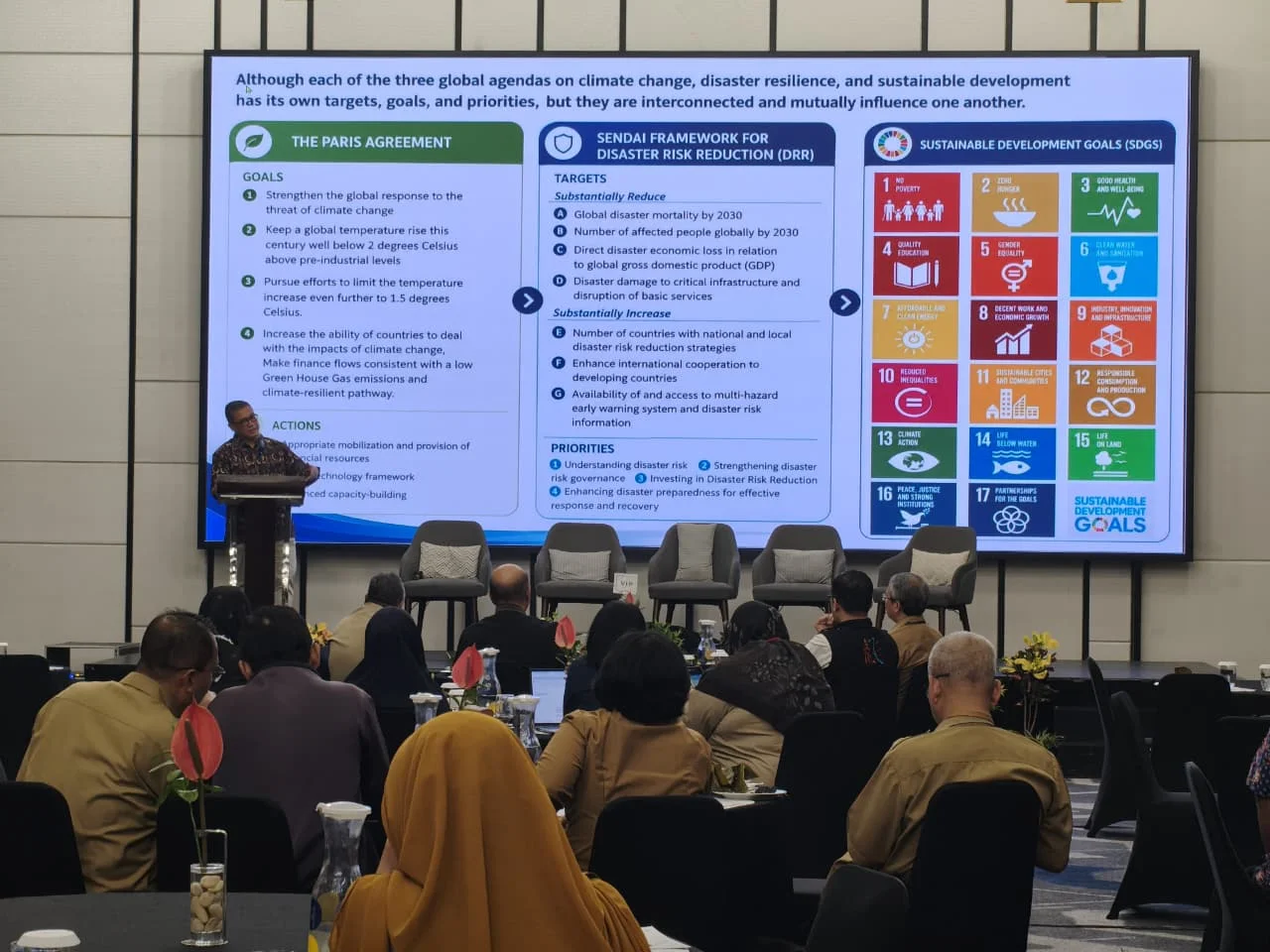
RRI.CO.ID, Yogyakarta - The National Disaster Management Agency (BNPB) is pushing Sustainable Resilience beyond the conceptual stage into integrated action that delivers tangible benefits to communities. The message was highlighted at the National Seminar on the Integrated Operationalization of Sustainable Resilience at the Local Level in Yogyakarta on Monday.
Supported by the Australian Government through the SIAP SIAGA Program, the event was part of the Road to the 3rd Global Forum for Sustainable Resilience (GFSR) 2026. The seminar brought together central and regional governments, academics, communities, businesses, civil society, media, and development partners to discuss integrated approaches to climate change, disaster risk reduction, and sustainable development.
Sustainable Resilience is an approach aimed at protecting communities, reducing risks, strengthening adaptation, and ensuring that development benefits can be sustained in the long term. It places communities and local conditions at the center of development.
BNPB Deputy for Systems and Strategy, Raditya Jati, said the main challenge is to connect existing programs so they can reinforce one another and create greater impact. “We must bring Sustainable Resilience from concept into practice. The measure is not only how many programs we have, but the extent to which those programs are interconnected, reinforce one another, and ultimately deliver tangible benefits to communities,” Raditya said, as quoted from an official statement on Tuesday, August 11, 2026.
According to BNPB, development, climate adaptation, and disaster risk reduction programs are still often implemented separately. Data, indicators, policies, financing, and institutions have not yet been fully integrated.
Yogyakarta was highlighted as an example of how resilience can grow from the local level through local wisdom, mutual cooperation, community leadership, innovation, infrastructure, and collaboration among stakeholders. “Yogyakarta’s experience shows that communities are not merely beneficiaries of development and disaster management. Communities are both the subjects and the driving force of resilience. Local knowledge, community experience, and innovation at the community level need to become part of our development and risk management systems,” Raditya said.
BNPB also stressed the importance of strengthening Pentahelix collaboration involving governments, communities, academia, businesses, media, civil society, and development partners. Such cooperation should be reflected in aligned data, financing, roles, information systems, and monitoring mechanisms.
The seminar recommended integrating climate change, disaster management, and sustainable development policies from the national to village level, while strengthening local leadership, shared resilience indicators, participation of vulnerable groups, and diversified financing. The Yogyakarta discussions will contribute to The 3rd Global Forum for Sustainable Resilience 2026 in Jakarta on September 9–12, 2026.
News Recomendation
Loading latest news.....