



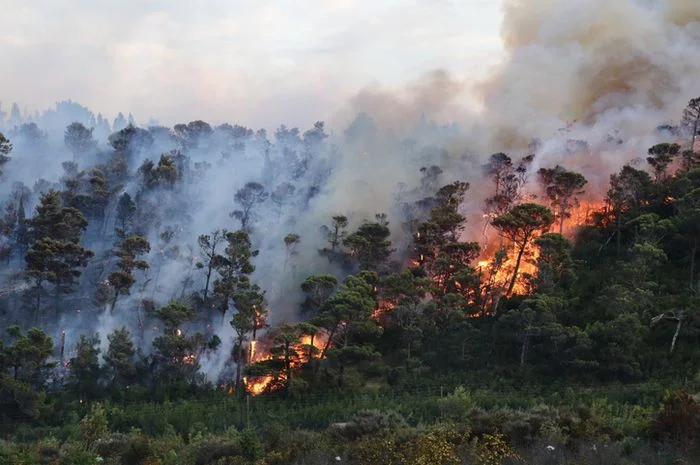
RRI.CO.ID. Jakarta - Forest fires, wildfires, and burning peatlands occur frequently during summer, especially now as El Niño extends the hot and dry season. This year, large fires have burned across Indonesia and other parts of the world. The longer dry periods create ideal conditions for fires to start and spread quickly, making wildfires a seasonal crisis in many regions.
The impact goes beyond burned land. Wildfires disrupt human health and destabilize ecosystems already stressed by global climate change. Smoke can travel thousands of kilometres, lowering air quality far from the fire zone. Scientists warn that as the climate warms, fires will become more frequent, larger, and harder to control.
What makes wildfire smoke dangerous? It contains a complex mix of gases and particles: ozone, carbon monoxide, nitrogen dioxide, polycyclic aromatic compounds, and fine particulate matter known as PM2.5. Health officials advise people who can see or smell smoke to stay indoors. The pollutants are directly linked to respiratory and cardiovascular disease.
Short-term exposure causes stinging eyes, coughing, and trouble breathing. Long-term exposure is more serious. Because fires now happen every summer and last longer, people inhale smoke repeatedly. Research shows this chronic exposure can affect the lungs, kidneys, liver, brain, and heart. A 2023 study in Nature found that wildfires have even reversed air quality gains made in the United States.
Air quality is tracked using the Air Quality Index, or AQI, a scale from 0 to 500. It measures five key pollutants, including PM2.5. When the AQI reaches 200-300, air is considered very unhealthy. During major smoke events, cities like New York, Washington D.C., and Chicago have recorded AQI levels above 250, meaning the air is hazardous for everyone.
PM2.5 is the biggest concern because the particles are 30 times smaller than a human hair. They penetrate deep into the lungs and enter the bloodstream. The body responds with inflammation, similar to fighting a virus, but it cannot break down the particles. This leads to lasting damage. For people with asthma, Chronic Obstructive Pulmonary Disease COPD, or heart disease, added inflammation can trigger attacks, hospitalizations, and reduced oxygen delivery.
The risks are not limited to the lungs. Studies link wildfire smoke to heart attacks, irregular heart rhythms, and poor blood flow to the brain. There is also evidence that smoke exposure weakens immune defences, making people more prone to respiratory infections like flu and COVID-19. Vulnerable groups — the elderly, low-income communities, pregnant people, and those with pre-existing conditions — face the highest risk.
Protection starts with limiting exposure. The CDC recommends staying indoors, closing windows, and using HEPA air purifiers. If you must go outside, wear a properly fitted N95 respirator. Avoid adding indoor pollution from cooking, smoking, or vacuuming. Long term, experts say we must address the root cause through prescribed burns, smarter housing policies, and climate action. As one scientist put it, adapting to more extreme fires is becoming one of humanity’s greatest challenges.
Source : Nat Geo
News Recomendation
Loading latest news.....