



Natural Upwelling Causes Mass Fish Die-Off in Bali's Lake Batur
- 24 Jul 2026 21:03 WIB
- Voice of Indonesia
Key Points
- Natural upwelling and hydrothermal gas caused the mass fish die-off in Lake Batur.
- Authorities confirmed the incident is unrelated to Mount Batur's volcanic activity.
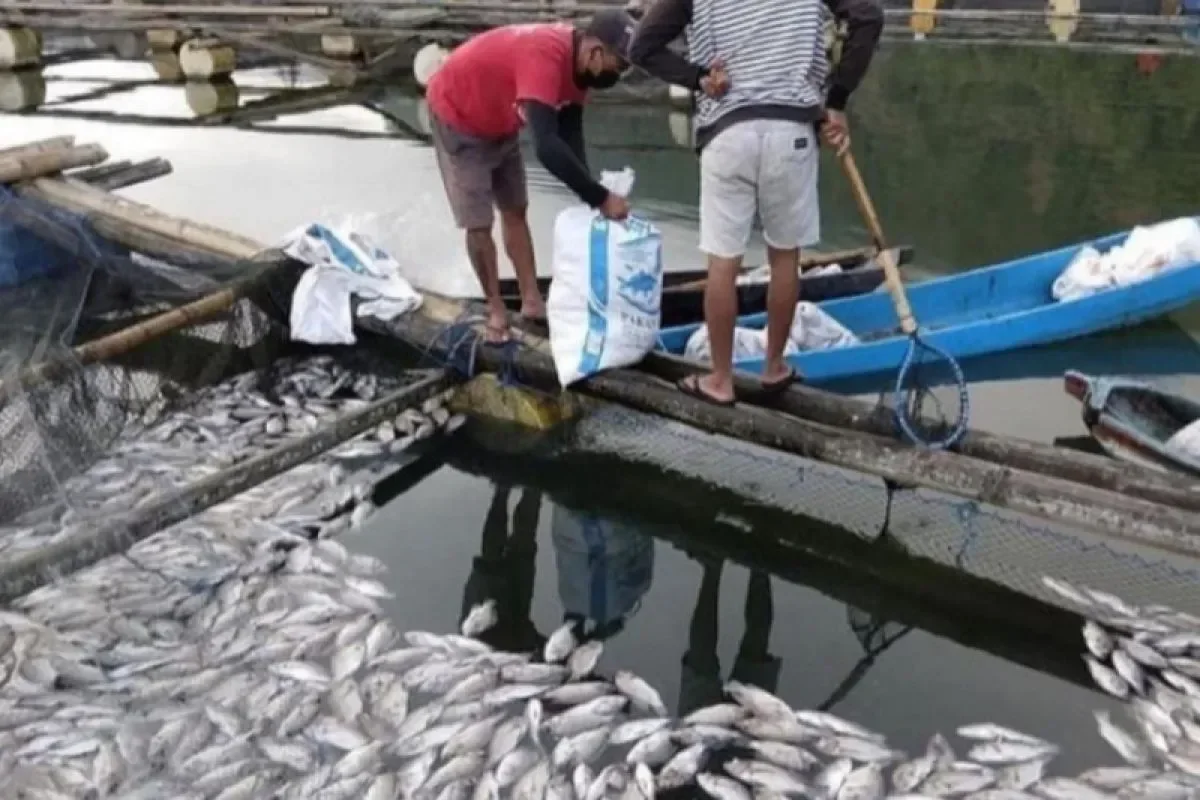
RRI.CO.ID, Denpasar - A sudden mass die-off of thousands of fish at Lake Batur in Bangli Regency, Bali, was triggered by natural limnological and hydrothermal dynamics within the caldera rather than impending volcanic activity, according to the Geological Agency of the Ministry of Energy and Mineral Resources (ESDM).
The clarification comes as local authorities address public concern over a sulfurous gas release that swept through Bali's largest lake earlier this week, killing thousands of farmed and wild tilapia. Acting Head of the ESDM Ministry's Geological Agency, Lana Saria, confirmed in Denpasar on Friday, July 24, 2026, that the phenomenon poses no volcanic threat to the surrounding region.
"This is not an indication that an eruption will occur at Mount Batur," Lana said on Friday, July 24, 2026, as quoted by Antara.
Limnology, the study of inland aquatic ecosystems, explains how physical, chemical, and biological interactions drive such aquatic shifts. Geological Agency analysts revealed that gas bursts inside the lake stem from natural overturn processes within the Mount Batur caldera.
Lana explained that during specific environmental conditions, water turnover or upwelling forces oxygen-depleted water from the lake bottom to the surface. This deep water often carries dissolved volcanic gases, primarily hydrogen sulfide (H2S).
When these gases escape into the upper water column, they produce a distinct sulfur smell while rapidly depleting dissolved oxygen levels, leaving fish unable to survive. Despite the gas release, Lana reassured the public that seismic monitoring equipment detected no increase in volcanic activity at the 1,717-meter volcano.
"The activity level of Mount Batur remains at Level I, or Normal, with the recommendation that tourists and the public refrain from activities inside the crater of Mount Batur," Lana added.
Since early this week, thousands of tilapia, including those raised in commercial floating net cages by local aquaculture farmers, have died across the lake. The Bangli Regency Agriculture, Food Security, and Fisheries Agency (KPP) is working to calculate the total economic and physical toll of the event.
Head of the Bangli KPP Agency, Wayan Sarma, noted that official loss figures remain pending as field teams continue monitoring gas levels across the water. "We have not issued the final figures for the number of dead fish because the sulfur emissions have not completely stopped yet," Sarma said. ***
News Recomendation
Loading latest news.....